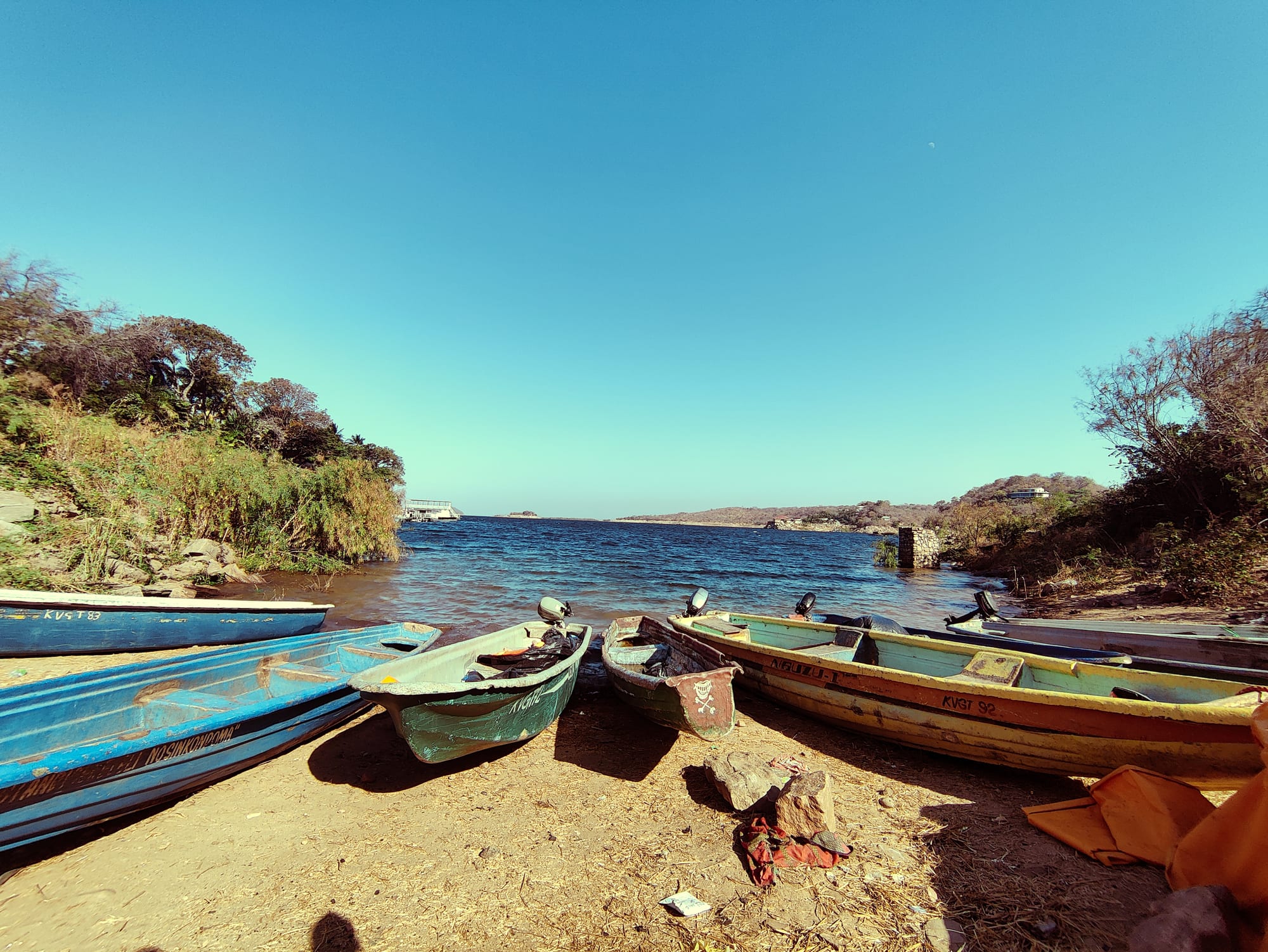
Wooden fishing boats with outboard motors drawn up on a sandy shore beside the blue water of a lake, with scrub-covered hills behind

Livingstone, Victoria Falls & the West, Zambia

Siavonga

Fishing boats pulled up on the shore of Lake Kariba at Siavonga, Zambia. (Mulengac / Wikimedia Commons · CC BY-SA 4.0)

A hillside town on the northern shore of Lake Kariba, built on the slopes above the water near the dam wall that created the lake in 1959. It is Zambia's main lakeside resort town, with hotels and houseboats on the bays, kapenta fishing rigs working at night, and a border crossing into Zimbabwe over the dam itself.

Neighbourhoods

  • The town centre on the ridge
    • First-time visitors
    • Local life
    • Close to transport

    The administrative and commercial centre sits on high ground above the lake, with district offices, shops, banks, the market and the bus stop within a short walk. Views open down over the water between the buildings, and the roads fall steeply away towards the shore.

    Open in Maps
  • The lakeshore and the bays
    • Views
    • Swimming and boats
    • Quiet and residential

    Hotels, lodges and houseboat moorings line the inlets below the town, reached by steep side roads. This is where visitors spend most of their time, on terraces and jetties looking across the lake towards the Zimbabwean hills.

    Open in Maps
  • Towards the dam wall
    • Views
    • Historic sites

    The road east from town runs along the ridge to the border post and the dam wall, passing viewpoints over the gorge where the Zambezi is held back. Staff housing and fishing settlements lie along the way.

    Open in Maps
  • The fishing camps and compounds
    • Local life
    • Markets

    Away from the hotel bays, the fishing camps and residential compounds house most of Siavonga's people, with kapenta rigs drawn up on the shore, drying racks in the sun and small shops and bars along the dirt roads.

    Open in Maps

Things to do

The lake and the dam

  • Kariba Damlandmark

    The double-curvature concrete arch dam completed in 1959 across the Kariba Gorge, which created the lake and supplies hydroelectric power to both Zambia and Zimbabwe.

    Open in Maps
  • Lake Karibaattraction

    One of the largest reservoirs in the world, filling the Gwembe Valley behind the dam, with drowned trees standing in the shallows and hippos and crocodiles along the shoreline.

    Open in Maps
  • Houseboats on the lakeattraction

    Slow, multi-day boats moored in the bays below the town are the classic way to see Kariba, drifting between inlets with fishing tenders in tow.

    Open in Maps
  • Kapenta rigs and tigerfish watersattraction

    Fishing rigs put out at dusk with lamps to draw the small kapenta, and anglers work the same water by day for tigerfish and bream.

    Open in Maps

Short trips from the town

  • Kariba, Zimbabweattraction

    The Zimbabwean resort town built in the 1950s to house the dam's construction workers, on the far side of the lake close to the wall, with its own lakeside hotels and a busy border crossing.

    Open in Maps
  • Chirunduattraction

    A border town on the Zambezi below the dam, with two road bridges into Zimbabwe, heavy truck traffic and the Chirundu Petrified Forest, a national monument of fossilised trees, west of the town.

    Open in Maps

Eat and drink

Long-standing places and food districts in Siavonga. Hours, ratings and directions come from your maps app, always current.

Siavonga classics

  • Kapenta with nshimarestaurant

    The lake's small dried fish, fried with tomato and onion and eaten with stiff maize porridge, is the town's everyday plate and its best-known export.

    Open in Maps
  • Bream and tigerfishrestaurant

    Fresh lake bream is grilled or fried whole at hotels and shoreline stalls; tigerfish, bony and prized by anglers, also turns up on menus.

    Open in Maps

Markets and stalls

  • Siavonga marketmarket

    The town market sells maize meal, vegetables, groundnuts and heaps of dried kapenta, alongside household goods for the fishing camps.

    Open in Maps
  • Lakeside hotel terracesneighborhood

    The hotels and lodges strung along the bays serve grills, fish and Zambian dishes on terraces above the water, and are where most visitors eat.

    Open in Maps

Experience Siavonga

History

The Gwembe Valley, the deep trench of the middle Zambezi, was home to the Tonga for centuries before the lake existed, farming the fertile alluvial soils along the river and moving with its floods. Their villages lay on both banks, and the river was crossed and fished rather than feared, though the valley's heat and tsetse fly kept outsiders away for much of the colonial period.

That world ended with the Kariba Dam. Built between 1955 and 1959 in the Kariba Gorge for the Federation of Rhodesia and Nyasaland, the dam created a lake more than 220 kilometres long and displaced tens of thousands of Tonga people from both banks — about 57,000 people in all — most of them resettled on poorer land above the new shoreline, a dislocation still remembered in the valley and the subject of long-running grievance. As the water rose, Operation Noah rescued thousands of stranded animals from shrinking islands. Construction was dangerous, and eighty-six workers lost their lives building it.

Siavonga grew afterwards as the Zambian administrative and service town for the new lake, on the ridge above the north bank near the wall. Kapenta, a small sardine-like fish brought to the lake from Lake Tanganyika, created a fishing industry that remains the district's economic base, while hotels and houseboats made the town Zambia's lakeside holiday resort. Kariba's turbines supply much of the country's electricity, so drought years lower the lake, cut generation and are felt in Siavonga in both power and livelihoods.

Culture & Customs

Siavonga is a Tonga town, and Tonga identity runs through it: a cattle-keeping, farming people of the southern plateau and the valley, with a strong oral tradition and rain ceremonies held by chiefs. The story of the dam and the resettlement is part of that identity, and the figure of Nyaminyami — the serpent-like river spirit said to have been separated from his consort by the dam — appears in carvings, on walking sticks and in the name of businesses all around the lake.

The town's other culture is the culture of the water. Fishing crews, rig owners, boat builders and houseboat crews set the working rhythm, and life on the shoreline runs to the lamps going out at dusk and the catch coming in before dawn. Weekends bring visitors from Lusaka, and the bays fill with families and church groups; Zambian holidays turn the town into a resort in earnest.

Churches of many denominations are central to community life, and the border gives a steady flow of Zimbabwean traders, workers and shoppers. Manners are those of rural southern Zambia: unhurried greetings, respect for elders and chiefs, modest dress in town, and hospitality towards guests even in the fishing camps.

Daily Life

Siavonga is a small town and the administrative centre of a district counted at about 66,000 people in 2022, spreading along the lakeshore and up into the hills. The town is built on steep ground, so daily life involves a good deal of climbing between the ridge, where offices, schools and the market are, and the shore, where the work is.

Kapenta fishing and processing dominate the economy: rigs and crews, drying grounds, ice and transport to markets in Lusaka and the Copperbelt. Tourism is the second pillar, with hotels, lodges, houseboats and boat crews employing a large share of households, and its fortunes rise and fall with the domestic holiday trade. Government offices, the hospital and schools, the border post and the dam's own operations provide most formal employment; farming is limited by the heat and the thin valley soils.

The pressures are visible: falling lake levels in drought years reduce both fishing and hydropower, national load-shedding leaves the town short of the electricity generated on its doorstep, water supply is difficult on the slopes, and work in fishing and tourism is seasonal. Even so, the lake keeps Siavonga busier than most towns of its size in Southern Province.

Food

Kapenta is the food of Kariba. The small fish are landed at night, spread on racks or bare ground to dry, and then fried with tomato, onion and oil into a salty relish eaten with nshima, the stiff maize porridge taken by hand that is Zambia's staple. Fresh bream from the lake is grilled or fried whole, and tigerfish, prized more for the fight than for the plate, is served at some lakeside kitchens.

Around the fish, the food is Tonga and southern Zambian: relishes of pumpkin leaves, rape or okra cooked with groundnuts, beans, and beef or goat stewed slowly, with mabisi, thick soured milk, in farming households. Roadside stalls sell roasted maize in season, fritters, chips and sweet potatoes, and mangoes, bananas and papaya grow well in the valley heat.

The hotels along the bays cook a wider mix — grills, chicken and chips, curries and South African-style braais — for Lusaka weekenders. To drink there is Mosi lager, cartons of Chibuku sorghum beer, munkoyo, the lightly fermented maize and root drink, and strong sweet tea, with cold drinks a priority in a town where the afternoon heat rarely lets up.

Planning tools

Budget

Siavonga is a domestic holiday town, so prices sit between backpacker Livingstone and the safari camps: mid-range lakeside hotels, cheaper guesthouses in the centre and self-catering rooms. Houseboats are the big cost and are usually chartered by a group for two or three nights, which makes them reasonable when shared.

Daily Budget Midrange
USD 130–330 (lakeside hotel, boat trips or a share of a houseboat, restaurant meals)
Daily Budget Shoestring
USD 35–70 (guesthouse in town, nshima and fish, minibuses from Lusaka)

Prices rise for Zambian public holidays and school breaks, when Lusaka empties towards the lake; carry kwacha cash, since cash machines are few.

Best Time to Visit

The cooler dry months from May to August are the pleasantest, with clear skies and calm water. September and October are punishingly hot in the valley. The rains from November to April bring storms and green hills, and fishing and boating continue year-round, though lake levels vary a great deal between wet and dry years.

Suggested Number of Days

One or two days cover the town, the dam viewpoints and a boat trip. Three or four suit a stay on the water or a houseboat charter, which usually runs over two or three nights. Most visitors come for rest rather than sightseeing, so the length depends on appetite for the lake.

First Visit
1–2 days
With Surroundings
3–4 days

Transportation

The town is spread over steep slopes, and taxis and shared minibuses run between the centre, the hotel bays and the border road; walking between them is hard work in the heat. Hotels arrange boat transfers and fishing trips, and boats are the natural way to move along the shoreline.

Agree taxi and boat prices in advance, and allow for steep, rough side roads down to the shore, where a high-clearance vehicle helps.

Airport & Station Connections

Siavonga lies about 180 kilometres south of Lusaka by road, a drive of three to four hours on a tarred route that leaves the Lusaka–Chirundu highway and winds down into the valley. Buses and minibuses run from Lusaka, and most visitors drive or come with a hotel transfer. The Zimbabwean side is reached by the border post at the dam wall.

Walkability

Only the ridge-top centre works on foot, and even there the gradients are steep and the sun heavy. The hotels and moorings are strung along several kilometres of shoreline below, well apart from each other and from the shops, so getting about generally means a vehicle or a boat rather than a walk.

Safety

Siavonga is a quiet town with little crime aimed at visitors, beyond opportunist theft around the market and the border. The lake is the hazard: crocodiles and hippos make open-water swimming dangerous, bilharzia is present in still fresh water, storms can blow up quickly, and the valley heat brings a real risk of dehydration. Malaria is present year-round.

Change money at banks or bureaux, swim only at guided sites, carry water and fuel on western roads, and take malaria precautions. Check current official travel advice before travelling.

Climate

The Zambezi valley at Kariba is among the hottest parts of Zambia, and the lake adds humidity. The wet season runs from November to April, the cool dry months from May to August, and the build-up before the rains in September and October is fierce. In the southern hemisphere, summer falls in December to February.

Summer
December to February is hot and humid, often above 32°C by day, with heavy afternoon storms
Winter
June to August is dry and sunny, around 26–29°C by day and mild at night by the water

Local Customs

This is Tonga country, and the memory of the valley's flooding in the 1950s remains part of local identity; Nyaminyami, the river spirit of the Tonga, is a common motif in carvings sold in the town. Tonga and English are widely used, greetings are unhurried and churches anchor community life.

Dress modestly away from hotel pools and beaches, ask before photographing fishing camps, people or the dam and border installations, and treat the lake's shoreline settlements as private homes rather than sights.

Common Payment Methods

The currency is the Zambian kwacha, and cash is the practical choice for markets, minibuses and boats. Hotels take cards and sometimes quote in US dollars, but connections can fail; cash machines exist in the centre and can run out at holiday weekends. Mobile money is widely used.