💰 Budget
Algiers is the most expensive city in Algeria. Hotels are priced for government and business visitors, and there are few cheap options that take foreigners, while café food, the metro, trams and shared taxis cost very little. Almost everything is paid for in dinar cash, and the gap between the official exchange rate and the unofficial street rate has a large effect on what a stay costs.
- Daily Budget Midrange
- USD 110–220 (mid-range hotel in the centre or on the hills, restaurant meals, taxis or a hired driver)
- Daily Budget Shoestring
- USD 35–65 (simple hotel, café and street food, metro, tram and shared taxis)
Bring clean euro notes to change, since foreign cards work in very few places, and book a room well ahead, as central hotels fill with business travellers.
📅 Best Time to Visit
April to June and late September to November are the most comfortable months, with warm days, green hills behind the city and manageable humidity for walking the Casbah. July and August are hot, humid and busy on the beaches either side of the city. Winter is mild but wet, and Ramadan reshapes daily life whenever it falls.
⏳ Suggested Number of Days
Two to three days cover the city itself. Four or five allow the Roman coast west of the capital and the mountains behind it as well. Heavy traffic, steep hills and the time taken to arrange a guide or a driver all stretch the days out.
- First Visit
- 2–3 days
- With Surroundings
- 4–5 days
🚆 Transportation
A metro line runs under the centre and out to the east, trams serve the eastern suburbs, cable cars climb the hillsides, and suburban trains cross the Mitidja plain towards Blida and Thénia. Yellow taxis are everywhere and often shared, and buses cover the rest. Traffic on the bay road and the hill routes is heavy for much of the day.
Agree a taxi fare before setting off, travel early to avoid the worst of the rush hour, and expect police checkpoints on roads out of the city.
🛬 Airport & Station Connections
Houari Boumediene Airport, the country's main hub, lies about 17 km east of the centre, roughly half an hour by road when traffic allows and longer at peak times. Air Algérie flies from Europe, the Middle East and across Africa, and domestic flights reach the Sahara. Mainline trains run west to Oran and east to Constantine and Annaba, and ferries connect the port with Marseille and other Mediterranean cities.
🚶 Walkability
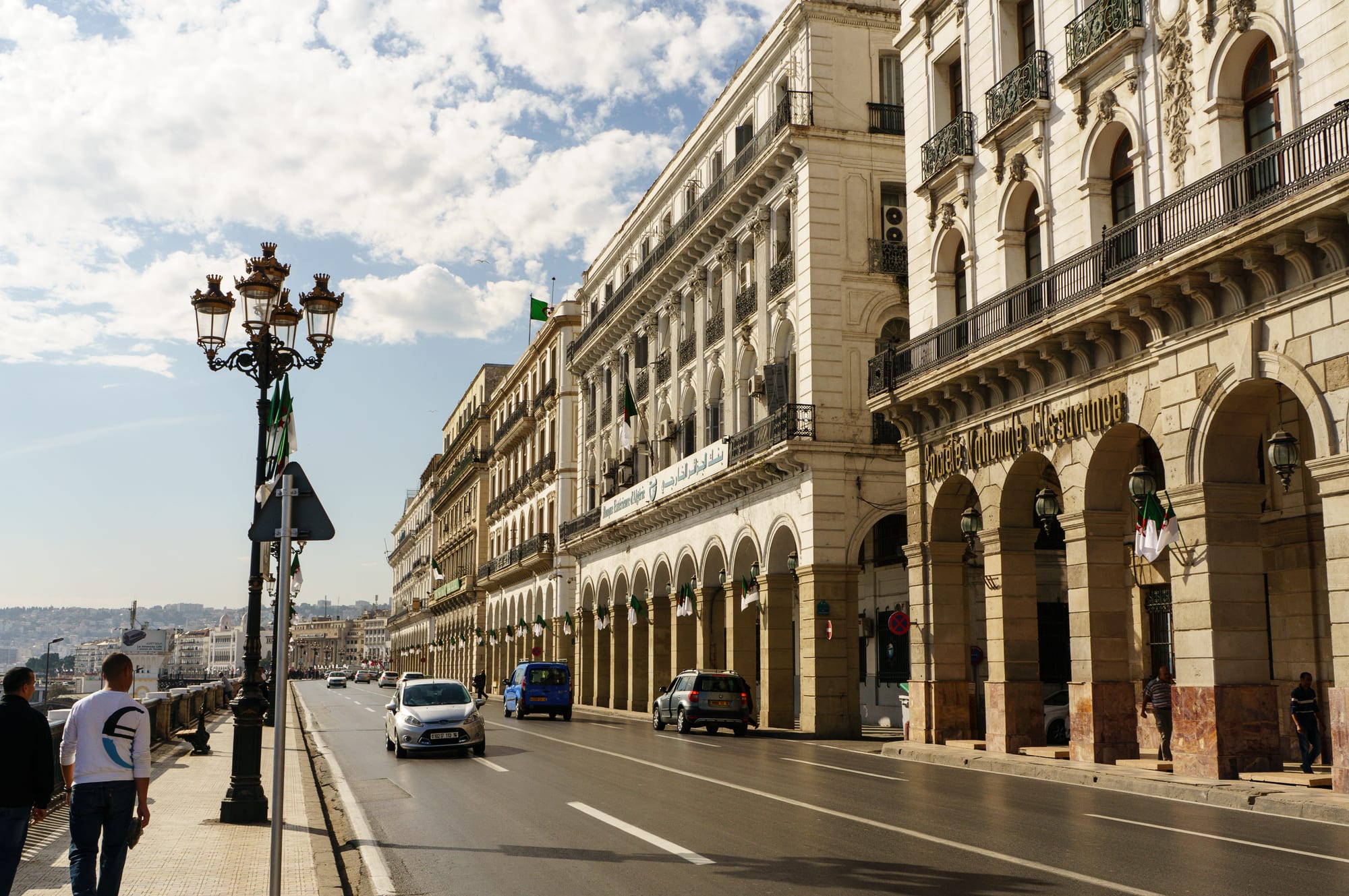
The French-era centre is walkable and pleasant, with arcades for shade and short distances between the waterfront, the Grande Poste and the foot of the Casbah. Beyond that the city is built on steep hills, and stairways, cable cars and taxis do much of the work. Pavements are crowded and uneven in places, and the Casbah's lanes are steep, slippery when wet and easy to get lost in.
🛡️ Safety
The capital is generally calm, with the ordinary risks of a large city: pickpocketing on crowded streets, in markets and in the lower Casbah, and bag snatching after dark. Police are very visible and checkpoints are common. Photographing police, military sites, ports and government buildings is not permitted.
Carrying a copy of the passport for checkpoints, visiting the Casbah with a local guide and keeping valuables out of sight in crowds are the usual precautions. Most governments advise against all travel to the border regions with Mali, Niger, Libya, and Mauritania, and to parts of the Saharan interior, citing terrorism and kidnapping risk. Check current official travel advice before travelling.
🌦️ Climate
A Mediterranean climate softened by the sea, with hot humid summers, mild wet winters and a long green spring. Rain falls mostly between November and March, sometimes heavily on the steep hillsides, and the sirocco occasionally brings hot dusty air from the south.
- Summer
- hot and humid, generally around 30°C by day with warm nights and little rain
- Winter
- mild and rainy, generally 10–16°C, with grey spells and strong winds off the sea
🤝 Local Customs
Algiers is among the more relaxed cities in the country, but it is still conservative by European standards. Modest dress, covering shoulders and knees, avoids attention, and women visitors are expected to dress more carefully than in Europe. Greetings are unhurried and handshakes common between men; many women prefer not to shake hands with men. Friday is the day of rest and communal prayer, and non-Muslims do not enter mosques during prayers.
Tipping is modest and rounding up is enough; ask before photographing people and never photograph police, soldiers or official buildings; alcohol is sold in few places and is not drunk in public.
💳 Common Payment Methods
The currency is the Algerian dinar, and Algiers runs on cash. Foreign cards are accepted in only a handful of large hotels and airline offices, and cash machines that take them are scarce. Visitors bring euros or US dollars to change; banks and hotels give the official rate, which is much weaker than the widely used parallel rate, and changing money outside the banking system is technically illegal. Dinars cannot easily be changed back or used abroad.