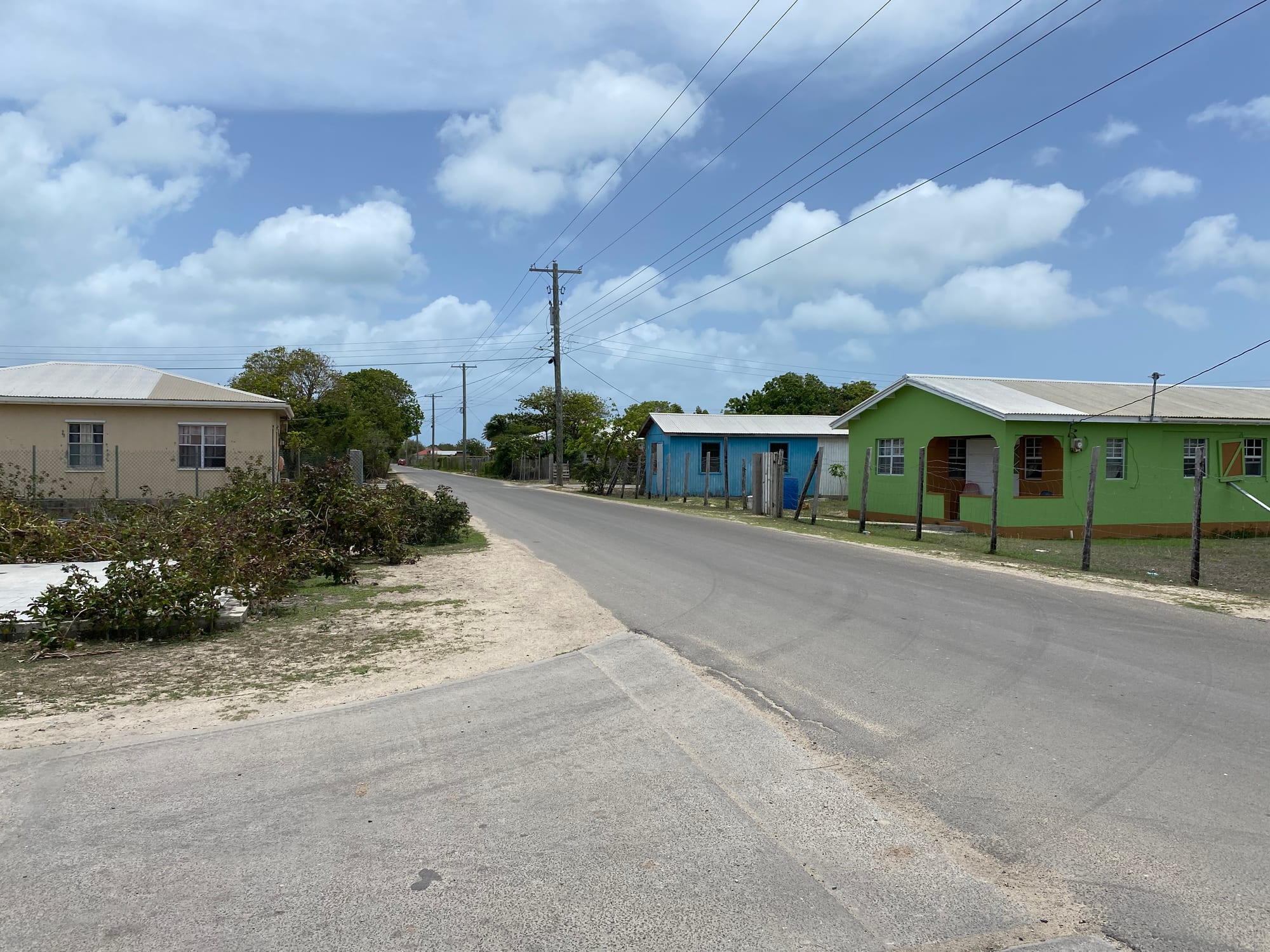
A quiet paved street in Codrington lined with single-storey houses painted green, blue and cream under a cloudy sky

Antigua and Barbuda

Barbuda

Top Mission Street in Codrington, the only village on Barbuda. (CROIX / Wikimedia Commons · CC BY-SA 4.0)

A flat, sparsely settled coral island about 30 miles north of Antigua, whose people live in the single village of Codrington beside a great saltwater lagoon. Held by the Codrington family for nearly two centuries, then farmed as common land, it was devastated by Hurricane Irma in 2017, and most residents have since returned. Long beaches, caves and a large frigatebird colony draw visitors.

Neighbourhoods

  • Codrington
    • Local life
    • First-time visitors

    The island's only village, on the eastern shore of Codrington Lagoon, with several churches, schools, a post office, a police station and the Barbuda Council's offices. Most homes are detached concrete-block houses with metal roofs.

    Open in Maps
  • Codrington Lagoon and the west coast
    • Wildlife
    • Beaches

    The largest saltwater lagoon in the eastern Caribbean, a national park separated from the sea by a long strip of beach. Hurricane Irma broke through its western edge in 2017, opening new channels to the sea.

    Open in Maps
  • The south coast
    • Beaches
    • Quiet

    The road south from Codrington runs to the Martello Tower and the ferry wharf at River, an easy walk from almost empty beaches; further south, Princess Diana Beach near Coco Point is periodically tinted pink.

    Open in Maps
  • The Highlands and Two Foot Bay
    • Caves
    • Walks

    A low limestone plateau on the east side of the island, protected for its plants and wildlife, with caves, sinkholes, the ruins of the Codringtons' Highland House and the cliffs of Two Foot Bay on the Atlantic coast.

    Open in Maps

Things to do

Wildlife and the lagoon

  • Codrington Lagoonpark

    A national park and the largest saltwater lagoon in the eastern Caribbean, with Codrington on its eastern shore.

    Open in Maps
  • Frigate Bird Sanctuarypark

    A protected nesting colony of magnificent frigatebirds around Man of War Island in the north of the lagoon, reached only by boat — one of the island's most popular sights, which survived the storm surge of Hurricane Irma.

    Open in Maps

Beaches

  • Princess Diana Beachbeach

    A white beach about two miles long near Coco Point in the south, periodically coloured pink by foraminifera, renamed in 2011 after Princess Diana, who visited it many times.

    Open in Maps

History

  • Martello Towerlandmark

    A 56-foot defensive tower on a beach about three miles south of Codrington, said to be the oldest martello tower in the Caribbean and still the tallest building on the island.

    Open in Maps
  • Highland Houselandmark

    The stone ruins of the Codrington family's house in the Highlands, about three miles north of the village, from which most of the island can be seen.

    Open in Maps

Caves and the Highlands

  • Darby Caveattraction

    A sinkhole about 300 feet across and 70 feet deep in the Highlands, with long stalactites and a growth of palms and ferns like a small rainforest.

    Open in Maps
  • Two Foot Bay and Indian Caveattraction

    A nature reserve of limestone cliffs and caves on the north-east coast, where Indian Cave holds the island's only petroglyphs and the endemic Barbuda warbler lives.

    Open in Maps

Seasonal events

  • Barbuda CaribanaMay, occasionally early June

    The island's annual festival, with a Caribana Queen show, a teenage pageant, calypso competitions and weekend beach parties.

  • Independence Day1 November

    The national holiday, marked on Barbuda with a parade at Madison Square in Codrington.

Eat and drink

Long-standing places and food districts in Barbuda. Hours, ratings and directions come from your maps app, always current.

Barbuda classics

  • Codrington fisheries piermarket

    Where the fishing boats land fresh fish and lobster in the afternoon, often sold straight from cold boxes.

    Open in Maps
  • Codrington street grillsneighborhood

    Lobster and fish grilled at the roadside, and a few small local restaurants serving burgers, chicken and island fare.

    Open in Maps

Experience Barbuda

History

The first people on Barbuda were hunter-gatherers who arrived by canoe some 3,000 to 4,000 years ago; Arawak and later Kalinago people followed, the Kalinago calling the island Wa'omoni. After early Spanish and French settlement, an English colony formed in 1666, by which time Codrington was the main place of residence. In 1685 the island was leased to the brothers Christopher and John Codrington, whose family held it as absentee owners until 1870, run by resident managers from a castle that towered over the village until an earthquake ruined it in 1843.

Barbuda's enslaved population grew from 172 in 1746 to 503 in 1831. The enslaved resisted: in Beach's Rebellion of 1741 they rose against a cruel manager, and in 1745 they killed another manager, McNish, and seized the castle and its arms. After slavery was abolished in 1834, Barbudans went on farming the island as common land, because it had all been covered by a single grant.

Barbuda became part of independent Antigua and Barbuda in 1981, keeping its own Barbuda Council, and the Barbuda Land Act of 2007 enshrined communal land rights in law. In September 2017 Hurricane Irma, a Category 5 storm, destroyed more than 90 per cent of the buildings and the whole population was evacuated to Antigua; most residents had returned by February 2019. Since the storm, national policies on Barbudan land and new developments, including the airport opened in 2024, have been at the centre of a political dispute between the island and the national government.

Culture & Customs

Barbudan identity rests on the land. For generations the island was held in common, and the right to use it is guarded closely; in 2023 the Barbuda People's Movement, which holds the island's seat in parliament and controls its council, vowed to reverse a bill ending communal land ownership, and the dispute has brought renewed calls for independence. The Barbuda Council, elected locally and meeting in Codrington, runs much of island life, from utilities to roads.

The calendar's high point is Caribana in May, with a queen show, a teenage pageant, calypso contests and weekend beach parties. On some Sunday afternoons the Barbuda Turf Club meets for horse racing at a track in the Spring View area. The European fallow deer, found on only one other island in the eastern Caribbean, is a symbol of Barbuda and of the whole country, and hundreds of shipwrecks lie on the reefs around this low, hard-to-see island.

Church is central to life: Pentecostal, Anglican, Wesleyan Holiness and Baptist congregations are the largest, and there is a small Rastafarian community. English and Barbudan Creole are spoken side by side.

Daily Life

Barbuda's population was estimated at about 2,200 in March 2025, higher than before Hurricane Irma, and almost everyone lives in or around Codrington. The village has several churches, a post office, a police station, a hospital in the Spring View area and schools from daycare to secondary, and the Barbuda Council's administration building stands in the Middle Section neighbourhood.

The economy rests mostly on government and tourism, with the central and local governments the largest employers, and fishing provides most of the island's exports, especially lobster caught with low-impact methods handed down over generations. Most homes are single detached houses of concrete block with metal roofs, built on land held under the island's communal system.

Life is quiet and slow. Fishing boats come in to the pier in the afternoon, there is no market, and produce is sold at the roadside or occasionally at the council's agriculture building. Since Irma the basketball and tennis courts have been resurfaced, but the disputes over land, development and the island's relationship with Antigua continue.

Food

Barbuda eats from the sea and the bush. Lobster is the island's prize, cooked straight from the sea and often grilled at the roadside, and crab, conch and fish are also local specialities. Large barracuda are caught close to shore and widely eaten here, and the island's seafood is harvested with low-impact fishing methods developed over many generations.

The island's other specialities are venison from the fallow deer, land turtle, and locally raised beef, lamb and goat. There is no market, so fresh fish and lobster are sold from cold boxes on the street or at the pier, and local fruit and vegetables at the roadside.

Beyond Barbuda's own produce, the table is shared with Antigua: fungie and pepperpot, the national dish of a cornmeal-and-okra dish similar to polenta with a slow-cooked stew; saltfish; and ducana, a sweet potato and coconut dumpling. Local meals are sometimes served with rice, fungie or yabba dumplings, and soursop, ginger beer, passion fruit, sea moss and tamarind juices are among the drinks.

Planning tools

Budget

Barbuda has few places to stay and almost no tourist infrastructure, so costs depend on what is available: modest guesthouses in Codrington or expensive beach cottages. Transport is the main extra — a car, a driver or a boat to the frigatebird colony — and day trips from Antigua are sold as packages.

Daily Budget Midrange
USD 220–450 (guesthouse or cottage, car hire, lagoon boat trip, meals out)
Daily Budget Shoestring
USD 100–150 (guesthouse, local food, shared transport)

Rooms are few, so arrange accommodation and transport before crossing; US dollars are often used for rooms, tours and car hire.

Best Time to Visit

December to April is the cooler, drier season, and the frigatebirds' mating season runs from September to March or April. Caribana brings the island's main festival in May. The island is at risk of hurricanes from August to October.

Suggested Number of Days

Tours can be booked as excursion packages from Antigua. Staying a night or two allows time for the lagoon, the beaches and the Highlands without rushing, and longer stays suit those who want empty sand and a slow pace.

First Visit
1–2 days
With Surroundings
3–4 days

Transportation

The island's one main road runs from the ferry wharf and the Martello Tower in the south through Codrington to Two Foot Bay. Residents offer transport by car or boat, and cars can be hired with little formality. No beaches are within walking distance of Codrington.

Watch for heavy trucks on the southern road between the Martello Tower and the wharf.

Airport & Station Connections

Barbuda lies about 30 miles north of Antigua. Most visitors arrive by ferry from Antigua, which docks at River Wharf in the south, some way from Codrington. Burton–Nibbs International Airport, east of the village, opened in October 2024 and replaced the old Codrington airport; several airlines serve it.

Walkability

Codrington is small and flat enough to walk around, but the island's sights are spread out along roads with little shade. A car, a driver or a boat is needed for the beaches, the Highlands and the lagoon.

Safety

Antigua and Barbuda is generally safe, with low levels of violent crime against visitors. Barbuda is a small, quiet community. The main hazards are natural: the island is low and exposed to hurricanes, and Hurricane Irma destroyed more than 90 per cent of its buildings in 2017. Services, including medical care, are very limited.

Follow storm warnings closely in the hurricane season, carry water and sun protection on the beaches and in the Highlands, and do not leave belongings unattended. Check current official travel advice before travelling.

Climate

A tropical marine climate, warm all year with little seasonal variation, on a low island with little shade. The cooler, drier months are December to April; hurricanes are a risk from August to October.

Summer
July to November is hotter and more humid than the 73–84°F of the dry season, with heavier showers
Winter
December to April is cooler and drier, around 73–84°F with steady trade winds

Local Customs

Barbudans have a strong identity of their own, built on generations of communal land and a close-knit village life. Most are Christians — Pentecostal, Anglican, Wesleyan Holiness and Baptist — and English and Barbudan Creole are both spoken. Land and the island's future are sensitive subjects.

Greet people when passing, dress modestly in the village and at church, and ask before photographing residents or their homes.

Common Payment Methods

The currency is the East Caribbean dollar, pegged at 2.70 to the US dollar, and US dollars are often used for rooms, tours and car hire. Services are limited on an island this small, so carrying cash is sensible.