💰 Budget
Antigua is a resort destination and prices reflect it, especially from December to April. Staying in a guesthouse in or near the city, riding the minibuses and eating at local restaurants and the market is far cheaper than the all-inclusive resorts, but nothing is a bargain.
- Daily Budget Midrange
- USD 220–450 (hotel or small resort, car hire or taxis, restaurants, a boat trip)
- Daily Budget Shoestring
- USD 100–150 (guesthouse, minibuses, local food and the market)
May, June and November offer better value with good weather; much of what the city offers — the cathedral, the quays, Fort James and the market — costs little or nothing.
📅 Best Time to Visit
December to April is the cooler, drier season, sunny with calm seas, and the busiest and most expensive. May and June are a good compromise. Rain peaks from September to November with the hurricane season, and Carnival fills the city from late July into early August.
⏳ Suggested Number of Days
The city itself needs a day or two. Most visitors use it as a base for the island, and a week allows time for the beaches, English Harbour and a boat trip to Barbuda. Cruise passengers usually have a single day.
- First Visit
- 1–2 days
- With Surroundings
- 5–7 days
🚆 Transportation
Privately run minibuses with about 12–14 seats run set routes out of the city, shown by a number on a badge in the windscreen; they can be hailed from the roadside. Taxis are plentiful but not cheap, and car hire is widely available.
Agree the taxi fare before setting off, and budget for taxis after dark.
🛬 Airport & Station Connections
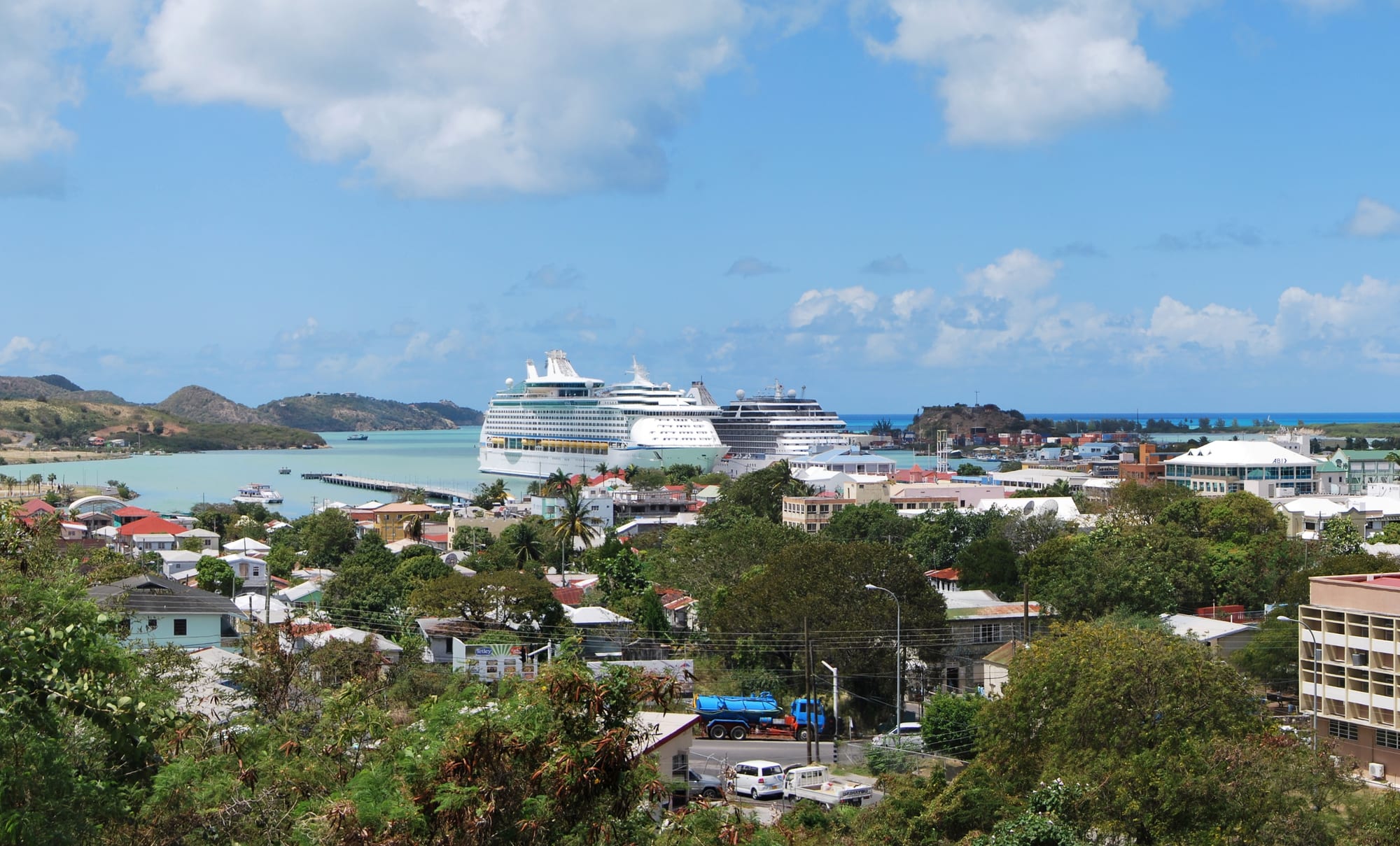
V. C. Bird International Airport is about 5 miles north-east of the city, a short taxi ride, with regular flights from the UK, the US and other Caribbean islands, and links to more than fifty destinations. Cruise ships dock at the quays in the city centre several times a week, and ferries run from Antigua to Barbuda.
🚶 Walkability
Downtown is compact and laid out on a gentle slope, so the quays, the market, the museum and the cathedral are all within an easy walk. The streets are busy on cruise-ship days. Fort James, Dickenson Bay and the outer areas need a minibus, taxi or car.
🛡️ Safety
Antigua and Barbuda is generally safe, with low levels of violent crime against visitors. The usual precautions apply against petty theft and opportunistic burglary of rooms, and parts of St. John's call for care after dark. The low-lying coast of the city is prone to flooding.
Lock valuables away, take a taxi rather than walking through quiet streets at night, and follow storm advice in the hurricane season. Check current official travel advice before travelling.
🌦️ Climate
A tropical savanna climate, warm all year with hot days and warm nights, and relatively little rain. The country's highest recorded temperature, 94.8°F, was measured in August 1995.
- Summer
- hotter and more humid from July to November than the 73–84°F of the dry season, with heavier showers and the hurricane season; rain peaks from September to November
- Winter
- December to April is the cooler, drier season, around 73–84°F with steady trade winds
🤝 Local Customs
Church, family and village anchor social life, and Anglicans are the largest of many Christian denominations. Most people speak Antiguan and Barbudan Creole at home, and nearly everyone also speaks English. Cricket is followed with passion, and Carnival is the high point of the year.
Beachwear belongs on the beach; dress modestly in town and for church on Sunday.
💳 Common Payment Methods
The currency is the East Caribbean dollar, pegged at 2.70 to the US dollar. US dollars are accepted almost everywhere, though change is often given in EC dollars. Cards are widely accepted in shops, hotels and restaurants; cash is useful for minibuses, the market and small eateries.