💰 Budget
Gyumri is cheaper than Yerevan across the board, with modest guesthouse and hotel prices, inexpensive restaurants and short taxi fares. The main additional costs are transport out to the monasteries and the national park, and the train or minibus fare from the capital.
- Daily Budget Midrange
- USD 55–100 (small hotel in the old quarter, restaurant meals, taxis and a half-day trip out)
- Daily Budget Shoestring
- USD 20–35 (guesthouse or hostel, market food and canteens, minibuses and walking)
Carry cash: cards work in hotels and the larger restaurants in the centre but not in the market, in minibuses or in the villages around.
📅 Best Time to Visit
May to early October is the comfortable season on the plateau, with warm days, cool nights and the old quarter at its best for walking. July and August are hot but rarely as heavy as Yerevan. Winter is long and severe here, colder than anywhere else in the country's main cities, with deep snow and short days, though the stone streets under snow are memorable.
⏳ Suggested Number of Days
A day is enough for the historic quarter and the central museums, and two make it unhurried. Adding the monasteries and the high plateau around the city extends the stay to about three days.
- First Visit
- 1–2 days
- With Surroundings
- 2–3 days
🚆 Transportation
The centre and the old quarter are best covered on foot. Minibuses and buses run out to the residential districts and the surrounding villages, and taxis booked by app or hailed in the street are cheap enough that most visitors use them for anything beyond the centre. Trains and intercity minibuses connect the city with Yerevan and with the towns of Shirak.
Roads out to the villages are rough in places and can be blocked by snow in winter, so allow extra time between November and March.
🛬 Airport & Station Connections
Gyumri is about 126 kilometres from Yerevan, roughly two and a half hours by road, and is also reached by train from the capital's railway station. Shirak Airport, about five kilometres south-east of the city, handles a small but growing number of scheduled flights. The land border with Turkey a short distance west is closed, so travel to or from Georgia goes by road through the north. Citizens of the EU, the United States, the United Kingdom, Canada, Australia and many other countries enter Armenia visa-free for a stay of several months, with an e-visa or a visa on arrival available to others.
🚶 Walkability
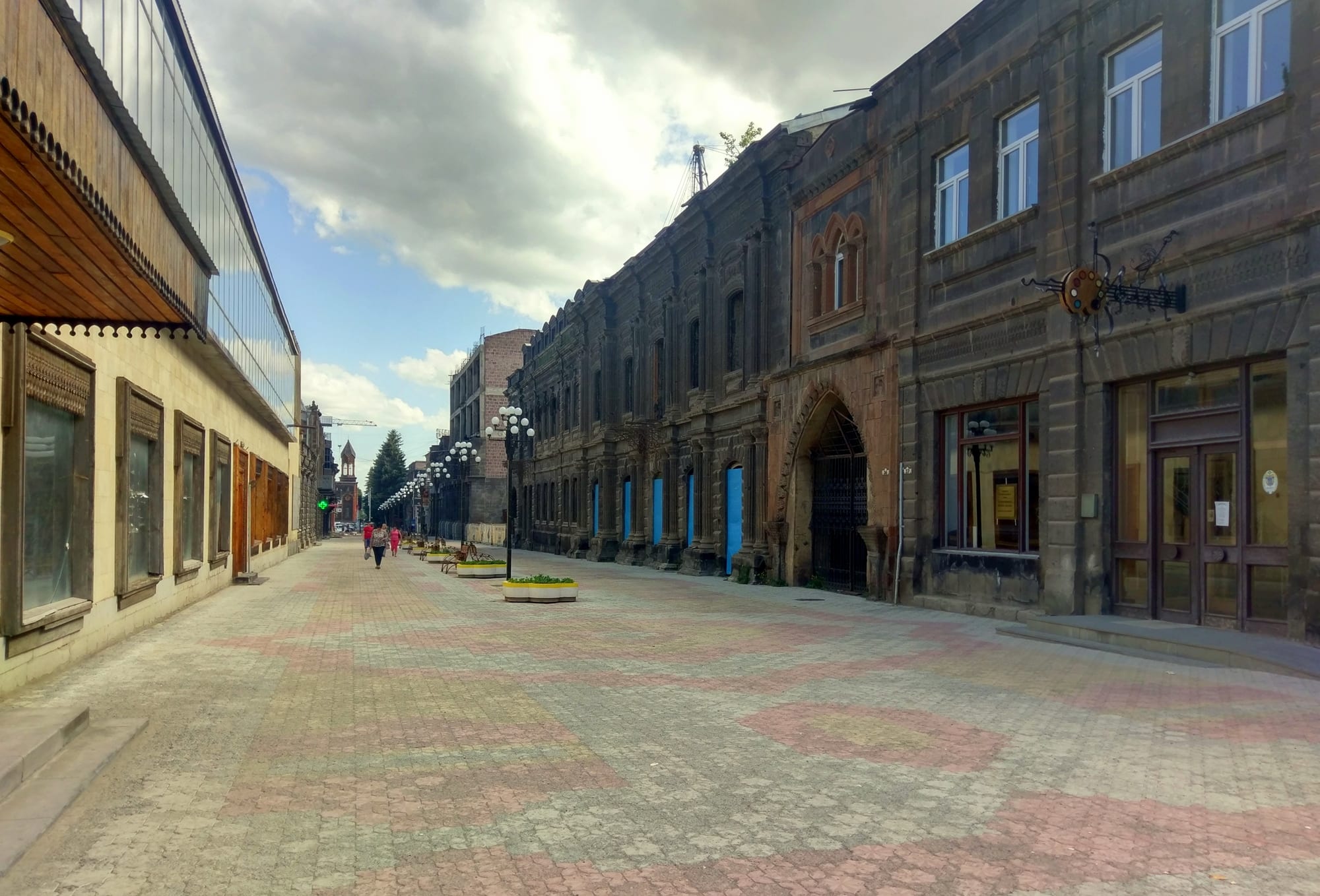
The historic core is flat, compact and made for walking: Vardanants Square, Abovyan Avenue and the museums of the Kumayri district are all within a few hundred metres of each other, and the pedestrian street is the centre of daily life. Pavements in the outer districts are patchy, distances there are long, and ice makes winter walking slow.
🛡️ Safety
Gyumri is a quiet, low-crime city and walking in the centre after dark is normal. The practical hazards are traffic, uneven pavements and ice in winter, and some derelict or half-repaired buildings left from the earthquake that should not be entered. Stray dogs are common in the outer districts. The Turkish border nearby is closed and militarised and is not a place to wander towards.
Avoid unmarked roads and hiking near the eastern and southern borders, and check the current situation before travelling to Syunik. Check current official travel advice before travelling.
🌦️ Climate
A dry, harsh continental climate at about 1,550 metres on an exposed plateau, with the coldest winters of any large Armenian city and warm, sunny summers. Nights are cool even in midsummer, and frost can come early in autumn and late in spring.
- Summer
- warm and dry, usually about 25–32°C by day in July and August, with cool nights
- Winter
- very cold, often around -10 to 0°C from December to February, with lying snow and hard frosts
🤝 Local Customs
Gyumri has a strong local identity and a reputation across Armenia for humour, irony and quick talk, and its dialect is distinctive enough to be quoted in comedy. Hospitality is pressed on visitors as it is everywhere in the country, with long tables and toasts made in turn. Churches expect modest dress and quiet, and the earthquake is remembered in almost every family, so it is spoken of carefully.
Ask before photographing people, damaged housing or the temporary dwellings some families still occupy; tip around 10 per cent in restaurants when no service charge is added.
💳 Common Payment Methods
The currency is the Armenian dram. Hotels, the larger restaurants and supermarkets take cards, and cash machines are easy to find near Vardanants Square, but markets, minibuses, taxis and small bakeries are cash only. Money is best changed in Yerevan or at exchange offices in the centre.