💰 Budget
Coober Pedy is not expensive by outback standards, but everything has been trucked a long way and fuel and groceries cost more than in the south. Underground and above-ground motel rooms, a hostel and caravan parks cover most budgets, and mine tours, museums and a trip out to the Breakaways are the main extras. Long driving days either side of the town add their own fuel bill.
- Daily Budget Midrange
- USD 150–250 (underground or motel room, meals out, mine tours and a guided trip to the Breakaways, a hire car)
- Daily Budget Shoestring
- USD 55–100 (hostel bed or campsite, supermarket food, one mine tour)
Fill the tank here whichever way the journey continues, and buy opal only from established shops, asking for a written description of the stone.
📅 Best Time to Visit
April to September, when days are warm and dry rather than punishing and the nights are cold and clear. Winter is the most comfortable time for walking the Breakaways and taking mine tours. From December to February the heat is extreme, dust storms are possible and outdoor sightseeing becomes unpleasant, though the dugouts stay cool.
⏳ Suggested Number of Days
A night is enough to see the town, go underground once and eat a meal. A second and third allow the desert outside it and a slower look at the opal fields. Most people arrive as part of a long drive along the Stuart Highway rather than as a destination in itself.
- First Visit
- 1–2 days
- With Surroundings
- 2–3 days
🚆 Transportation
The town is small enough to drive across in a few minutes, and Hutchison Street is where almost everything is. A vehicle, a tour or a bicycle is needed for the Breakaways and the outlying fields, and the road out to them is partly unsealed. Guided tours cover the mines, the churches and the desert for those arriving by coach. The Adelaide to Darwin railway passes about 40 kilometres west of the town, where the Ghan calls at Manguri Siding once a week in each direction, and there is an airport on the town's edge.
Unsealed roads become impassable after rain and can be closed; check conditions locally, keep well clear of mine workings when driving off the bitumen, and watch for kangaroos and cattle at night.
🛬 Airport & Station Connections
Coober Pedy sits on the sealed Stuart Highway roughly 850 kilometres north of Adelaide, a drive of eight to nine hours, and about 690 kilometres south of Alice Springs. Daily coaches from Adelaide stop in the town, and the airport on the edge of the settlement has flights to Adelaide. Most visitors arrive by car or campervan as part of a longer crossing of the continent.
🚶 Walkability
The centre is flat and walkable: shops, cafés, museums and most accommodation lie within a few hundred metres of Hutchison Street. Beyond the built-up streets walking becomes genuinely dangerous, because the surrounding fields are pitted with unfenced and unmarked shafts. Footpaths are patchy, there is little shade, and the heat makes even short walks hard work for much of the year.
🛡️ Safety
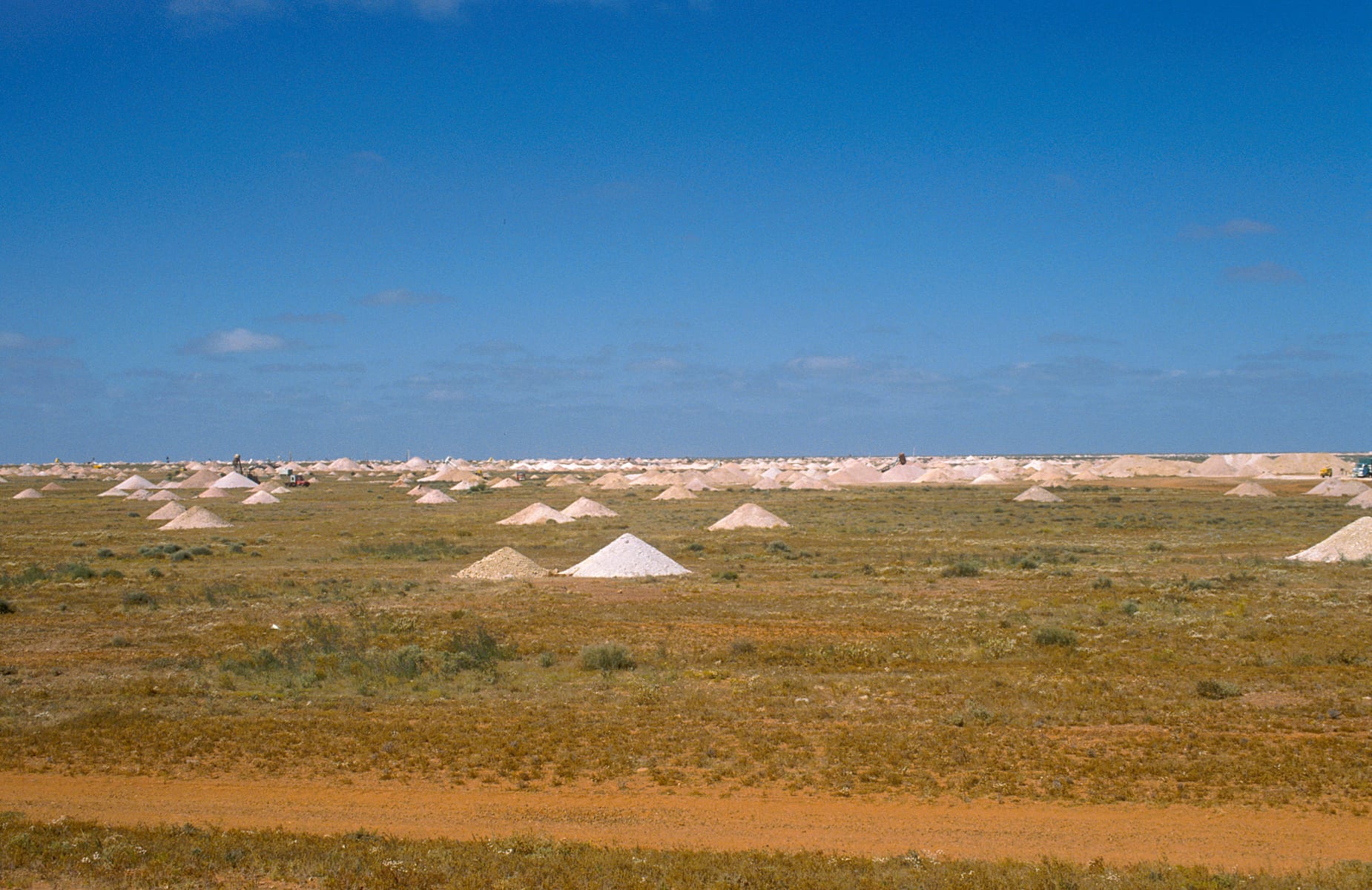
The town is quiet and the risks are physical rather than criminal. The serious one is open mine shafts: more than 250,000 shaft entrances surround the settlement, many of them unmarked or abandoned, and walking off the roads and tracks is dangerous. Extreme heat, dehydration, dust and the long empty distances either side of the town are the other hazards.
Stay on marked tracks and roads in the opal fields, never step backwards while taking photographs, do not enter shafts or abandoned workings, and carry plenty of water in the car. Check current official travel advice before travelling.
🌦️ Climate
Desert climate: very hot summers, mild sunny winter days, cold nights and little rain, which falls unpredictably at any time of year. In the southern hemisphere summer falls in December to February and winter in June to August. Dust storms occur in dry, windy weather, and the daily swing between afternoon and dawn is large.
- Summer
- extremely hot and dry — days commonly 35–40°C and sometimes above 45°C, with warm nights
- Winter
- mild and clear by day, cold at night — days around 19–21°C, with cold nights
🤝 Local Customs
This is Antakirinja Matu-Yankunytjatjara country, and the town's population has come from dozens of countries, with Greek, Italian, Serbian and Croatian families among the strongest mining communities. Manners are direct and informal, and tipping is not expected in Australia. Mining claims are private property and are worked by people who take trespass seriously. Noodling, or searching through mine waste for missed opal, is allowed only where signs say so.
Ask before photographing people or their dugouts, keep off claims and out of shafts, and respect requests about photography at Aboriginal sites and in the underground churches. The legal drinking age is 18.
💳 Common Payment Methods
The currency is the Australian dollar. Cards and contactless payment are taken in the shops, roadhouses, motels and tour offices, and there are cash machines in the town, though it is worth carrying some cash for small purchases and in case connections drop out. Opal is sold in shops along the main street at negotiable prices, and a written description of any stone bought is worth asking for.