💰 Budget
Hobart is not a cheap city. Accommodation is limited and prices climb steeply from December to March, around the New Year race finish and during the midwinter festival, when rooms are scarce at any price. Eating out, museum entry and a hire car are the other main costs, while the markets, the waterfront and the mountain tracks cost nothing.
- Daily Budget Midrange
- USD 170–300 (hotel or apartment, restaurant meals, museum entry, a hire car)
- Daily Budget Shoestring
- USD 80–130 (hostel bed, market food and self-catering, city buses and the ferry)
Book accommodation months ahead for summer and for festival weekends, and treat the Saturday market, the botanical gardens and the walks on the mountain as the free core of a visit.
📅 Best Time to Visit
December to March has the long days, the warmest weather, the regattas and the festivals, and also the crowds and the highest prices. Autumn, from March to May, is settled and quiet, with colour in the highlands inland. Winter is cold, short-dayed and cheap, with snow on the mountain and the midwinter festival in June.
⏳ Suggested Number of Days
Two or three days suits the city itself. Five to seven allow the peninsulas, islands and forests within a day's drive, which is why many visitors base themselves here for longer. Short winter days slow everything down, and summer weekends need booking well ahead.
- First Visit
- 2–3 days
- With Surroundings
- 5–7 days
🚆 Transportation
Metro Tasmania buses run from the city bus mall on Elizabeth Street to the suburbs, frequently towards Glenorchy and the eastern shore and sparsely in the evenings and at weekends. A fast ferry crosses and runs up the Derwent from the waterfront. There are no trains or trams. Most visitors hire a car for trips out of the city; parking in the centre is metered and tight, and the road to the summit of the mountain is sealed but narrow and often closed by ice or wind.
A car is worth having only for the region beyond the city, since the centre is walkable; on country roads, drive slowly between dusk and dawn because wallabies, wombats and devils are often on them.
🛬 Airport & Station Connections
Hobart Airport is at Cambridge, about 17 kilometres north-east of the centre, roughly twenty minutes by road, with shuttle buses and taxis at the door and flights from the mainland capitals. The Spirit of Tasmania car ferry from Geelong docks at Devonport on the north coast, about 280 kilometres away, three to four hours' drive. Cruise ships tie up at Macquarie Wharf beside the city centre.
🚶 Walkability
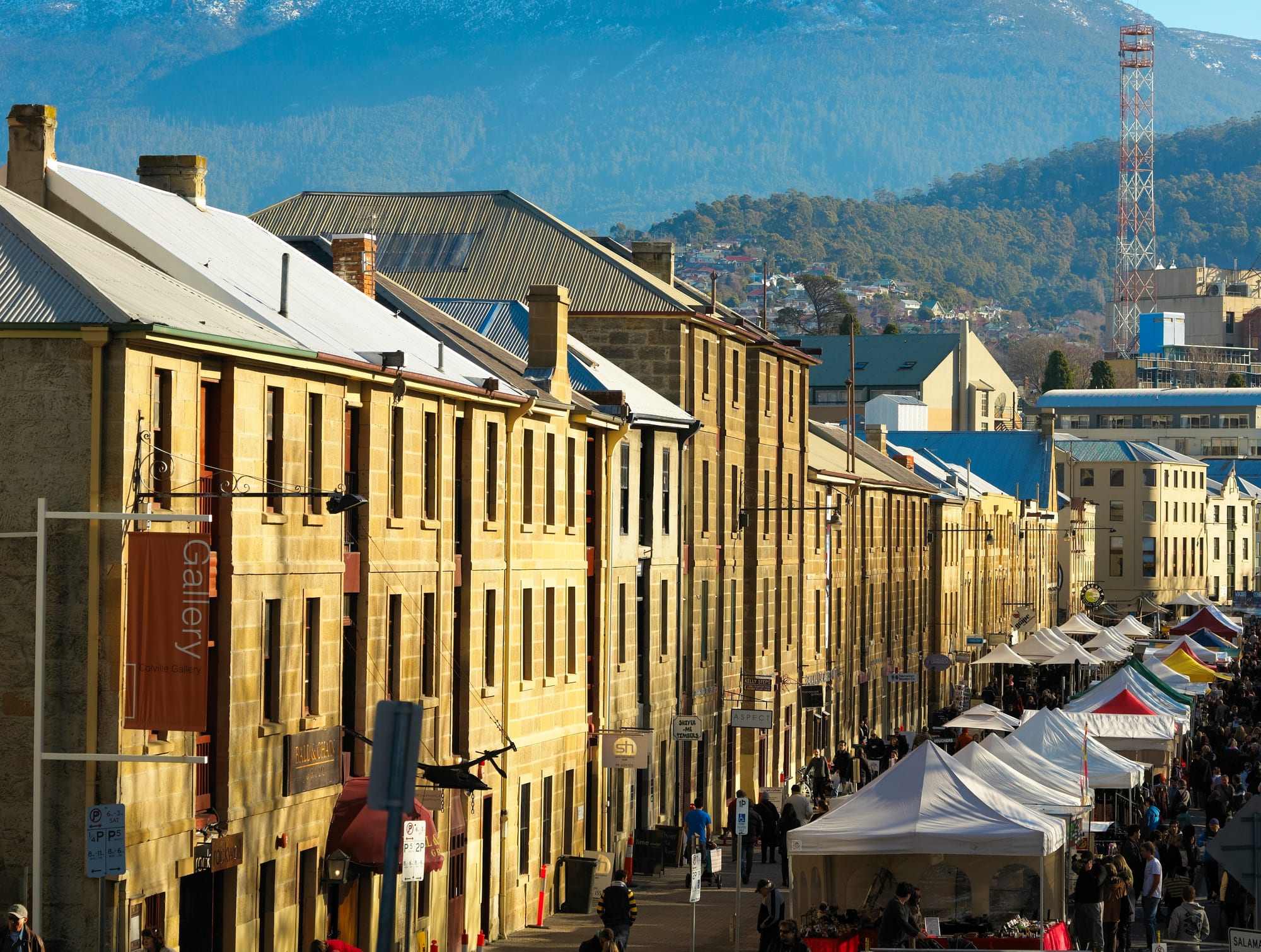
One of the more walkable Australian capitals. The centre, the waterfront, Salamanca and Battery Point make a compact circuit, and North Hobart is about twenty minutes on foot from the middle of town. The city climbs steeply from the water, so many streets are hard work, and Kelly's Steps and the rivulet path are the useful shortcuts. Footpaths are slippery after winter rain and frost.
🛡️ Safety
Hobart has low rates of crime and the problems of larger cities are small here. The real risks are environmental. The mountain is far colder than the city, with cloud, strong wind and snow possible in any month, and walkers are regularly caught out in light clothing. Ocean beaches have cold water and rips, the Derwent is colder than it looks, and bushfire is a serious danger in hot, dry summers. Country roads are narrow and winding, with wildlife on them at night.
Carry warm, waterproof layers for the mountain even on a summer morning, check fire danger ratings and park alerts in summer, and tell someone the route before a long walk. Check current official travel advice before travelling.
🌦️ Climate
Cool temperate and maritime, with four distinct seasons and changeable weather. Hobart is one of the driest of the Australian capitals, though rain is spread thinly through the whole year. The mountain makes its own weather, and a warm morning can turn cold within the hour.
- Summer
- December to February is summer in the southern hemisphere — mild, typically 12–23°C, with long evenings and occasional hot, dry days above 30°C
- Winter
- June to August — cool and damp, about 4–12°C, with frosts, short days and snow on the mountain above the city
🤝 Local Customs
Manners are informal and unhurried, and first names are used at once. Tipping is not expected and prices include the 10 per cent goods and services tax. Tasmanians call other Australians mainlanders and are used to being left off maps of the country. Aboriginal names are in official use beside English ones, the mountain being kunanyi and the city nipaluna in palawa kani, the revived Tasmanian Aboriginal language.
Fresh fruit, vegetables, honey and plants may not be brought into Tasmania, and quarantine bins stand at the airport and the ferry terminal for them. Dress in layers whatever the forecast, carry a raincoat, and expect identification to be asked for when buying alcohol.
💳 Common Payment Methods
The currency is the Australian dollar. Cards and contactless payment are accepted almost everywhere, including on buses and at most market stalls, and some venues no longer take cash at all. Cash machines are in the centre and in the suburban shopping strips.