💰 Budget
Minsk is the most expensive place in Belarus but still cheap by European standards. Central hotels and restaurants are the main costs; canteens, the metro and museums cost little. Western sanctions mean many foreign cards do not work, so cash in euros or US dollars to exchange is essential backup.
- Daily Budget Midrange
- USD 60–120 (central hotel, restaurant dinners, museum tickets, a day trip by hired car or tour)
- Daily Budget Shoestring
- USD 25–45 (hostel or budget hotel, canteen meals, metro and buses)
Exchange money at banks in the city, and check before travelling whether a foreign card will work at all.
📅 Best Time to Visit
May to September, when the parks along the Svislach are green, outdoor cafés open and day trips are easiest; Victory Day in May and Independence Day on 3 July bring the city's biggest public occasions. Winter is cold and snowy but the museums, theatres and metro make the city workable all year.
⏳ Suggested Number of Days
Two or three days cover the centre at an easy pace. Four or five allow for the memorials and castles beyond the city, which are best reached by hired car or organised tour and each take most of a day.
- First Visit
- 2–3 days
- With Surroundings
- 4–5 days
🚆 Transportation
Minsk is the only city in Belarus with an underground metro, opened in 1984, now with three lines and used by about 800,000 passengers on a typical day. Buses, trolleybuses and trams cover the rest of the city, fares are low, and app-based taxis are inexpensive and widely used. Visa and Mastercard cards can be used for contactless fares where foreign cards work.
Police at metro stations may scan large bags; stay calm and polite if questioned.
🛬 Airport & Station Connections
Minsk National Airport lies 42 km east of the city, linked by express bus and taxi to the central coach station. The central railway station is the hub of the national network, with trains to the other Belarusian cities and to Moscow, and intercity buses run to Brest, Grodno, Vilnius and Warsaw. Belavia has been banned from the European Union since 2021, so most flights go east and south.
🚶 Walkability
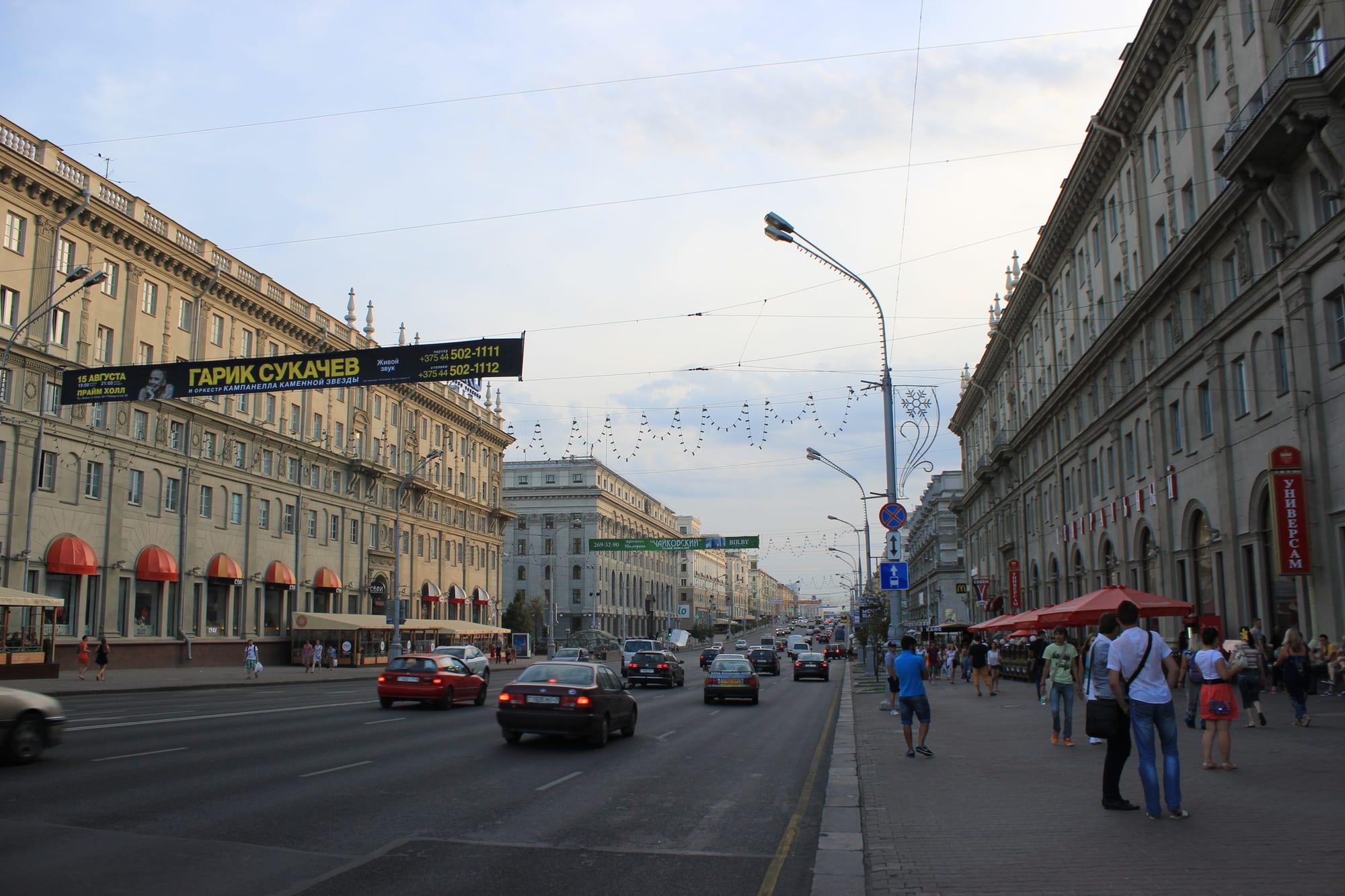
The historic centre — the Upper Town, the Trinity Suburb and the riverside parks — is compact and pleasant on foot. Independence Avenue and the Soviet-era districts are laid out on a large scale, with long blocks and wide roads usually crossed by underpasses, so the metro is the practical way to cover distances.
🛡️ Safety
Setting aside politics, Belarus has low street crime and is an orderly place to travel. The capital is where political risk is sharpest: the authorities detain people, including foreigners, on vague charges, any gathering can be treated as a protest, and photographing government buildings, security sites or police can lead to questioning. The police presence on the streets and in the metro is heavy. Several Western governments advise against all or all-but-essential travel to Belarus.
Carry a passport at all times, avoid anything touching on politics, do not photograph officials or security sites and stay away from any public gathering. Check current official travel advice before travelling.
🌦️ Climate
A warm-summer humid continental climate, with weather that is often unpredictable as Atlantic and continental air meet. Winters are cold and snowy; summers are mild to warm, with showers and thunderstorms.
- Summer
- mild to warm — July averages about 19°C, with occasional hot spells
- Winter
- cold and snowy — January averages about −4°C
🤝 Local Customs
Manners are formal with strangers. Russian is the language of daily life in the city, though Belarusian is understood as well. Tipping of up to 10 per cent for table service is common but not compulsory. Guests bring flowers or something sweet. Modest dress is expected in churches.
Never photograph government buildings, police or the security services, and keep political opinions to yourself in public.
💳 Common Payment Methods
The currency is the Belarusian ruble (BYN). Cards and contactless payment are widely accepted in Minsk, but foreign cards are often blocked by sanctions, so bring enough cash in euros or US dollars to exchange at banks and exchange offices for the whole stay.