💰 Budget
Costs follow national policy rather than local prices: most visitors pay the Sustainable Development Fee of USD 100 per person per night on top of accommodation, food and transport, and many book through a licensed Bhutanese operator who provides guide and driver. Bumthang has fewer luxury hotels than Paro or Punakha, and most stays are in comfortable mid-range lodges and farmhouses, so the daily figure is steadier here.
- Daily Budget Midrange
- USD 400–550 (the fee, a mid-range lodge, guide and driver, restaurant meals, textiles and local produce)
- Daily Budget Shoestring
- USD 300–400 (the nightly Sustainable Development Fee, a simple guesthouse or farmstay, canteen meals and shared transport)
Yathra bought from weavers in the valley costs less than the same cloth in Thimphu's shops; visitors from India travel under separate, much cheaper rules.
📅 Best Time to Visit
Autumn, from late September to November, is the clearest season and holds the valley's big festivals. Spring, from March to May, brings blossom and rhododendron on the passes. Winter is cold, with snow and frozen ground, and many lodges are quiet; the monsoon months from June to August are wet, with cloud on the passes and landslides on the roads.
⏳ Suggested Number of Days
Two days cover the main valley's temples and the town. Three or four allow the higher side valleys and a slower pace at altitude. Festival dates, the long drives in and out, and whether the flight is used all change the number.
- First Visit
- 2 days
- With Surroundings
- 3–4 days
🚆 Transportation
The town is small and the main temples of the Chokhor valley are within a few kilometres, linked by one road and by footpaths across the fields. Tourist travel is normally in the operator's vehicle with a driver; the higher valleys of Tang and Ura need one, as roads are rough and public transport is minimal. Bicycles are available in the valley.
Walking between Jambay, Kurjey and Tamshing along the river is a straightforward alternative to driving between them.
🛬 Airport & Station Connections
Jakar is reached by the lateral road, about two hours east of Trongsa over the Yotong La and a long day from Punakha or Thimphu. Domestic flights from Paro land at Bathpalathang on the valley floor, a few minutes from the town, and cut out a day of mountain driving. The road east continues over the Thrumshing La to Mongar and eastern Bhutan.
🚶 Walkability
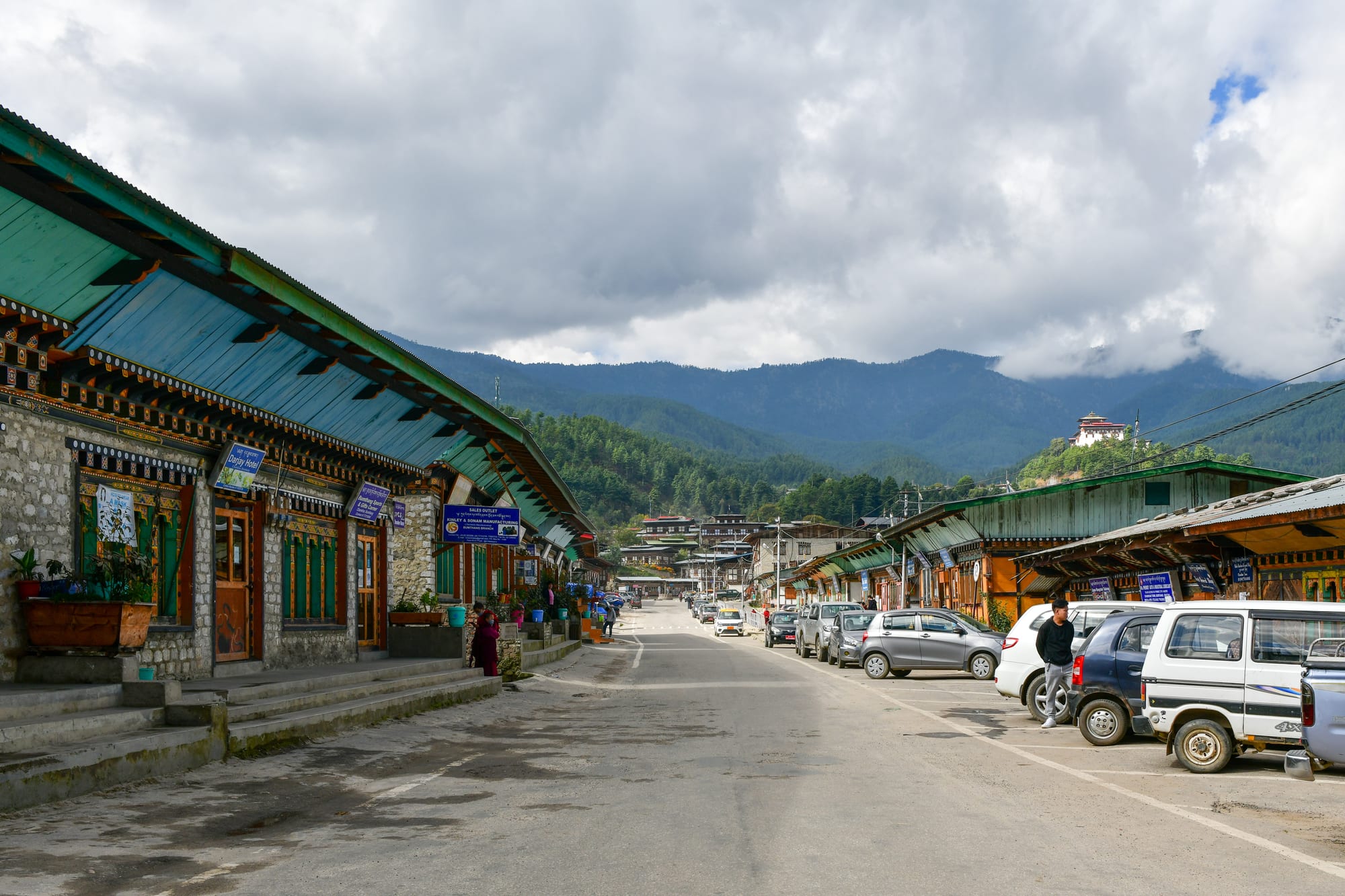
The bazaar street is walked end to end in ten minutes, and the paths to the dzong and down to the river start from it. Beyond that, the valley is spread over several kilometres of road without pavements, though the walks between the main temples are level and pleasant. At about 2,600 metres, climbs feel harder than they look.
🛡️ Safety
Bumthang is very safe, with very little crime. The practical risks are cold, altitude, and long mountain roads with ice on the passes in winter and landslides in the monsoon. Medical facilities are basic: there is a hospital in Jakar, but serious cases are moved to Thimphu.
Carry warm clothing for the evenings, allow extra time for road delays, and take the first walks gently at altitude. Check current official travel advice before travelling.
🌦️ Climate
A cold highland climate, the coldest that most visitors to Bhutan experience, with a short growing season, bright dry winters and cool, cloudy summers. Frost is possible for much of the year at night.
- Summer
- cool and damp — June to August days are generally 15–22°C, with monsoon cloud and rain
- Winter
- cold and dry — December to February days reach about 8–12°C, nights fall well below freezing and snow falls in the valley
🤝 Local Customs
Bumthang's temples are living places of pilgrimage rather than monuments: dress modestly with covered arms and legs, remove shoes and hats at shrine doors, and leave cameras outside the inner rooms. Walk clockwise around chortens, prayer wheels and temples. Bumthangkha, the valley's own language, is spoken at home, though Dzongkha and English are widely understood.
Ask before photographing people, monks or dances, and do not step over offerings, thresholds or ritual objects.
💳 Common Payment Methods
The currency is the ngultrum, pegged one to one with the Indian rupee, which also circulates. Jakar has banks and ATMs on the main street, but machines can be empty and card acceptance is limited to larger hotels, so cash brought from Thimphu is worth carrying. Weavers and farm stalls deal in notes or mobile QR payments.