💰 Budget
Sarajevo is the dearest city in the country and still cheap by European standards. Grill food, pies, coffee and public transport cost little; hotel prices are the main expense and rise during the film festival in August and the ski season, when visitors base themselves in the city for the mountains.
- Daily Budget Midrange
- USD 90–160 (mid-range hotel, restaurant dinners, museum tickets, a taxi or a guided trip)
- Daily Budget Shoestring
- USD 45–70 (hostel bed, ćevapi and pies, trams and trolleybuses)
Carry convertible marks in cash for bakeries, grill houses and public transport; many of the old town's sights, from the bazaar lanes to the Yellow Bastion, cost nothing.
📅 Best Time to Visit
May, June and September are the most comfortable months for walking the city. August is warm and busy with the film festival. Winter brings snow, the ski season on the nearby Olympic mountains and the winter festival, but also fog in the valley.
⏳ Suggested Number of Days
Two or three days cover the city at an easy pace. Allow four or five to add the mountains, the springs at Ilidža and a trip to another town. Winter visits for skiing need longer, and the steep hillside quarters take more time on foot than the map suggests.
- First Visit
- 2–3 days
- With Surroundings
- 4–5 days
🚆 Transportation
Sarajevo is long and narrow, and one tram route runs the length of the valley from the old town to Ilidža, with seven tram lines supplemented by trolleybuses and buses. Taxis are inexpensive in marked, metered cabs. A cable car climbs Trebević from near the old town. A car is useful only for the mountains and other towns.
Check whether a bus leaves from the main bus station beside the railway station or from the East Sarajevo station at Lukavica, which serves Republika Srpska and Serbia.
🛬 Airport & Station Connections
Sarajevo International Airport is at Butmir, about 12 kilometres west of the centre; trolleybuses, an airport bus and taxis link it with the city. Intercity buses arrive at the main bus station next to the railway station, and trains run south to Mostar. Direct buses also run from Croatian cities such as Split, Dubrovnik and Zagreb.
🚶 Walkability
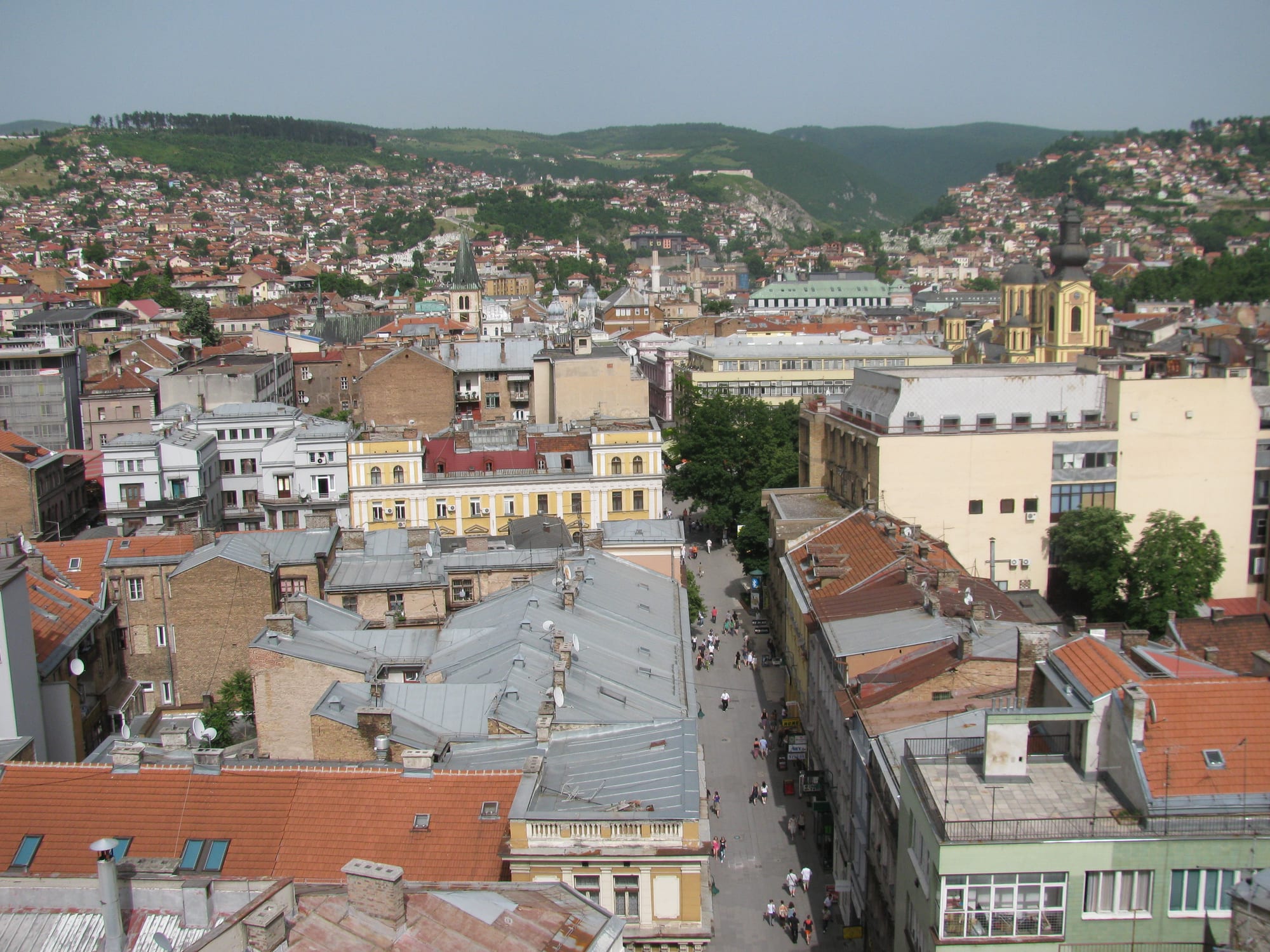
The centre is easy on foot: the Baščaršija, Ferhadija, the cathedrals and the riverbank sights lie within a few minutes of each other, and much of the core is pedestrianised. The hillside quarters above the old town are steep, with stepped lanes, and the newer districts to the west are reached by tram. Pavements can be icy in winter.
🛡️ Safety
Everyday crime is low and violent crime against tourists is rare; the main nuisances are pickpocketing in Sarajevo's tourist crowds and taxi overcharging — use marked, metered cabs or an app. Pickpockets are active in the city. The hills around the city were front lines, and marked or suspected minefields remain off the paths in parts of the surrounding mountains. Air pollution is a major issue.
Keep to marked trails in the mountains and never enter abandoned buildings or land marked with mine warning signs. Check current official travel advice before travelling.
🌦️ Climate
The city lies at about 518 metres in a valley ringed by mountains, with a climate between oceanic and continental: warm summers, cold winters with regular frost, and rain spread through the year. Air pollution is a serious problem.
- Summer
- warm — August, the warmest month, averages about 21°C, and the temperature passes 30°C on about 32 days a year
- Winter
- cold — January averages about 0.6°C, and the temperature drops below freezing on about 83 days a year
🤝 Local Customs
Coffee is a slow social ritual, served in a džezva, and visitors are expected to linger. The city is home to Muslims, Orthodox and Catholic Christians and a small Jewish community: modest dress is expected in mosques and churches.
Let locals raise the subject of the war rather than probing, and treat cemeteries, memorials and the Sarajevo roses in the pavement with care.
💳 Common Payment Methods
The currency is the convertible mark (KM, BAM), pegged to the euro. Cards are widely accepted in hotels, shops and larger restaurants; cash is needed for bakeries, grill houses, markets and public transport. ATMs are plentiful in the centre. Euros are taken in some places, at a poor rate.