History
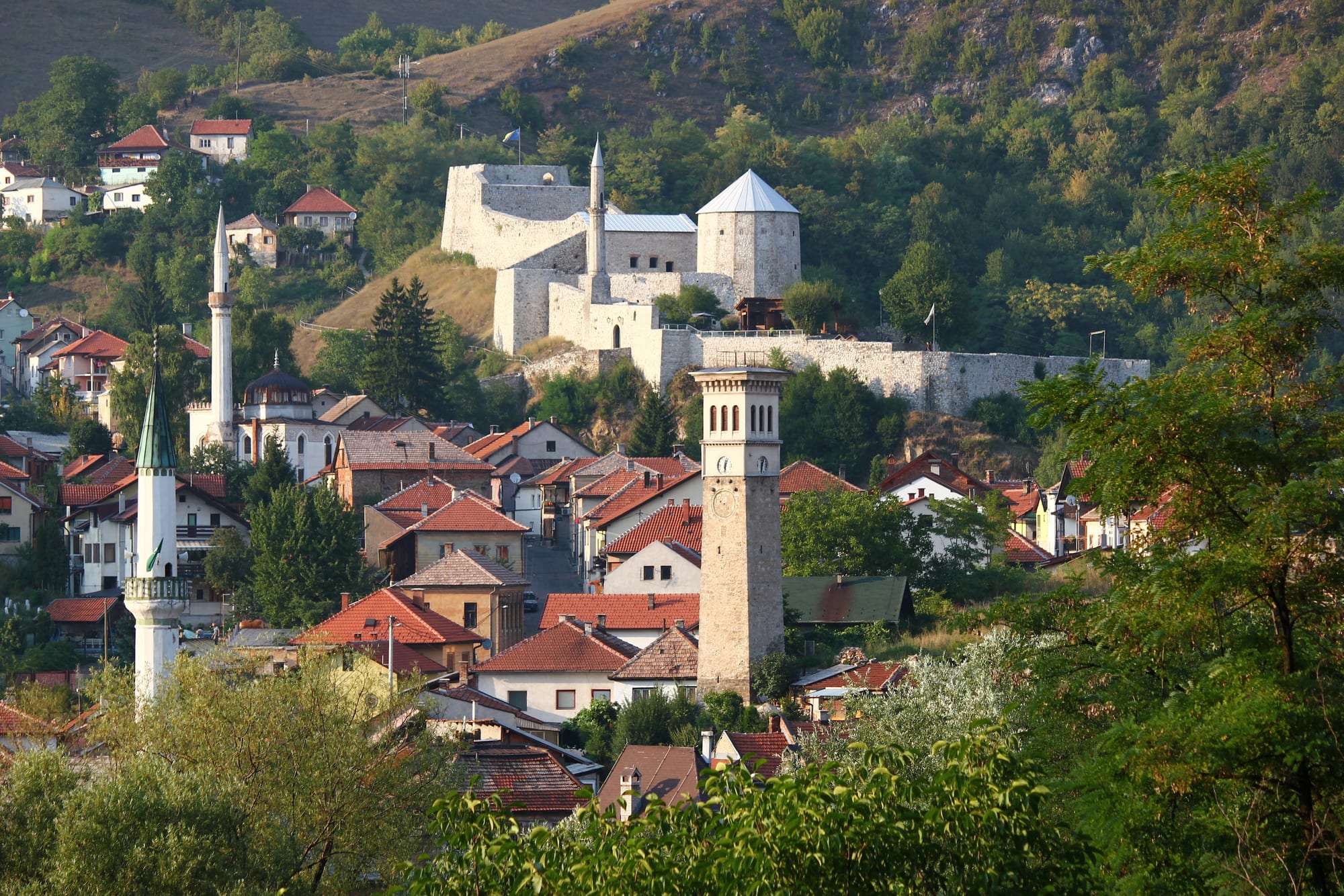
The Travnik area was settled in the Bronze Age and has links with the Roman colony at today's Zenica, 30 kilometres away. In the Middle Ages it was the župa of Lašva, a province of the Bosnian Kingdom, and the castle above the town was built in the late 14th or early 15th century, probably under the kings Tvrtko II or Ostoja, as one of several fortresses meant to stop the Ottoman advance. It was built too late. After the conquest much of the local population converted to Islam, and the Ottomans expanded the castle into a fortress with watchtowers.
Travnik's great period began in 1699, after Prince Eugene of Savoy's soldiers set Sarajevo on fire. The town became the capital of the Ottoman province of Bosnia and the residence of its viziers until 1850, an important centre of government for the empire's whole western frontier, where France and Austria opened consulates. That world of viziers and consuls in the Napoleonic era is the setting of Ivo Andrić's novel Travnik Chronicle, also known as Bosnian Chronicle.
Under Austria-Hungary the town gained industry but lost importance, and a fire started by a spark from a locomotive in September 1903 destroyed most of its buildings. Travnik grew slowly while Sarajevo and Zenica expanded: in 1991 it had about 30,000 people. During the 1990s war it largely escaped fighting with Serb forces and took in refugees from Jajce, but local Bosniak and Croat forces fought each other in the area until the Washington Agreement of 1994. After the war it became the capital of the Central Bosnia Canton.