💰 Budget
Gaborone is the cheapest place in Botswana to spend a night, with guesthouses, mid-range hotels and self-catering flats at prices well below the safari camps of the north. Minibuses are very cheap, food from stalls and supermarkets costs little, and the main extra is a hire car, which most visitors need to reach the reserves and villages around the city.
- Daily Budget Midrange
- USD 120–260 (business or mid-range hotel, restaurant meals, a hire car, reserve entry)
- Daily Budget Shoestring
- USD 40–80 (guesthouse room, minibus fares, market and supermarket food)
Weekday hotel rates are set for government and business visitors and often drop at weekends; the museum, the Main Mall and Kgale Hill cost little or nothing.
📅 Best Time to Visit
May to September is the pleasant time: dry, sunny days around 20–25°C, cold nights, and clear air for walking Kgale Hill. October and November are very hot before the rains break. The rainy months from December to March bring afternoon thunderstorms, green bush and the fullest dam, and the city empties around the December holidays.
⏳ Suggested Number of Days
The city's own sights fit comfortably into a day or two. Three or four days allow the reserves south of town and the old chiefdom villages within an hour's drive. Anyone using Gaborone only as an arrival point for the Kalahari or the north needs less.
- First Visit
- 1–2 days
- With Surroundings
- 3–4 days
🚆 Transportation
Shared minibuses, called combis, run fixed routes between the ranks in the centre and the suburbs for a flat fare, and are the way most residents travel; taxis wait at the malls and hotels, and ride-hailing operates in the city. The reserves, the dam and the villages around Gaborone are awkward without a vehicle, and hire cars are available at the airport and in town.
Traffic drives on the left, and the roads out of the city carry cattle, donkeys and goats; drivers should keep speeds down and avoid intercity driving after dark.
🛬 Airport & Station Connections
Sir Seretse Khama International Airport lies about 15 km north of the centre, 20 minutes by road, with flights to Johannesburg and other regional cities and onward services to Maun and Kasane. Many visitors instead arrive overland: the South African border at Tlokweng Gate and Pioneer Gate near Lobatse is close, and coaches and minibuses run to Johannesburg, Francistown and the larger villages.
🚶 Walkability
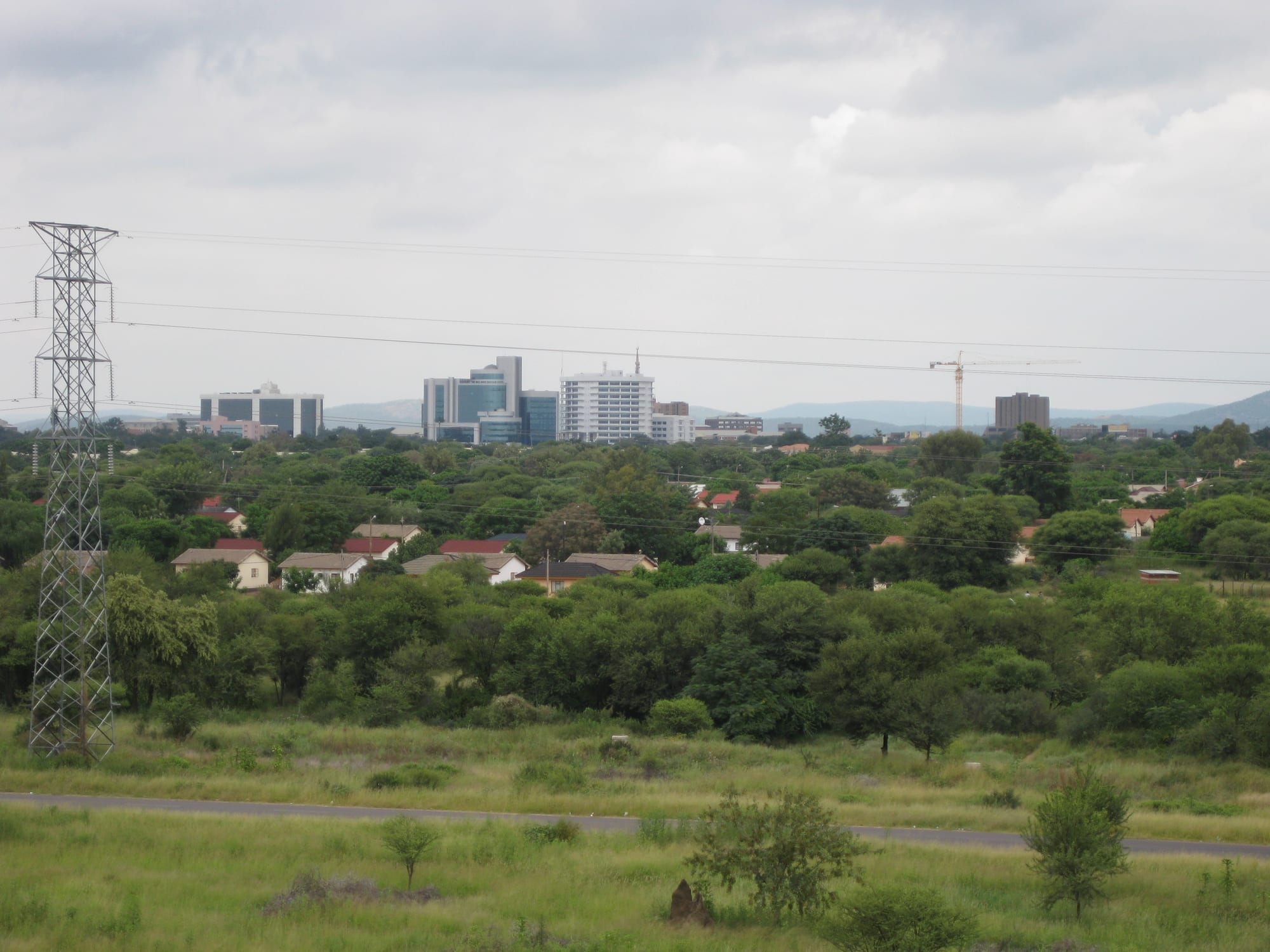
The Main Mall, the government offices and the museum form a small area that is easy and pleasant on foot. Beyond it the city was planned around the car: districts are separated by wide roads, roundabouts and stretches of open bush, pavements are patchy, and distances between the malls are long. Walking is best done early or late in the day because of the heat, and after dark most people take a taxi.
🛡️ Safety
Gaborone is calm by the standards of the region, and violent crime against visitors is uncommon. The ordinary risks are bag-snatching, pickpocketing in crowded ranks and malls, theft from parked cars and house burglary. Poorly lit streets and open ground between districts are best avoided on foot at night, and drink-driving makes weekend roads dangerous.
Carry recovery gear, two spare tyres, extra fuel and water for the Kalahari parks, leave a route plan with the park office, and never walk outside camp at night. In the city, keep bags closed in crowds, leave nothing visible in a parked car, and take a taxi after dark. Check current official travel advice before travelling.
🌦️ Climate
Semi-arid and continental, on a plateau around 1,000 m above sea level. Rain falls almost entirely in thunderstorms between November and April, and the rest of the year is dry and sunny with a wide gap between day and night temperatures. In the southern hemisphere summer runs December to February and winter June to August.
- Summer
- hot, often 30–35°C by day, humid before afternoon thunderstorms; warm evenings
- Winter
- dry and bright, around 20–25°C by day, with nights near or below 5°C and occasional frost
🤝 Local Customs
Greetings matter: dumela rra and dumela mma, followed by an enquiry after the other person's health, come before any request or transaction, and a light two-handed handshake is usual. Dress is modest and neat, especially for church, offices and any visit to a kgotla, where a chief's court is still an active institution. Elders are addressed respectfully and photographs of people should be asked for first.
Tipping is not obligatory but about 10 per cent is welcome in restaurants; alcohol is sold under restricted hours and taxed heavily, and government buildings and the airport should not be photographed.
💳 Common Payment Methods
The currency is the Botswana pula (BWP), divided into 100 thebe. Cards are taken in hotels, supermarkets, malls and fuel stations across the city, and ATMs are common. Cash is needed for minibuses, market stalls, craft sellers and small shops in the surrounding villages, and some safari operators quote in US dollars.