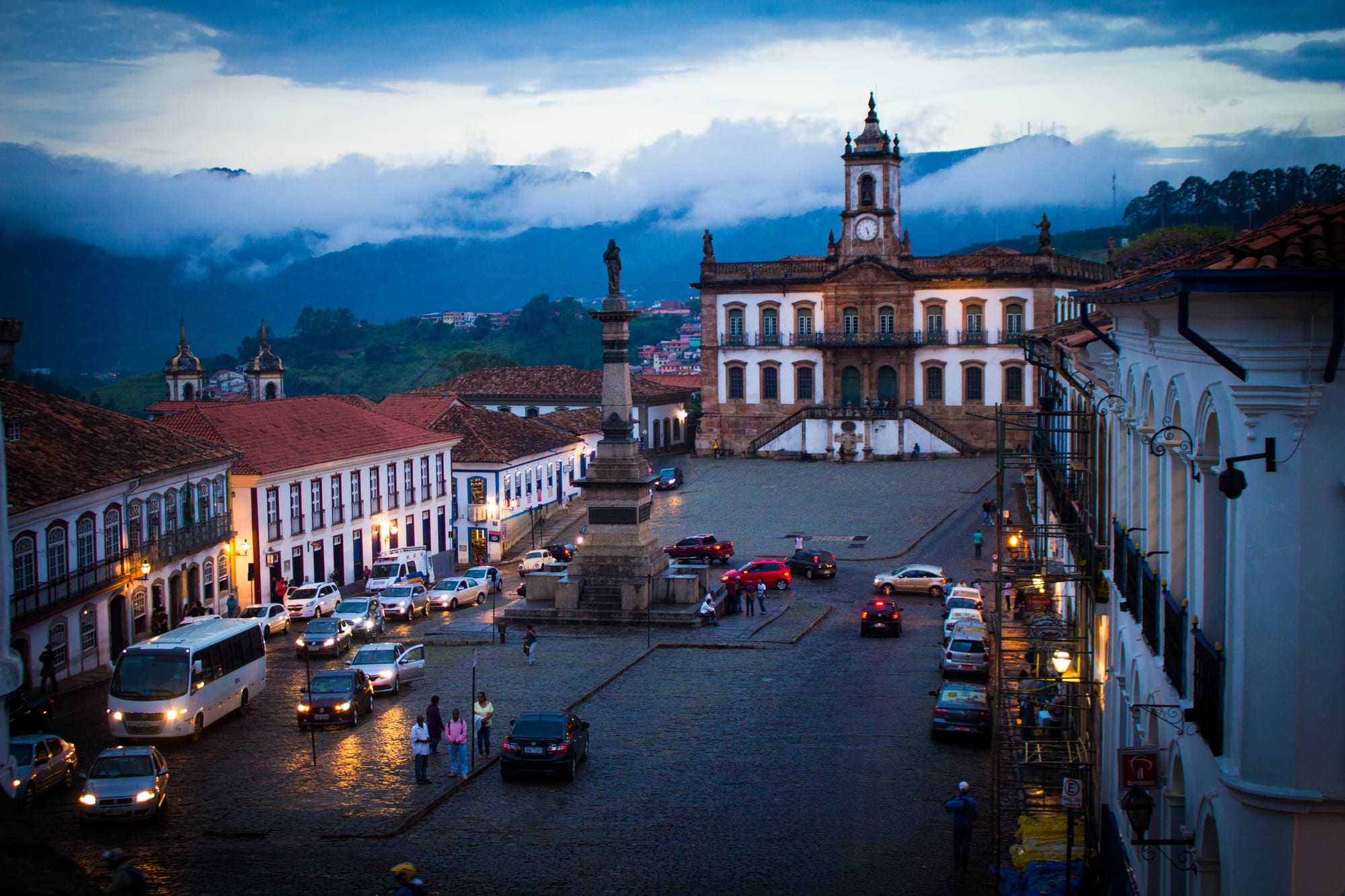
💰 Budget
Ouro Preto is good value by Brazilian standards. Pousadas in colonial houses, plain hostels and student-priced bars keep costs low, and the self-service lunch is cheap and filling. Churches, museums and mines each charge a separate entry, which adds up over a few days. Rooms are dearer and scarcer at Carnival, Holy Week and during the winter festival.
- Daily Budget Midrange
- USD 70–140 (colonial-house pousada, restaurant dinners, church and museum entries, a mine tour)
- Daily Budget Shoestring
- USD 30–50 (hostel or simple pousada, self-service lunches, walking and local buses)
Book early for Carnival and Holy Week, and wear sturdy shoes; the squares, streets and views are free.
📅 Best Time to Visit
April to September is the dry season, with sunny days and cool nights, the best time for walking the steep streets and visiting the hills; June and July are the coldest months and bring occasional frost. Summer, October to March, is warm and wet. Carnival and Holy Week are the town's busiest weeks.
⏳ Suggested Number of Days
Two or three days are enough to see the town's churches, museums and a mine at an unhurried pace. Allow four or five to add the neighbouring colonial towns and the hills around them. The steep streets and separate church opening times make the town slower to see than its size suggests.
- First Visit
- 2–3 days
- With Surroundings
- 4–5 days
🚆 Transportation
The historic centre is small, and walking is the most practical way to get around it. City buses run to the outer neighbourhoods and to Mariana, and taxis and app rides are available. A car helps for the state park, Lavras Novas and Congonhas, but parking in the old centre is difficult and the streets are steep and narrow.
Drive the winding, unlit mountain roads by day, and leave a car at the inn rather than in the centre.
🛬 Airport & Station Connections
Most visitors arrive through Belo Horizonte, whose main airport is at Confins, north of that city; from there the journey continues by car or bus. Buses from Belo Horizonte arrive at the bus station on the north-west edge of town. Mariana is about 18 km to the east.
🚶 Walkability
Everything in the centre is within walking distance, but almost nothing is level: the streets climb and drop steeply between churches on the hilltops, and the cobbles are uneven and slippery when wet. Good shoes are essential, and people with limited mobility will find much of the town hard going.
🛡️ Safety
Brazil has high rates of crime, including violent crime, and it is the main practical concern for visitors — though very unevenly distributed. Ouro Preto itself is generally calm. The real hazards are the steep, slippery cobbles, especially in rain, and the winding mountain roads at night. Crowds at Carnival bring the usual risk of pickpocketing.
Wear grippy shoes, keep valuables close in festival crowds, and avoid driving the mountain roads after dark. Check current official travel advice before travelling.
🌦️ Climate
A highland climate at about 1,100–1,200 metres, with humid summers, dry winters and mild temperatures through the year. Summer is December to February and is the rainy season; winter, June to August, is dry, with frost on some nights.
- Summer
- warm and wet, the rainy season; the record high, 33.9°C, was set in October 1980
- Winter
- dry, with cold nights and occasional frost in June and July; the record low is 0°C, set in 1925
🤝 Local Customs
A service charge is usually added to restaurant bills. Churches are active places of worship: dress modestly, keep voices down, and note that photography is restricted or forbidden inside many of them and in some museums. Mineiros are polite and reserved at first, and a greeting before a question goes a long way. The student repúblicas keep their own traditions and parties.
The legal drinking age in Brazil is 18. Ask before photographing people, especially during religious processions.
💳 Common Payment Methods
The currency is the Brazilian real (R$). Cards and the Pix instant transfer system are widely accepted in restaurants, inns and shops, though some church and museum ticket desks and market stalls prefer cash. ATMs are found in the centre; use those inside banks by day.