💰 Budget
Tiradentes is one of the more expensive of the Minas colonial towns, with boutique inns and restaurants priced for weekenders from Belo Horizonte, Rio and São Paulo. Prices fall noticeably midweek. Staying in simpler pousadas, eating the main meal at lunch and visiting the churches and streets on foot keeps costs down.
- Daily Budget Midrange
- USD 90–180 (colonial-house inn, restaurant dinners, the steam train, church entries)
- Daily Budget Shoestring
- USD 35–60 (simple pousada midweek, home-style lunches, local buses)
Visit midweek, when inn prices drop, and book well ahead for the gastronomy festival and holiday weekends.
📅 Best Time to Visit
April to September is the dry season, with sunny days and cool nights, the best time for walking the cobbled streets and the Serra de São José. The rainy season runs from October to March. Weekends, holidays and the festivals are busiest; midweek the town is calm.
⏳ Suggested Number of Days
The town is small, and one or two days cover its churches, streets and museums at an easy pace. Allow three or four days to include the neighbouring colonial town, walking in the hills and the surrounding villages. Train days and festival dates shape how long a stay works best.
- First Visit
- 1–2 days
- With Surroundings
- 3–4 days
🚆 Transportation
The old town is compact and walking is by far the best way to see it; cars are allowed but the streets are narrow and cobbled. Small horse carriages offer short tours from Largo das Forras and the station. Local buses run to São João del-Rei, and taxis cover nearby villages.
Leave a car at the inn: parking in the historic centre is limited and the cobbles are rough.
🛬 Airport & Station Connections
Tiradentes is about 14 km from São João del-Rei, the regional transport hub, and roughly 215 km by road from Belo Horizonte, which has a major airport. Buses from Belo Horizonte reach the town via São João del-Rei, and local buses run between the two towns through the day. At weekends the steam train is an alternative way to arrive from São João del-Rei.
🚶 Walkability
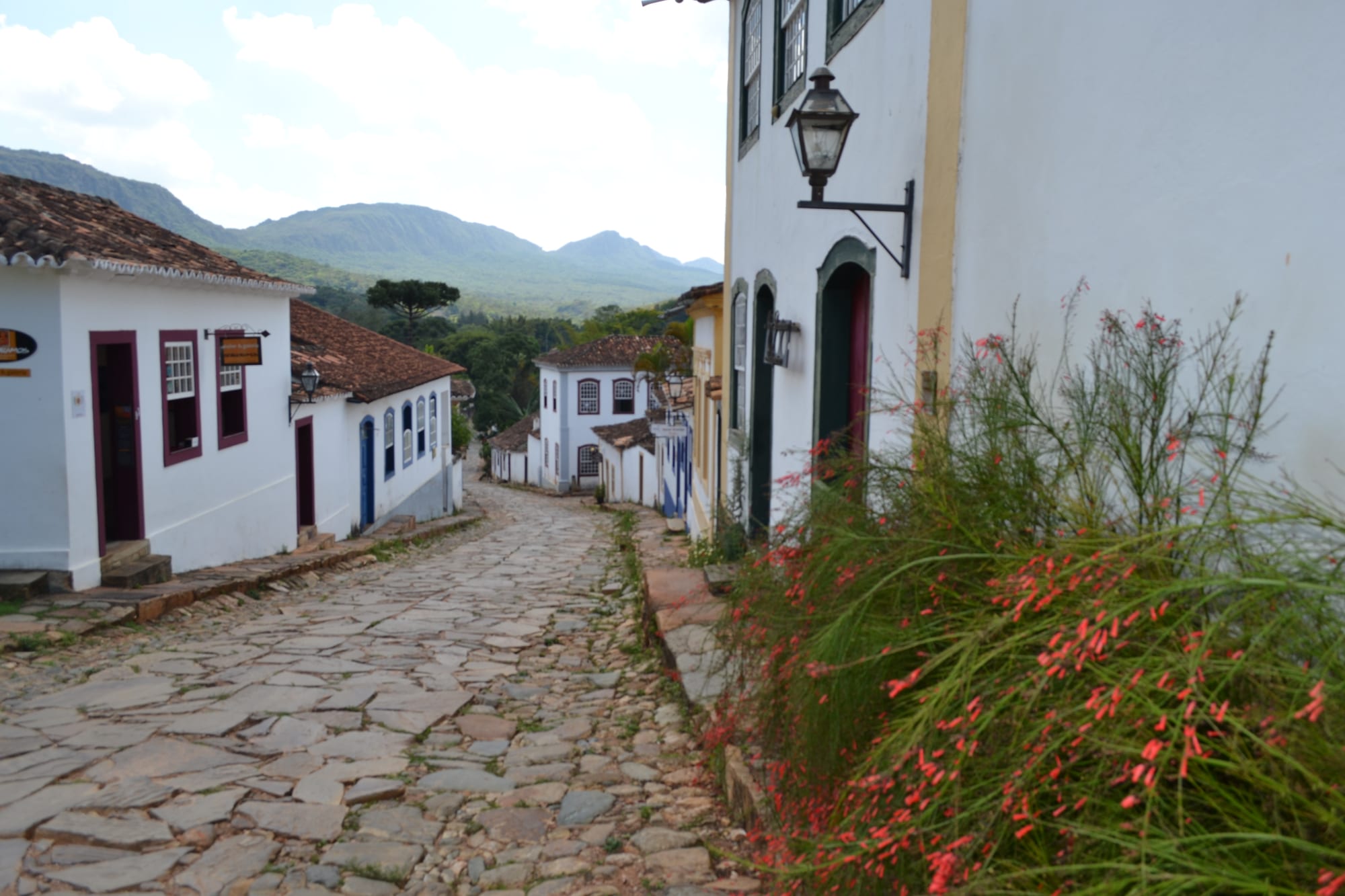
Everything in the old town is within a short walk, but the streets are laid with irregular old stones and some climb steeply, which makes them hard going for anyone with limited mobility and slippery after rain. The walk up to the Matriz and São Francisco de Paula is short but steep.
🛡️ Safety
Brazil has high rates of crime, including violent crime, and it is the main practical concern for visitors — though very unevenly distributed. Tiradentes itself is a quiet, calm town. The main hazards are the uneven cobbles, especially in the rain, and the region's mountain highways at night.
Wear grippy shoes, keep an eye on belongings in festival crowds, and avoid driving rural roads after dark. Check current official travel advice before travelling.
🌦️ Climate
A highland climate with a warm, rainy season from October to March and a dry, sunny winter with cool nights. Summer is December to February, in the middle of the rains; winter is June to August.
- Summer
- warm and wet, with afternoon storms; the yearly average in the area is about 19°C
- Winter
- dry and sunny, cooler than the area's yearly average of about 19°C, with chilly nights
🤝 Local Customs
A service charge is usually added to restaurant bills. The churches are active places of worship; dress modestly inside, and note that photography is not allowed inside the Matriz. Mineiros are courteous and unhurried, and a greeting comes before any request. Lunch is the main meal of the day.
The legal drinking age in Brazil is 18. Ask before photographing people, especially during Holy Week processions.
💳 Common Payment Methods
The currency is the Brazilian real (R$). Cards and the Pix instant transfer system are accepted in most restaurants, inns and shops, but carry some cash for craft stalls, carriage rides and small purchases.