💰 Budget
Vitória is a business city, and hotel prices follow the working week more than the tourist calendar, with weekend deals common. Eating out is reasonable, and a moqueca shared between two is the classic splurge. Prices along the beaches of Vila Velha and Guarapari rise in the December–March summer holidays.
- Daily Budget Midrange
- USD 80–150 (business hotel near the beach, moqueca dinners, app rides across the bridge)
- Daily Budget Shoestring
- USD 35–55 (hostel or simple hotel, self-service lunches, city buses)
Lunch on a self-service buffet priced by weight and keep the evening for a moqueca.
📅 Best Time to Visit
The weather is warm all year. Most of the rain falls from October to January; the cooler, drier months from about May to September are pleasant for walking, while December to March is the beach season, hot and busy. The Festa da Penha fills the convent hill in the week after Easter.
⏳ Suggested Number of Days
Two days are enough for the city itself. Four or five allow time for Vila Velha's beaches and the mountain towns of the highlands, or for a stop on a coast trip between Rio de Janeiro and Bahia.
- First Visit
- 2 days
- With Surroundings
- 4–5 days
🚆 Transportation
City buses are extensive and link Vitória with Vila Velha, Serra and Cariacica, but fares are not paid in cash on board — a GV transport card is needed. App rides and taxis are cheap and are the simplest way to cross the bay or reach the beaches at night.
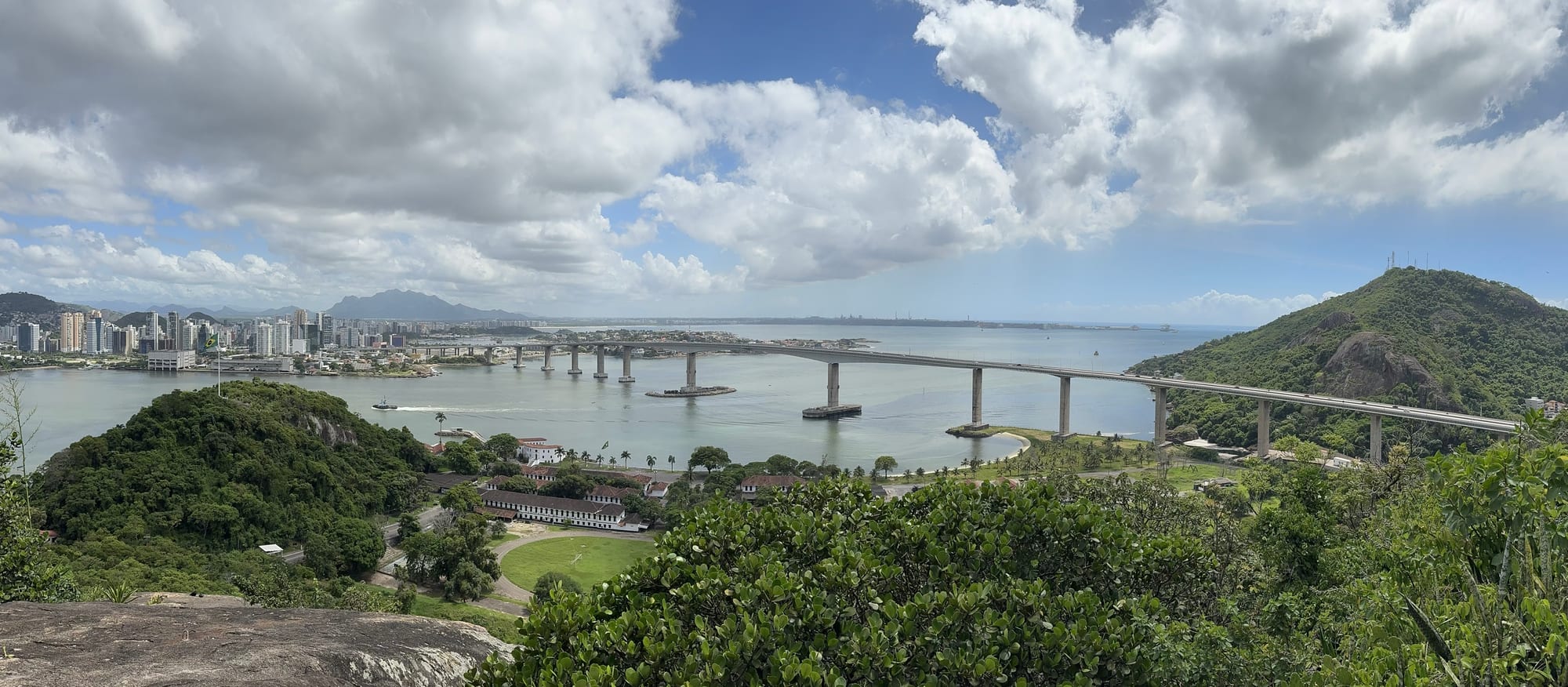
Traffic on the Third Bridge and the island's few bridges is heavy at rush hour; allow extra time for the airport.
🛬 Airport & Station Connections
Eurico de Aguiar Salles Airport, in Goiabeiras, is about 10 kilometres from downtown, with flights from São Paulo, Rio, Belo Horizonte and other capitals. The long-distance bus station is downtown: Rio is about 8 hours away, São Paulo about 14. The Vitória–Minas railway runs a daily passenger train between Cariacica, on the edge of Greater Vitória, and Belo Horizonte, a full day's journey.
🚶 Walkability
The centre and Praia do Canto are walkable, and the seafront paths along Camburi and the island's east shore are pleasant on foot. The districts themselves are split by hills, the bay and busy avenues, so most journeys between them are by bus or car.
🛡️ Safety
Brazil has high rates of crime, including violent crime, and it is the main practical concern for visitors — though very unevenly distributed. Vitória has the usual big-city risks of phone theft and robbery, concentrated in some neighbourhoods and at night: the old centre is quiet after business hours, and the area around Vila Rubim and parts of the waterfront have a reputation for muggings.
Keep phones out of sight in the street, take app rides after dark rather than walking through the centre, and swim only at busy beaches. Check current official travel advice before travelling.
🌦️ Climate
Tropical and warm, with an average annual temperature of about 23°C and relatively little rain for a Brazilian capital, most of it from October to January. Summer is December to February.
- Summer
- hot and humid, well above the yearly average of about 23°C, with the year's heaviest rain early in the season
- Winter
- mild and fairly dry — usually warm, though cold fronts can bring temperatures down to about 12°C
🤝 Local Customs
People from Espírito Santo call themselves capixabas and are proud of their moqueca, which they insist is the original. A service charge is usually added to restaurant bills. Beachwear is for the beach; cover up in the city and inside churches.
Ask before photographing the paneleiras at work. At the Penha Convent, dress modestly and keep quiet near services.
💳 Common Payment Methods
The currency is the Brazilian real (R$). Cards and the instant Pix transfer system are accepted almost everywhere, including at beach kiosks. Carry a little cash for small purchases and withdraw it by day from ATMs inside banks or shopping centres.