💰 Budget
Rio Branco is an inexpensive state capital for food and local transport; hotels are mostly mid-range business hotels. The main costs are the flights, as the city is far from the rest of Brazil, and private transport for trips into the countryside.
- Daily Budget Midrange
- USD 90–180 (business hotel, restaurant meals, taxis and a day trip with a driver)
- Daily Budget Shoestring
- USD 35–60 (basic hotel, set lunches and market food, city buses)
Arrange trips to the forest reserves through registered local operators.
📅 Best Time to Visit
The short dry season, roughly June to September, is the easiest time to travel, with dirt roads passable, and cool spells can bring unusually low temperatures for the Amazon. The wet season, from about October to May, brings heavy rain, heaviest from December to March, which is also the hottest time of year.
⏳ Suggested Number of Days
Two or three days are enough for the city itself. Time in the countryside and the rubber-tapping reserves, or onward overland travel to Bolivia and Peru, lengthens a stay, as distances in Acre are long.
- First Visit
- 2–3 days
- With Surroundings
- 4–6 days
🚆 Transportation
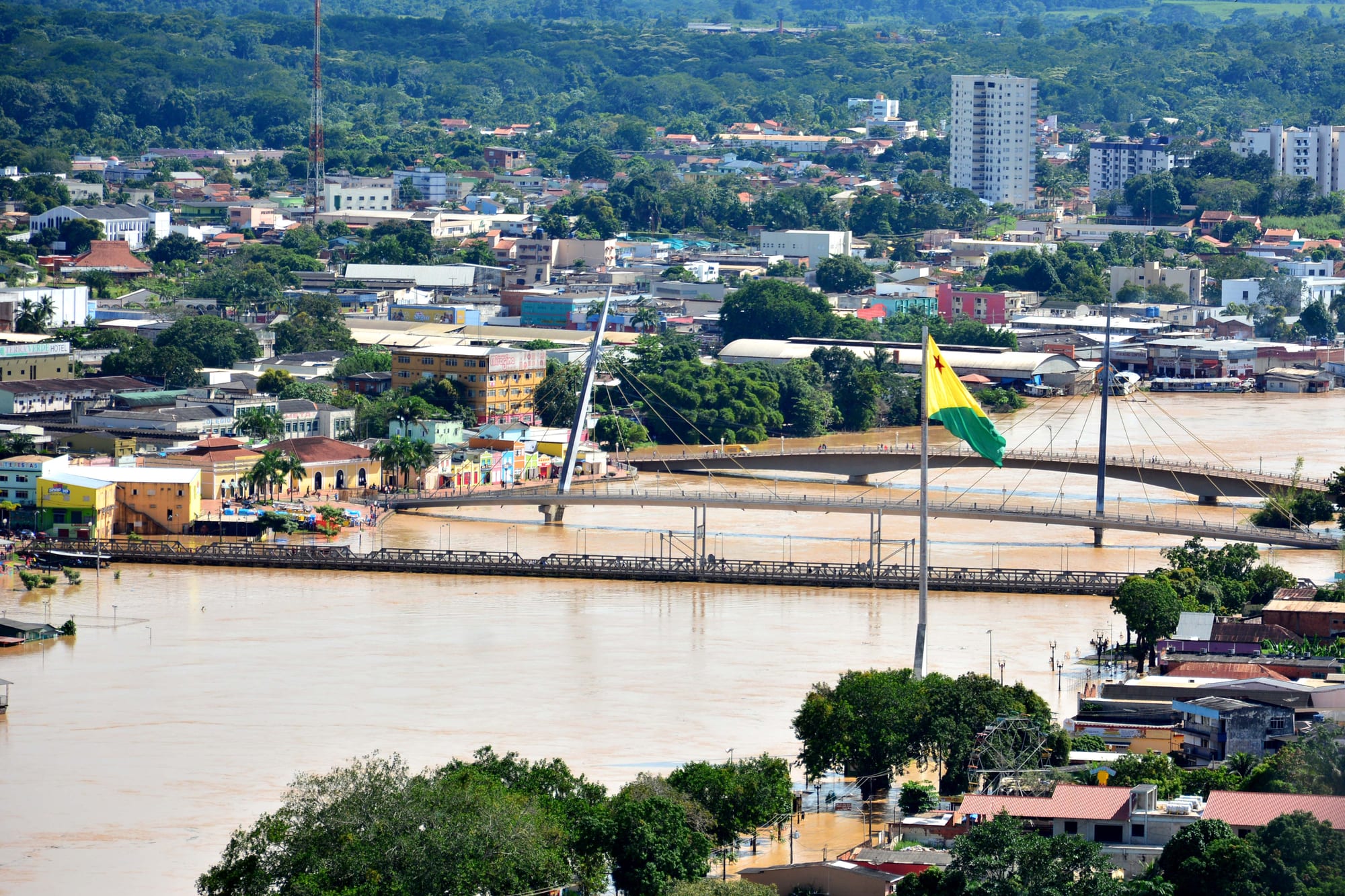
City buses run from the urban terminal near the centre but are often late; taxis, motorcycle taxis and app rides are widely used. The city has the largest network of cycle paths per inhabitant of any Brazilian state capital, and six bridges cross the Acre River.
For trips outside the city, a hire car or a driver is the practical choice; avoid driving rural highways at night.
🛬 Airport & Station Connections
Rio Branco–Plácido de Castro International Airport is 25 km from the city centre on the BR-364 highway, with scheduled flights. The BR-364 links the city east to Porto Velho and southern Brazil and west to Cruzeiro do Sul; the BR-317, the Interoceanic Highway, runs south to the Bolivian border at Brasiléia and on to Assis Brasil and Peru.
🚶 Walkability
The First District centre is compact and easy on foot, and the footbridge makes the Second District a short walk away. Beyond the centre the city is spread out, and the midday heat makes long walks tiring.
🛡️ Safety
Brazil has high rates of crime, including violent crime, and it is the main practical concern for visitors — though very unevenly distributed. Drug-trafficking routes along the borders with Bolivia and Peru bring violence to parts of the region. Malaria is present in rural areas and yellow fever vaccination is advised.
Use taxis or app rides at night, avoid deserted areas after dark, and use repellent against mosquitoes. Check current official travel advice before travelling.
🌦️ Climate
A tropical monsoon climate, with the lowest average temperature of the Amazonian state capitals. Hot days usually run between 23 and 33°C, with a long wet season from October to May and a short dry season.
- Summer
- December–February is the southern-hemisphere summer, the hottest and wettest time of year, with highs that can pass 38°C and heavy rain
- Winter
- June–August is the dry season; between May and August cold spells can bring temperatures down to around 15°C
🤝 Local Customs
Portuguese is the language of daily life. Most people are evangelical Protestants or Catholics. Acre is the birthplace of Santo Daime, whose founder's tomb in the Alto Santo neighbourhood draws pilgrims from abroad.
Treat Santo Daime churches and the Alto Santo tomb as places of worship, and ask before photographing people or ceremonies.
💳 Common Payment Methods
The currency is the Brazilian real (BRL, R$). Cards and Pix are widely accepted in the city; carry some cash for markets, small cafés and travel in the interior. Withdraw money by day at ATMs inside banks or shopping centres.