💰 Budget
Like the rest of the Cayman Islands, Cayman Brac is expensive: food and supplies are imported and dining choices are few. Diving is the main cost for most visitors. Holiday houses with kitchens, a hire car and walking the trails keep spending down.
- Daily Budget Midrange
- USD 350–700 (hotel room near the shore, restaurant meals, two boat dives, car hire)
- Daily Budget Shoestring
- USD 150–250 (holiday house or small guesthouse, self-catering, hire car shared)
Stock up on groceries on arrival and book dives in advance of busy winter weeks; the trails, caves and shore snorkelling cost nothing.
📅 Best Time to Visit
December to April is the dry season, with calmer seas and the busiest diving; winter also brings migratory birds to the parrot reserve. May to October is hotter and wetter, and August to October is the main hurricane risk.
⏳ Suggested Number of Days
A short visit covers the island's trails and caves; divers usually stay most of a week, and a few more days allow a hop to the neighbouring island.
- First Visit
- 3–4 days
- With Surroundings
- 5–7 days
🚆 Transportation
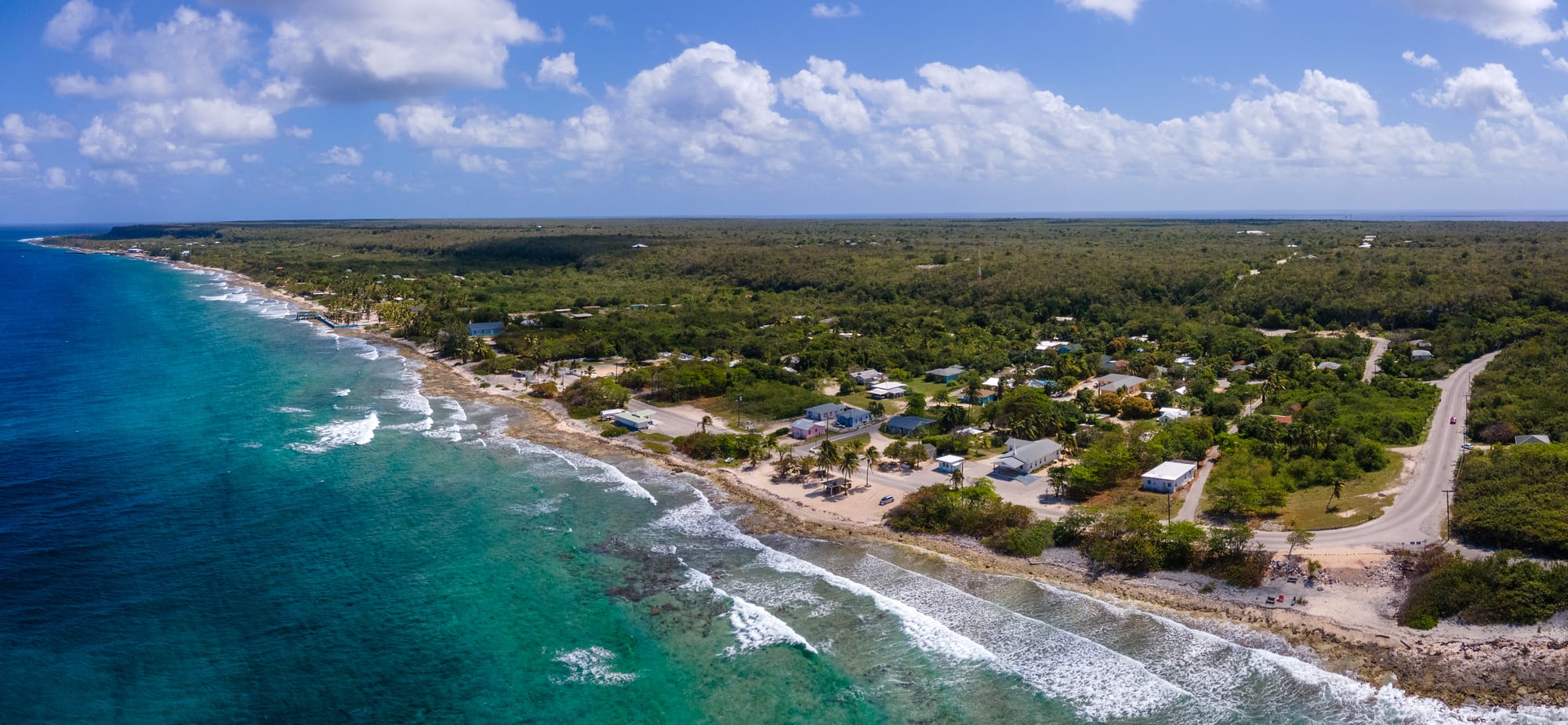
The island is about 12 miles long and on average a little over a mile wide. Visitors usually hire a car, van or bicycle, and some hire firms collect guests from the airport. Driving is on the left.
Hire a car for the length of the stay; the caves and trails are spread along the island.
🛬 Airport & Station Connections
Charles Kirkconnell International Airport, on the south-western end of the island with approaches over the water, is the only airport on Cayman Brac. Cayman Airways flies from Grand Cayman, about 90 miles to the south-west, with turboprops and small Twin Otters, and runs limited jet services to Miami via Grand Cayman. There is no ferry; private boat charters from Grand Cayman are possible.
🚶 Walkability
Settlements are spread along an island about 12 miles long, so walking between them is long and hot. The Bluff is good walking country, with trails through dense karst forest to the lighthouse, the parrot reserve and the caves, where steps and ladders help with access.
🛡️ Safety
Generally very safe for visitors. Crime is low on this small island; the real hazards are the heat on the bluff, uneven limestone underfoot, ladders into the caves, currents on the dive sites and hurricanes in late summer and autumn. Drug laws are strict across the territory.
Carry water and wear sturdy shoes on the bluff, take care on cave ladders, dive within training limits, and watch the forecast in hurricane season. Check current official travel advice before travelling.
🌦️ Climate
Tropical marine, warm and humid all year. The drier, slightly cooler season runs from November to April; May to October is hotter and wetter and falls within the Atlantic hurricane season, which runs from June to November.
- Summer
- hot, humid and wetter, with temperatures across the islands at around 81–90°F
- Winter
- drier and slightly cooler, with calmer seas, though temperatures across the islands still run at around 81–90°F
🤝 Local Customs
Islanders call themselves Brackers. Life is small-scale and church-going. Sunday is a quiet day, and many shops close. Caymanite, a local stone, is carved into jewellery and small ornaments by island artists.
Keep Sunday quiet and leave cave formations and wildlife untouched.
💳 Common Payment Methods
The Cayman Islands dollar is the currency, pegged to the US dollar. US dollars are accepted, with change often given in Cayman dollars, and cards are standard; carry some cash for small purchases on an island with few shops.