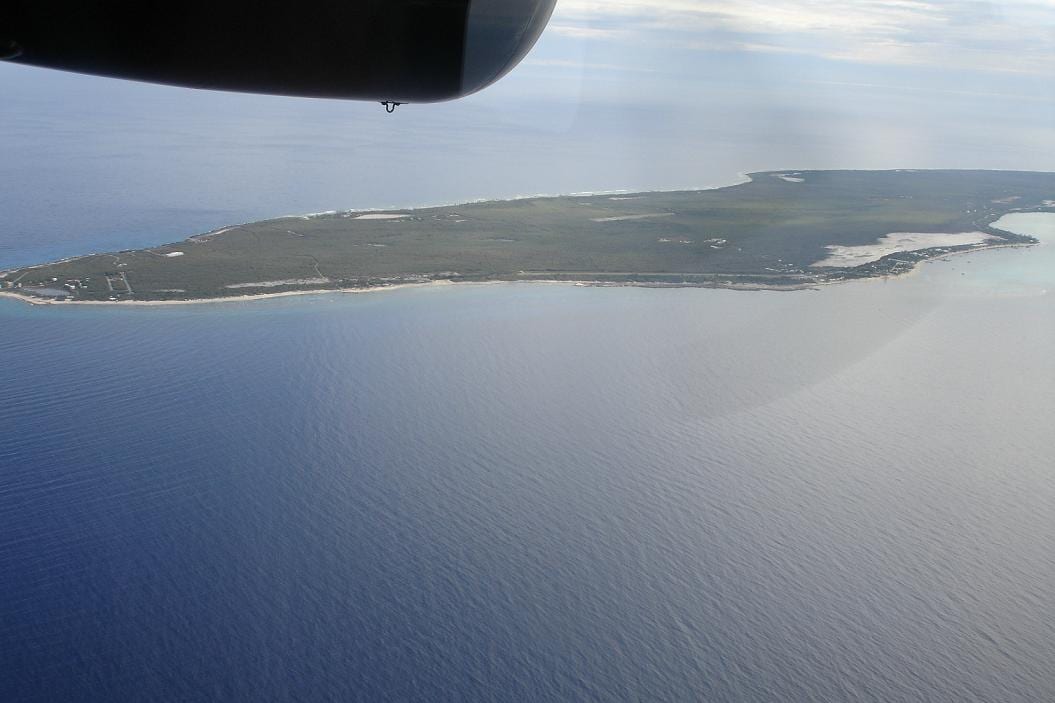
A long, low green island fringed with pale sand and shallow turquoise water, seen from a small plane over a wide blue sea

Cayman Islands

Little Cayman

Little Cayman seen from the air. (Ajrhobby at English Wikipedia / Wikimedia Commons · Public domain)

The smallest and least populous of the Cayman Islands, about 10 miles long and a mile wide, five miles west of Cayman Brac. Settled by turtle fishermen, abandoned and resettled in 1833, it is now a quiet, mostly undeveloped island known for the sheer reef wall of Bloody Bay, a large red-footed booby colony and its rock iguanas.

Neighbourhoods

  • Blossom Village and South Hole Sound
    • First-time visitors
    • Close to the airfield
    • Beaches

    The village on the island's south side, beside the lagoon of South Hole Sound. The school, stores, post office and a small park are here, with Owen Island a short paddle or boat ride across the sound.

    Open in Maps
  • The North Side and Bloody Bay
    • Diving
    • Quiet and residential

    The northern shore where the first settlement and harbour once stood, facing the dive sites of Bloody Bay and Jackson's Bight. A marine research centre stands on this coast, and much of the shoreline is undeveloped.

    Open in Maps
  • The East End
    • Beaches
    • Nature

    The far end of the island, where Point of Sand lies at the north-eastern tip, the island's best swimming beach, with Cayman Brac in view across the channel.

    Open in Maps

Things to do

Diving and the reefs

  • Bloody Bay Wallattraction

    A reef wall off the north coast that drops off from as little as 18 feet, with sections so sheer as to be effectively vertical; it is often ranked among the world's top dive sites.

    Open in Maps
  • Jackson's Bightattraction

    With Bloody Bay, one of the two most popular dive areas, on the north side just west of the island's midpoint.

    Open in Maps

Wildlife and nature

  • Booby Pond Nature Reservepark

    A protected wetland of about 200 acres that supports the largest red-footed booby population in the Caribbean and is a Ramsar wetland of international importance; the National Trust building beside it has viewing decks with telescopes.

    Open in Maps
  • Rock iguana boardwalktrail

    A National Trust boardwalk, opened in 2013, that lets visitors watch a nesting area of the island's critically endangered rock iguanas, which also sun themselves on the roads.

    Open in Maps
  • Tarpon Lakeattraction

    A salt pond near the centre of the island holding an unusual landlocked population of tarpon, large silver fish that normally live in the sea.

    Open in Maps

Beaches and islets

  • Point of Sandbeach

    The island's one truly fine swimming beach, at the north-eastern tip, with a sandy bottom and a protecting reef line; currents are often strong, but the shallows suit careful wading.

    Open in Maps
  • Owen Islandattraction

    A small, uninhabited, privately owned islet about 1,000 feet off the south-west coast, open to public use, with a shallow sand bar for swimming and snorkelling.

    Open in Maps

Short trips from the island

  • Cayman Bracattraction

    The neighbouring island five miles to the east, with its limestone bluff, caves and trails, linked to Little Cayman by daily inter-island flights.

    Open in Maps

Seasonal events

  • Pirates Week heritage festivalNovember

    Little Cayman's own heritage festival and parade, held as part of the territory's Pirates Week.

  • Little Cayman Agriculture ShowMay

    The island's agriculture show, one of three held on the three islands on different dates in the same month.

Eat and drink

Long-standing places and food districts in Little Cayman. Hours, ratings and directions come from your maps app, always current.

Food on the island

  • Blossom Village restaurantsneighborhood

    The island has three full-service restaurants, where lionfish culled by divers on the reefs are served as daily specials.

    Open in Maps
  • Island grocerymarket

    The island's single grocery-and-hardware store, supplied weekly by sea or air, where prices are high.

    Open in Maps

Experience Little Cayman

History

Christopher Columbus sighted Little Cayman and Cayman Brac on 10 May 1503, on his fourth and last voyage, when heavy winds blew his ship off course, and named the two islands Las Tortugas. In the 17th century turtle fishermen set up camps here, supplying pirate and naval convoys with turtle meat, penned pigs, goats, poultry and fresh water from springs running underground through the rock. After a raid by a Spanish privateer, the settlements were abandoned in 1671.

The island stayed empty until 1833, when a few families — mostly Boddens, Scotts, Ryans and Ritches — founded Blossom Village on the south side, beside South Hole Sound. The first settlement and harbour had been on the north coast, off what is now the Bloody Bay Wall. By the early 20th century about 400 people lived on Little Cayman, exporting phosphate ore, coconuts and marine rope made from silver thatch, the national tree, while the Bodden family built schooners.

The 1932 hurricane, which killed scores of people on the Brac and Little Cayman, changed that: many families moved to Cayman Brac afterwards. The island was later reborn as a diving destination. In 1999 the most vertical part of Bloody Bay Wall was photographed piece by piece for a mural reproduced in National Geographic in 2001, and the Central Caribbean Marine Institute, founded in 1998, opened a research centre on the north side.

Culture & Customs

Little Cayman's culture is that of a tiny, isolated community. Its residents come from Jamaica, the Philippines, Honduras and other Latin American countries, as well as Canada, the United States, India, Australia, Britain and South Africa, and local Caymanians number fewer than twenty. Two churches serve the island.

Despite its size, the island keeps its own events. A heritage festival and parade are held as part of Pirates Week each November, and the Little Cayman Agriculture Show takes place in May, one of three held across the islands that month on different dates.

Conservation is at the heart of island life. The National Trust runs the Booby Pond visitor building, with exhibits on the island's plants and animals, and a boardwalk for watching iguanas nest; signs warn drivers to slow down for iguanas on the road. Divers from the island's operators have hunted invasive lionfish on Wednesday afternoons since 2010, sending the catch for research and then to restaurants, and since the culls began more Caribbean reef sharks have been seen on dives.

Daily Life

Little Cayman has a permanent population of about 160 (2021), including seasonal residents and homeowners — the fewest of the three islands. Blossom Village, on the south side, is where the school, stores, post office and park are found.

Daily life depends on diving and tourism. Services are few: one grocery-and-hardware store, an online grocery delivery service, a liquor store, a bank that opens two days a week, a 24-hour ATM, three full-service restaurants, a food delivery service, two car-hire firms and a minibus. Cayman Airways flights from Grand Cayman and Cayman Brac link the island to the rest of the territory every day.

The pace is slow, with a 25 mph speed limit and iguanas on the road. Dive boats work the north side, switching to the south side when winter seas are rough. The airfield has an exemption of airworthiness from the territory's Civil Aviation Authority, but as of June 2025 the exemption would not continue unless the airport adhered to current standards.

Food

Food on Little Cayman follows the wider Caymanian table, closely tied to Jamaican cuisine: fish and seafood such as tuna, snapper, mackerel and mahi-mahi, conch and turtle; staples of coconut, plantain, cassava, yams, breadfruit, and rice and peas; and jerk and curry seasonings, with jerk chicken and pork, oxtail and patties frequently served.

The island's own speciality is lionfish. The invasive fish, culled by divers on the reefs, are passed to the marine research centre for study and then given to restaurants, which serve them as daily specials. The reefs around the island are home to green sea turtles, rays and a full range of Caribbean reef life.

With only three full-service restaurants, choices for eating out are limited. Groceries come from a single store, supplied weekly by sea or air, and are expensive; bringing supplies from Grand Cayman is one alternative.

Planning tools

Budget

Little Cayman is expensive. Groceries are very dear, choices are few, and most visitors come for diving, the main cost.

Daily Budget Midrange
USD 350–750 (dive lodge or cottage, meals, two boat dives, bicycle or hire car)
Daily Budget Shoestring
USD 180–280 (shared cottage, groceries brought from Grand Cayman, bicycle, shore snorkelling)

Bring groceries from Grand Cayman, and use bicycles and shore snorkelling to fill days between dives.

Best Time to Visit

The coolest months run from late November to mid-March, when the north side can be too rough to dive and boats move to the south side. Light rainy seasons fall from mid-April to June and from mid-September to mid-October. Mid-June to mid-September is the hottest and driest time, and also part of the hurricane season.

Suggested Number of Days

A few days cover the island itself. Divers usually stay most of a week, and some add a few days on the neighbouring island.

First Visit
3–4 days
With Surroundings
5–7 days

Transportation

The island has a 25 mph speed limit and warning signs for iguanas on the road. Two car-hire firms and an 11-seat minibus operate, and bicycles and scooters are also used; Point of Sand is a long but possible bicycle ride from Blossom Village.

Drive slowly and watch for iguanas sunning on the road.

Airport & Station Connections

Edward Bodden Airfield, also called Little Cayman Airport, lies on the south-west side of the island, with a runway parallel to the south shore and approaches over the water. Cayman Airways runs daily inter-island flights from Grand Cayman, about 60 miles to the south-west, and from Cayman Brac.

Walkability

Blossom Village, where the stores and the Booby Pond reserve are, is small enough to walk. The rest of the island is long and thinly settled, so most visitors use a bicycle, scooter or car to reach the north side and the east end.

Safety

Generally very safe for visitors. The island has no large, predatory or venomous animals that threaten people. The real hazards are at sea: strong currents off Point of Sand and depth on the walls, as well as sun, heat and the hurricane season.

Swim with care at Point of Sand, dive within training limits, carry no drugs, and watch the forecast in hurricane season. Check current official travel advice before travelling.

Climate

Warm all year. Light showers fall mostly from mid-April to June and from mid-September to mid-October, with occasional brief early-morning rain at other times.

Summer
hottest and driest from mid-June to mid-September, with temperatures between the mid-80s and high 90s °F
Winter
coolest from late November to mid-March, when northern cold fronts can bring temperatures down into the low 70s °F

Local Customs

Most residents are workers from abroad, from Jamaica, the Philippines, Honduras and many other countries, with fewer than twenty local Caymanians. There are two churches, and life is quiet and informal. Wildlife is part of daily life: rock iguanas cross the roads and nesting seabirds are protected.

Keep to the boardwalks and viewing decks near nesting birds and iguanas, and respect the strict drug laws.

Common Payment Methods

The Cayman Islands dollar is the currency, pegged to the US dollar, and US dollars are widely used. The island's one bank opens on Mondays and Thursdays, and a 24-hour ATM gives both Cayman and US dollars.