💰 Budget
Nothing here is priced for visitors. The cost of being in Bangassou is the cost of reaching it: humanitarian or charter flights, or a road journey from Bangui of several days when it is possible at all, with fuel, vehicles and security arranged in advance. Market food and local produce are very cheap; anything imported is not.
- Daily Budget Midrange
- USD 200–400 (compound or guesthouse accommodation with a vehicle and driver; flights and security arrangements cost far more)
- Daily Budget Shoestring
- USD 40–80 (basic local lodging and market food only, excluding any transport to the town)
There are no banking services to rely on in the east; all funds are carried in cash.
📅 Best Time to Visit
December to February is the short dry season and the only period when the road from Bangui is realistically passable. The long rains, from about March or April to November, close routes for months. In practice the security situation, not the season, rules out travel to the east.
⏳ Suggested Number of Days
The town can be covered in a day. Anyone travelling here for work stays longer because flights and convoys in and out are infrequent, and because any journey in the prefecture takes far longer than the distance suggests.
- First Visit
- 1 day
- With Surroundings
- 2–3 days
🚆 Transportation
Within the town people walk, cycle or take a motorcycle taxi. Beyond it, the unpaved road runs west through Alindao and Bambari towards Bangui and east towards Rafaï, Zémio and Obo, with broken bridges and long stretches cut by rain. Dugout canoes and a ferry cross the Mbomou to the Congolese bank.
Road travel in the east is slow, exposed to armed groups and banditry, and is not undertaken independently.
🛬 Airport & Station Connections
Bangassou lies roughly 750 kilometres east of Bangui by road, a journey of several days in dry conditions and impossible for much of the year. Most outsiders arrive by air at the town's airstrip, on flights arranged through an agency or operator. River traffic on the Mbomou is local rather than a practical route in.
🚶 Walkability
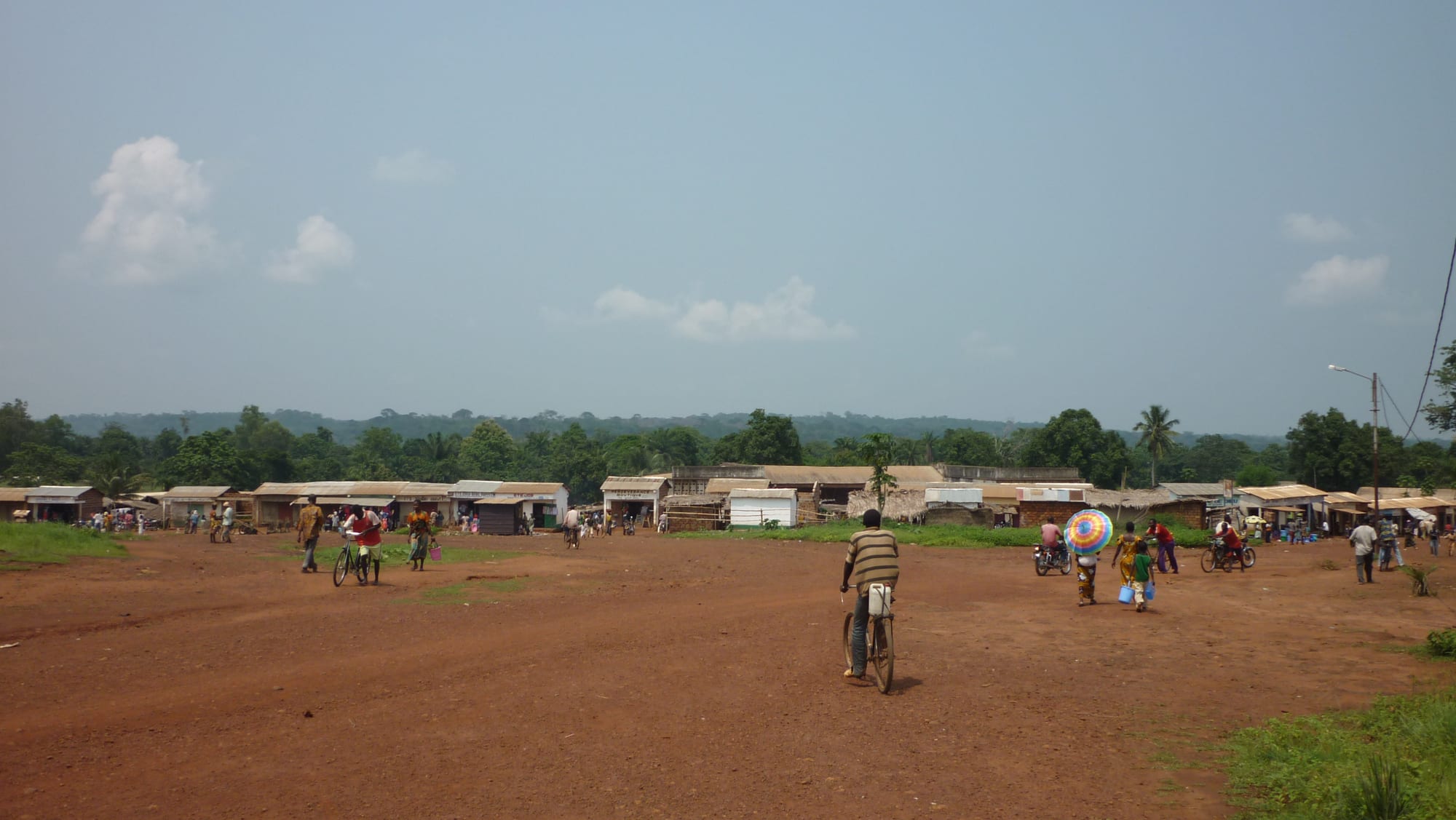
The town is flat near the centre and rises gently away from the river, and the market, the offices and the mission are within a short walk of one another. Streets are of packed red earth, muddy in the rains, and there is no street lighting, so movement stops at dusk.
🛡️ Safety
Bangassou has seen repeated violence since the crisis of 2013, including periods when people sheltered in mission compounds and in the town's church buildings, and armed groups have remained active in the surrounding prefecture. A United Nations peacekeeping presence is based in the town. Most governments advise against all travel to the whole country, and the east is among its most remote areas.
Globeway covers the Central African Republic so it can be understood, not to encourage travel there now. Any presence in the east is organised through an agency or specialist operator with current information. Check current official travel advice before travelling.
🌦️ Climate
Hot and humid, wetter and greener than the north, with a long rainy season and only a short dry one. The surrounding country is a mosaic of savanna and gallery forest, and the Harmattan brings haze for a few weeks around the turn of the year.
- Summer
- the long rains, roughly March to November, about 21–31°C, humid with heavy storms and flooded roads
- Winter
- the short dry season, December to February, hot days of 32–35°C and cooler nights
🤝 Local Customs
Sango is spoken by everyone, with French for administration; Zande and Nzakara are spoken at home in much of the prefecture. Memories of the sultanate are part of local identity. Greetings are formal, dress is modest, and the church shapes the week for most families.
Photographing peacekeepers, soldiers, checkpoints, the river crossing and displacement sites is not acceptable, and permission is asked before photographing anyone.
💳 Common Payment Methods
The currency is the Central African CFA franc (XAF). Everything is paid for in cash and small denominations matter; there are no cash machines and cards are not used. Congolese francs circulate informally around the river crossing.