💰 Budget
Calama's hotels are priced for mining contractors and business travellers, so rooms are expensive for what they offer, especially on weekdays. Food and transport are moderately priced. Many travellers spend no night here at all, heading straight from the airport or bus station to San Pedro de Atacama, where tours and lodging cost more again. Hire cars are cheaper in Calama than in San Pedro.
- Daily Budget Midrange
- USD 130–240 (business hotel, restaurant dinners, a hire car or taxis)
- Daily Budget Shoestring
- USD 50–85 (simple guesthouse, market lunches, colectivos and local buses)
For several people touring the high desert, hiring a four-wheel-drive in Calama can cost less than a series of tours from San Pedro.
📅 Best Time to Visit
The city can be visited at any time of year: it is dry, sunny and mild by day in every season. Winter nights are freezing, and the summer months of January and February can bring storms to the high Andes that close roads towards the geysers and lagoons. Spring and autumn are the most comfortable for trips into the mountains.
⏳ Suggested Number of Days
A day is enough for the city itself. Three or four days allow time for the surrounding oasis villages and a trip into the high Andes. Many visitors only pass through on their way further into the desert.
- First Visit
- 1 day
- With Surroundings
- 3–4 days
🚆 Transportation
The centre is small enough to walk. Shared taxis (colectivos) run fixed routes and city buses are lettered, and both are cheap. Buses to San Pedro de Atacama leave frequently from small stations on Calle Antofagasta, while long-distance coaches use the main terminal. The villages and high sites need a hire car — ideally a four-wheel-drive — or a tour.
Allow time to acclimatise before going higher than the city, and carry water and warm layers on any trip into the Andes.
🛬 Airport & Station Connections
El Loa Airport, one of the largest in Chile, is about 6 km from the city centre, with flights from Santiago, La Serena and Concepción. San Pedro de Atacama is about 90 km away. Coaches arrive from Antofagasta and, overnight, from Iquique and Arica.
🚶 Walkability
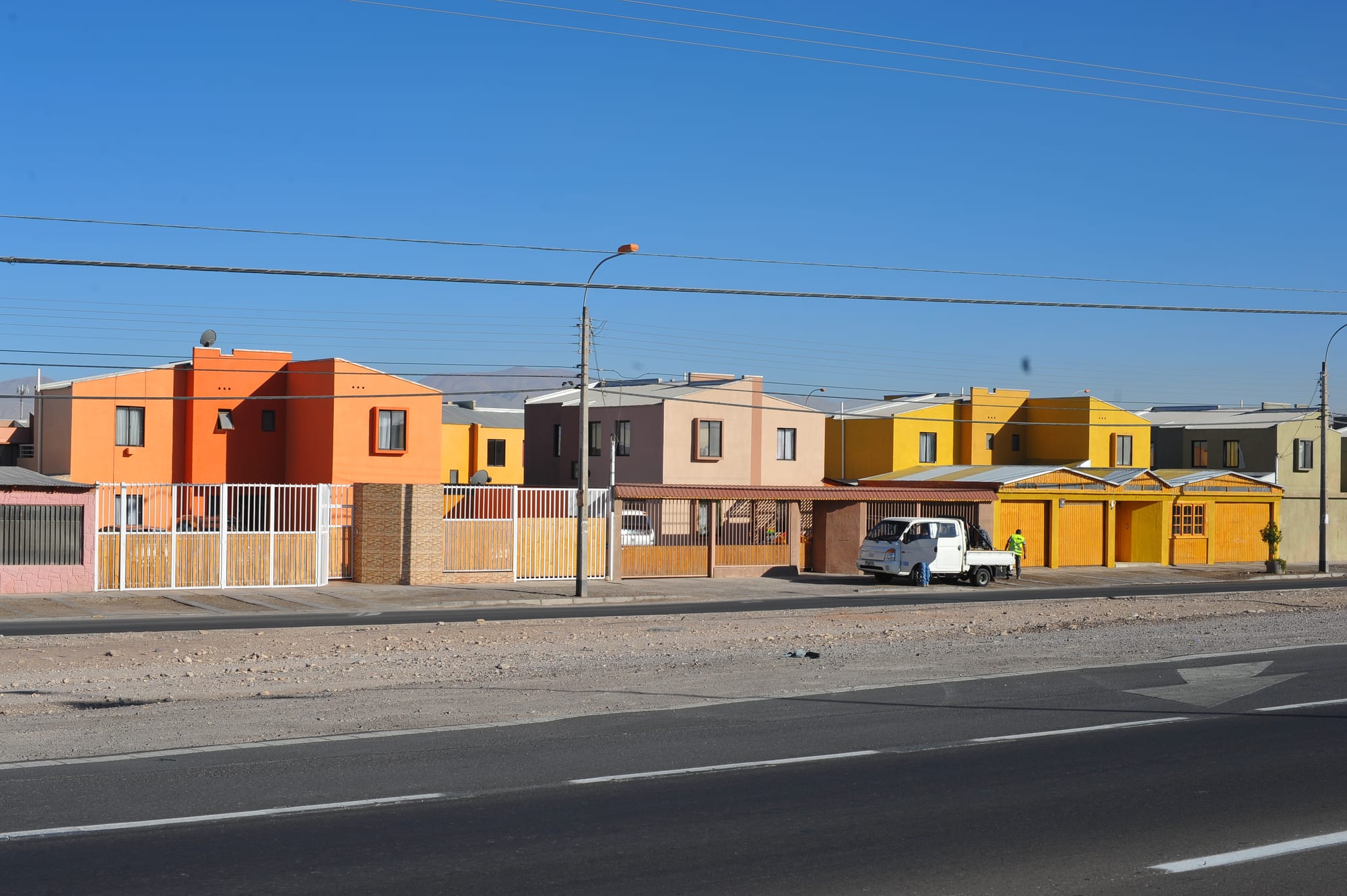
The central grid around the main square and the pedestrian street is flat and easy on foot. The newer districts sprawl across the desert along wide avenues, with long distances and little shade; colectivos or taxis are the practical way to cover them. The sun is strong and the air thin and dry.
🛡️ Safety
Chile is one of the safer countries in South America, but petty and opportunistic crime has risen, especially in Santiago and Valparaíso — pickpocketing, bag-snatching, phone theft, and distraction scams in tourist areas, markets, and on transport. Violent crime against tourists is uncommon. Calama has higher crime than the Chilean average, so the usual big-city care applies, above all at night and around the bus stations. Altitude, sun and long desert roads are the other risks.
Use taxis after dark, keep bags close at bus stations, and avoid driving desert highways at night. Check current official travel advice before travelling.
🌦️ Climate
High desert: one of the driest cities in the world, with about 5 mm of rain a year, intense sun and big daily swings in temperature. The year's average is about 11°C. Light easterly winds are common in the mornings, while strong westerly winds pick up in the afternoon.
- Summer
- December to February has warm, sunny days, and record highs have passed 30°C; nights are cool
- Winter
- June to August has days still above 20°C on average but nights that drop below freezing
🤝 Local Customs
A tip of about ten per cent is usual in restaurants and is often suggested on the bill. Chileans greet acquaintances with a kiss on the cheek and strangers with a handshake. Mining shapes everything — shift workers come and go at all hours — and the Lickanantay and Quechua communities of the surrounding villages keep their own customs. Drinking alcohol in public places is not allowed.
Ask before photographing people in the villages and at religious festivals.
💳 Common Payment Methods
The currency is the Chilean peso (CLP). Cards are widely accepted in hotels, malls, supermarkets and most restaurants, and cash machines are easy to find in the centre. Calama is a good place to draw cash before San Pedro de Atacama, where cash machines can run short.