💰 Budget
Viña del Mar costs a little less than Santiago but rises sharply in January and February, when Chilean and Argentine holidaymakers fill the city, and again during the song festival. Residenciales, the local guesthouses, are the cheapest beds, and the commuter railway and buses keep transport costs low.
- Daily Budget Midrange
- USD 100–200 (hotel, seafood dinners, taxis, a winery visit)
- Daily Budget Shoestring
- USD 45–80 (hostel or residencial, set-menu lunches, buses and the commuter train)
Book rooms well ahead for January, February and the festival week; the parks, beaches and seafront promenades cost nothing.
📅 Best Time to Visit
December to February is the beach season, when lifeguards are on duty, the city is at its liveliest and prices are highest; the song festival is held in the third week of February. Spring and autumn are quieter and mild. Winter is cool and brings most of the year's rain.
⏳ Suggested Number of Days
Two or three days are enough for the city and its beaches. Four or five allow time for the neighbouring port, the coast to the north and south, and the wine country inland. Summer traffic on the coast roads can make everything take longer.
- First Visit
- 2–3 days
- With Surroundings
- 4–5 days
🚆 Transportation
The commuter railway known as Merval, now the Limache–Puerto service, runs on one 43-kilometre line through Viña del Mar to Valparaíso, Quilpué, Villa Alemana and Limache, with a five-kilometre underground stretch under the city. Buses, called micros, go to every district, and colectivos — shared taxis on fixed routes — are common.
Buy the rechargeable card sold at the stations for the commuter railway; colectivos and many micros need cash.
🛬 Airport & Station Connections
Arturo Merino Benítez International Airport, in Pudahuel, 15 kilometres north-west of central Santiago, is the main gateway. Most visitors come by coach from Santiago along Route 68, about an hour and a half without traffic, arriving at the bus station a few blocks from the centre. Valparaíso is a short ride away by train, bus or colectivo.
🚶 Walkability
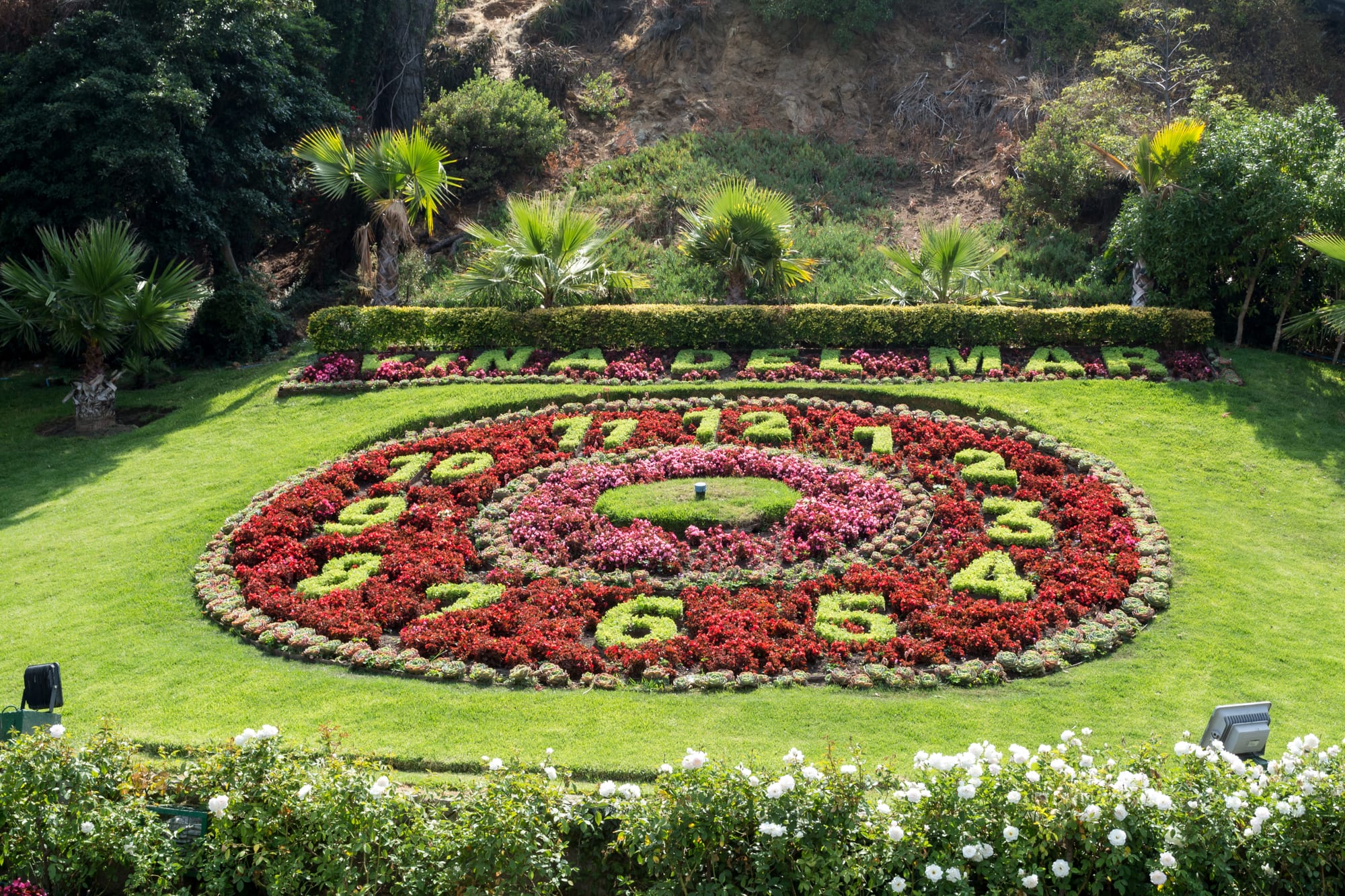
The plan is flat and easy to walk, with the casino, Quinta Vergara, Plaza de Viña and the seafront close together, and the shore road to the flower clock and Wulff Castle is a pleasant stroll. Most residents live on the hills around the plan, and Reñaca and Recreo are better reached by bus or colectivo.
🛡️ Safety
Chile is one of the safer countries in South America, but petty and opportunistic crime has risen, especially in Santiago and Valparaíso — pickpocketing, bag-snatching, phone theft, and distraction scams in tourist areas, markets, and on transport. In Viña del Mar the parks are best avoided after dark, street dogs are common, and the Pacific surf is strong. Summer wildfires are a serious hazard in the hills around the city.
Swim near lifeguards in the summer season, use only official currency exchanges, follow fire warnings in summer, and learn the tsunami evacuation routes on the coast. Check current official travel advice before travelling.
🌦️ Climate
A warm-summer Mediterranean climate cooled by the Humboldt Current. Summer, from December to February, is dry and mild; winter is damp and cool. Rain falls mainly in autumn and winter, July being the wettest month, and the annual total is about 480 millimetres.
- Summer
- dry and warm, rarely above 30°C, with cool nights around 16°C
- Winter
- damp and cool, with days of about 13–17°C and nights of 5–9°C, rarely below freezing
🤝 Local Customs
A tip of about 10 per cent is expected in restaurants when service is satisfactory, given to the waiter, and baggers at supermarket tills are tipped a few hundred pesos. Football loyalties matter: Everton's great rivals are Santiago Wanderers of Valparaíso.
At football matches buy seats in the neutral sections, away from the organised supporters' stands, and ask before photographing at naval sites.
💳 Common Payment Methods
The currency is the Chilean peso (CLP). Cards are widely accepted in shops, restaurants and hotels, but colectivos, micros and small stalls want cash. ATMs are common but charge fees, and cash payments are rounded to the nearest 10 pesos.