💰 Budget
Costs are low by Chinese standards once the town is reached, with cheap hotels, canteens and taxis. Getting there is the expense: Manzhouli is a long way from anywhere, and most visitors arrive by flight or overnight train. Rooms rise in July and August and during the winter ice season, and a hired car is usually needed to reach the lake and the grassland.
- Daily Budget Midrange
- USD 90–180 (mid-range hotel, restaurant meals, a hired car for the grassland, entry tickets)
- Daily Budget Shoestring
- USD 30–50 (budget hotel, canteen noodles and dumplings, local buses)
Share the cost of a car and driver for the lake and the pastures; public transport barely serves them.
📅 Best Time to Visit
July and August, when the grasslands are green, the days are warm and the summer fairs are held, though this is also the domestic peak. June and early September are quieter and still mild. Winter brings ice sculpture and a stark border-town atmosphere, but temperatures well below −20°C make it a trip only for those properly equipped.
⏳ Suggested Number of Days
The town itself is small and can be seen in a day or two. Adding the lake and the Hulunbuir grasslands, which need a car and long drives, brings the total to three or four. Winter cold shortens the hours spent outdoors.
- First Visit
- 1–2 days
- With Surroundings
- 3–4 days
🚆 Transportation
The centre is small enough to cross on foot, and taxis are cheap and plentiful for anything further, including Jalainur. There is no metro. Buses run to the surrounding banners, but the lake, the pastures and the border viewpoints are usually reached by hired car or on an organised trip. Roads are wide and traffic is light outside the freight routes.
Agree the price of a car for a half or full day before setting off, and allow for slow going on unpaved grassland tracks.
🛬 Airport & Station Connections
Manzhouli Xijiao International Airport, in the west of the city, has flights to Beijing and Hohhot as well as routes towards Russia and Mongolia, with services varying by season. Trains run east to Hailar and on across Heilongjiang, taking many hours; the same line carries the rail crossing to Zabaikalsk in Russia, where a change of track gauge means trains cannot run straight through. Most domestic visitors fly to Hailar or Manzhouli and continue by road.
🚶 Walkability
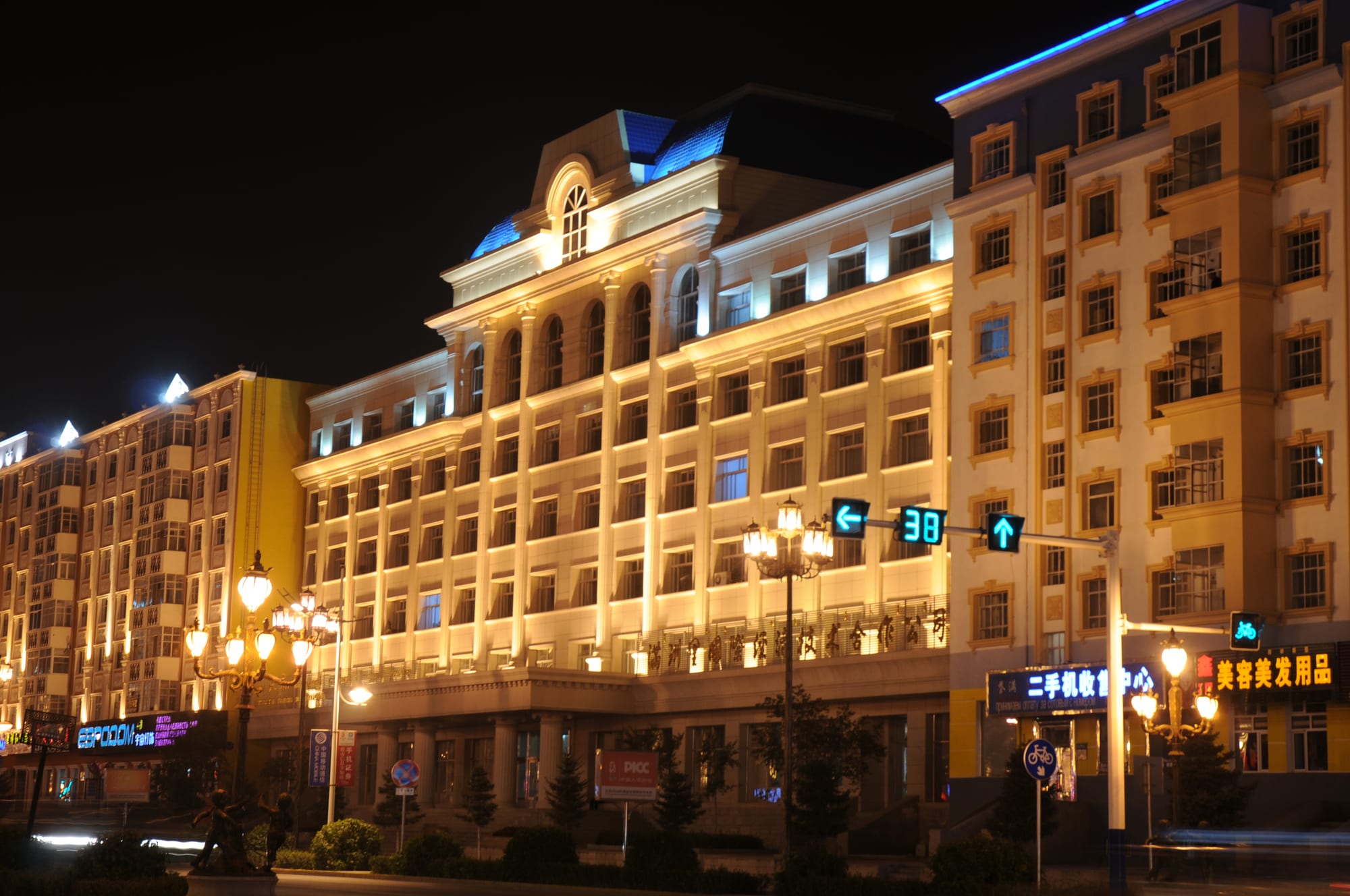
The centre is flat, gridded and compact, and walking is the natural way to see the Russian-styled streets and squares, which are at their best when lit at night. Distances to the border quarter, Jalainur and the outlying squares are too far on foot. Pavements are icy for much of the winter and the wind on open streets is severe.
🛡️ Safety
Crime is low and the town is heavily policed as a border port. The real risks are environmental — extreme winter cold, frostbite and falls on ice, and long drives on empty roads. This is a frontier zone with customs and military installations, frequent identity checks and restricted areas near the line itself.
Do not photograph the border installations, guards or military sites, carry a passport at all times, dress for severe cold in winter, and keep to marked roads on the grassland. Check current official travel advice before travelling.
🌦️ Climate
Harshly continental and among the coldest inhabited parts of China. Winters are long, dry and severe; summers are short, warm and the only wet season; spring is windy and dusty and autumn passes quickly. The open steppe means wind on almost every day of the year.
- Summer
- short and warm — July days usually around 20–25°C, with cool nights and three-quarters of the year's rain falling between June and August
- Winter
- long and severe — January well below −20°C, with temperatures that can fall below −40°C and frozen ground for months
🤝 Local Customs
Tipping is not customary in China and is generally refused. The town is trilingual in feel, with Chinese, Mongolian script and Russian on signs, and traders switch between Mandarin and Russian all day. Mongol hospitality on the surrounding grassland involves milk tea offered on arrival and a blue silk scarf, the khadag; spirits offered with a song are taken with the right hand.
Accept food and drink offered by herding hosts with both hands or the right hand, circle a stone oboo cairn clockwise if visiting one, and ask before photographing people at work or at prayer.
💳 Common Payment Methods
The currency is the renminbi, the unit called the yuan. Daily payment runs on QR codes through Alipay and WeChat Pay, which can be linked to an overseas card; foreign cards are accepted at some hotels and larger shops but not widely. Cash is still handy for small stalls and taxis, and ATMs are in the centre.