💰 Budget
Hotels and restaurants are inexpensive for a city with this much money in it, and the new district has more rooms than visitors. The costs that add up are transport: the two centres are about 20 kilometres apart, the desert resorts and the mausoleum are further, and taxis or a hired car are effectively unavoidable.
- Daily Budget Midrange
- USD 90–180 (mid-range hotel or desert resort, a hired car and driver, entry tickets)
- Daily Budget Shoestring
- USD 30–50 (budget hotel, noodle and mutton canteens, buses between the districts)
Agree a day rate with a driver covering the mausoleum and the dunes together; buses to both are slow and infrequent.
📅 Best Time to Visit
May, June and September are the most comfortable months, with warm days, clear light on the dunes and cool nights. July and August are hot in the sand and busy with domestic holidaymakers, though this is when the grassland is green and the festivals are held. Winter is bitter, windy and very quiet.
⏳ Suggested Number of Days
Two days take in both city centres and one trip out onto the plateau. Three or four allow the desert and the shrine country to the south at an unhurried pace. Driving times between sites are the main constraint.
- First Visit
- 2 days
- With Surroundings
- 3–4 days
🚆 Transportation
The municipality is effectively two towns and a scatter of banner settlements, and buses run between Dongsheng and Kangbashi through the day. Within each district taxis and ride-hailing are cheap and quick, streets are wide and traffic is light by Chinese standards. Anything beyond the districts — the dunes, the mausoleum, the river — needs a car.
Check which district a hotel is in before booking; a room in Kangbashi is a long ride from the restaurants and markets of Dongsheng.
🛬 Airport & Station Connections
Ordos Ejin Horo International Airport lies south of Kangbashi in Ejin Horo Banner, rebuilt on its present site and reopened in 2007, with flights to Beijing, Hohhot, Xi'an and other Chinese cities. Ordos railway station, opened in 2016, has daily high-speed trains to Hohhot and slower services through to Beijing West, and expressways run north across the Yellow River to Baotou and south towards Shaanxi.
🚶 Walkability
Dongsheng has a walkable core of shops and restaurants within a few blocks. Kangbashi was laid out for cars, with enormous plazas, long distances between buildings and little shade, so walking there is slow and exposed, although the riverside park and the square around the museum are pleasant on a mild day. Wind and dust can make walking unpleasant in spring.
🛡️ Safety
Crime is low and both districts feel secure. The risks are environmental and practical: extreme winter cold, strong spring winds and dust, heat, sunburn and dehydration in the dunes, and long drives on empty roads between coal traffic. Heavy lorries are a constant on the mine roads north and east of the city.
Carry water and sun protection into the desert, keep off dune slopes and mine roads on foot, and carry a passport for hotels and checkpoints. Check current official travel advice before travelling.
🌦️ Climate
Cold, dry and continental, high on the Ordos Plateau. Winters are long, sunny and severe; summers are warm with cool nights; and the little rain that falls comes almost entirely in July and August. Spring is the windiest season, with dust blown across the plateau.
- Summer
- warm rather than hot, usually 24–32°C by day with a sharp drop after sunset
- Winter
- long and cold, commonly −15 to −2°C, dry, bright and windy
🤝 Local Customs
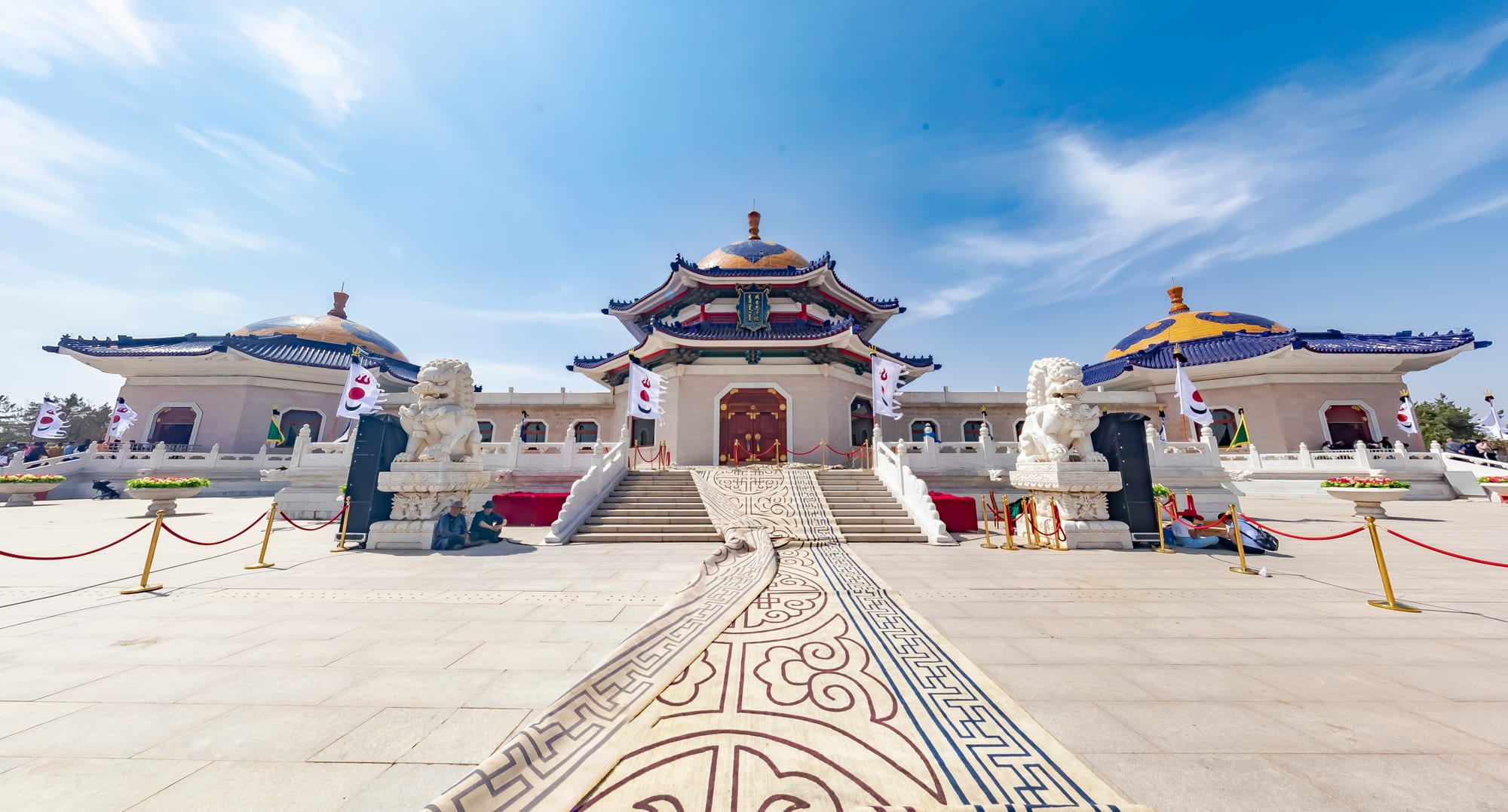
The Ordos Mongols keep distinctive customs, above all the cult of Genghis Khan maintained by the Darkhad families at the mausoleum, where visitors should follow directions closely, circle the halls clockwise, and refrain from photographing ceremonies or ritual objects unless told it is allowed. Ordinary hospitality is Mongol in style: milk tea first, food pressed on guests, spirits offered with a song and taken with the right hand. Signs are in Chinese and the traditional vertical Mongolian script.
Tipping is not expected. Politics, Taiwan, Tibet, Xinjiang, language policy and the Party are sensitive subjects, and security forces, protests, mines and military sites should not be photographed.
💳 Common Payment Methods
The currency is the Chinese yuan renminbi, colloquially kuai. Payment is by QR code through Alipay or WeChat Pay almost everywhere, and both apps now let foreign visitors link an overseas card. Foreign cards work at a few larger hotels and little else, and desert camps, drivers and small stalls may want cash, so carry some notes.