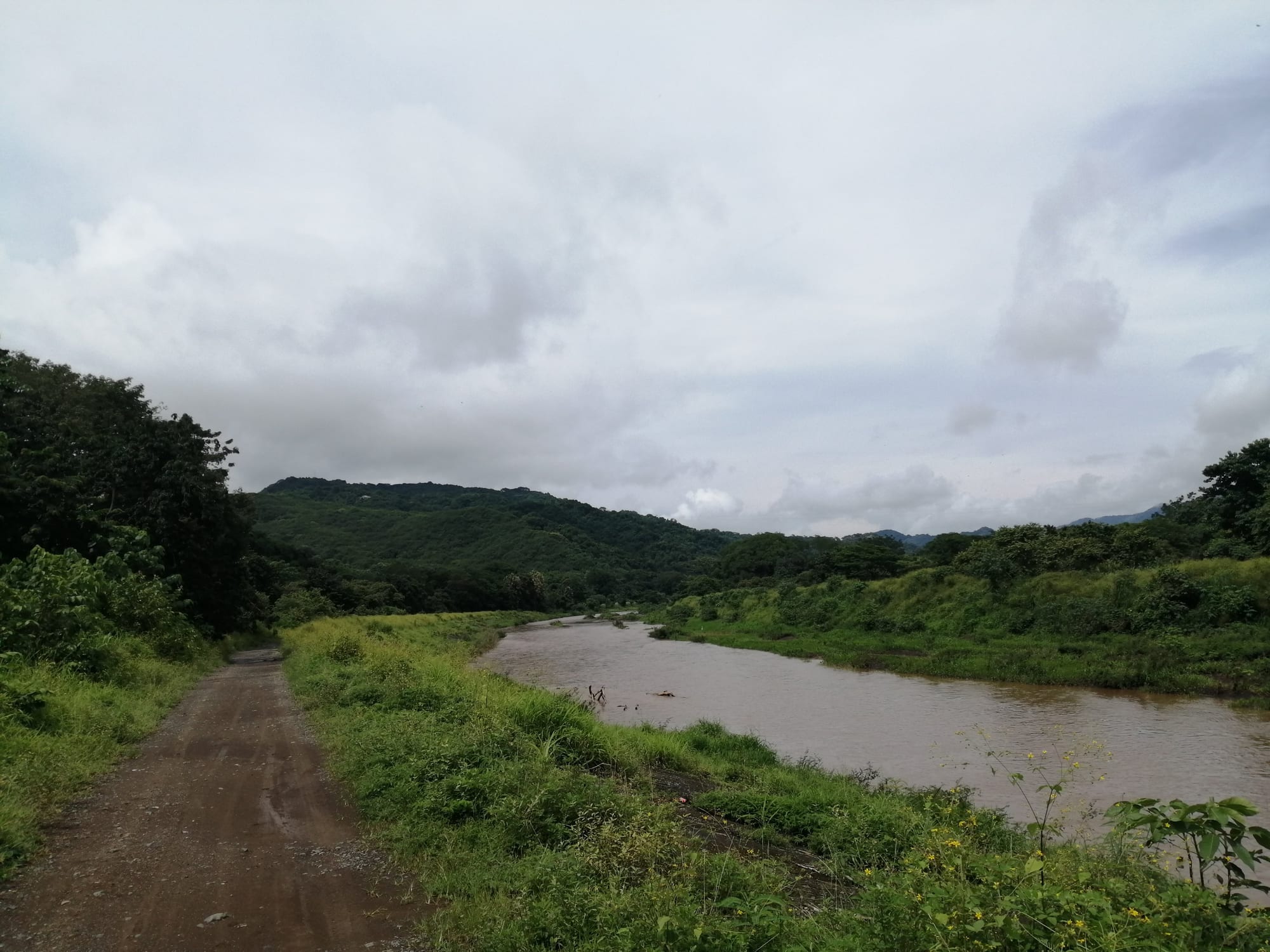
A brown river curving between green banks beside a dirt track, with forested hills under a cloudy sky

Guanacaste & the Nicoya Peninsula, Costa Rica

Nosara

The Nosara River in the rainy season, beside one of the district's unpaved roads. (Di (they-them) / Wikimedia Commons · CC BY-SA 4.0)

A spread-out district on the Pacific coast of the Nicoya Peninsula, where a farming and fishing village inland meets a string of beach communities among the forest. One of the oldest foreign-resident communities in Costa Rica, it is known for the consistent surf of Playa Guiones, its yoga schools and the turtle-nesting beach of Ostional to the north.

Neighbourhoods

  • Playa Guiones
    • Surfing
    • Yoga
    • First-time visitors

    The busiest of the beach communities, set back in the forest behind a long surf beach, with many of the hotels, restaurants, yoga studios, surf schools and wellness centres along its roads. Building is kept back from the sand, so the beach itself feels undeveloped.

    Open in Maps
  • Playa Pelada
    • Beaches
    • Quiet stays
    • Local life

    A smaller beach community, popular with local surfers and a gathering place for Costa Ricans, with rock formations that leave tide pools full of sea life at low tide.

    Open in Maps
  • Esperanza
    • Budget stays
    • Local life

    The settlement bordering Playa Guiones to the south, with the area's largest market, a school and football field, and a few new housing developments, hotels and restaurants.

    Open in Maps
  • Bocas de Nosara
    • Local life
    • Close to the airport

    The village about 6 km inland that is the district's administrative centre, where most local people live. The market, pharmacy, post office, churches, school, library, Red Cross clinic and police station are here, and the airstrip is nearby.

    Open in Maps

Things to do

Beaches and surf

  • Playa Guionesbeach

    A long surf beach with one of the most consistent waves in the world, rideable on more than 300 days a year, and the base for Nosara's surf schools and yoga studios.

    Open in Maps
  • Playa Peladabeach

    A smaller beach with rock formations whose tide pools reveal starfish, sea urchins, crabs and octopuses at low tide, and calmer water for swimming than the open surf beaches.

    Open in Maps
  • Playa Nosarabeach

    One of the three beaches of Nosara, sharing the district's name.

    Open in Maps

Nature

  • Ostional Mixed Wildlife Refugepark

    A protected stretch of coast north of Nosara, created to protect important nesting beaches of the olive ridley turtle and one of the two most important nesting areas in the world for the species; the turtles come ashore in very large numbers during mass nestings.

    Open in Maps
  • Nosara Riverpark

    The river that runs through the village to the sea; boat trips up it show native plants, birds, iguanas, basilisks and crocodiles.

    Open in Maps

Short trips from the town

  • Sámarabeach

    A beach district in the same canton, with a reef-protected beach.

    Open in Maps

Eat and drink

Long-standing places and food districts in Nosara. Hours, ratings and directions come from your maps app, always current.

Food districts and markets

  • Restaurants of Playa Guionesneighborhood

    The roads behind the beach are lined with cafés, smoothie bars and restaurants, many aimed at surfers and visitors to the yoga and wellness centres.

    Open in Maps
  • Beach restaurants at Playa Peladaneighborhood

    A few restaurants right on the sand at Pelada.

    Open in Maps
  • Sodas of Bocas de Nosaraneighborhood

    The small family diners of the inland village, where local people eat casados and other everyday Costa Rican dishes.

    Open in Maps

Experience Nosara

History

Nosara grew up as a fishing and farming area on the Pacific side of the Nicoya Peninsula, far from paved roads, and the peninsula remains one of the last parts of Costa Rica with large areas of unpaved road. Better roads in the 1970s and 1980s brought more settlers and visitors, and Nosara is one of the oldest foreign-resident communities in the country. The district itself is young: it was created on 26 January 1988.

From about 2005 the population multiplied, driven by a construction boom, a steep rise in land values and new services. Foreign residents bought land and built houses, and much of the local population left farm work for jobs in tourism and in building private homes. In 2017 economists at the University of Sydney, studying more than 5,000 surf breaks around the world, named Nosara the fastest-growing surf town anywhere.

Unlike most Costa Rican beach towns, Nosara has almost no development directly on the sand, because much of its coast lies within the protected Ostional refuge, set aside since 1982 for nesting turtles. Hotels and houses stand back in the forest, and the beaches remain largely natural, even as the communities behind them have grown.

Culture & Customs

Two cultures share the district. Inland, Bocas de Nosara is a Costa Rican village of farming and fishing families, with its churches, school, football and market. On the coast, Playa Guiones has become one of the best-known places for yoga in Costa Rica, with several well-known yoga schools, wellness centres and organic smoothie bars, and a surf culture built on a wave that can be ridden on more than 300 days a year.

Playa Pelada is the meeting place between the two, a beach popular with local surfers and a hangout for Costa Ricans as well as visitors. Life in the beach communities revolves around the surf, the yoga studios and the beach.

Conservation shapes the coast. The Ostional refuge protects the beach where olive ridley turtles come ashore in great numbers during mass nestings, called arribadas, which makes the refuge one of the two most important nesting areas in the world for the species, and keeps building back from the sand.

Daily Life

Nosara district had about 4,900 people at the 2011 census, and a 2022 estimate put it at about 9,400. Its villages include Bocas de Nosara, the administrative centre, along with Garza, Guiones, Playa Pelada, Esperanza Sur and many smaller settlements. The five main ocean-front communities, named after their beaches — Nosara, Guiones, Pelada, Garza and Ostional — hold the largest share of the foreign-owned houses, hotels and restaurants.

Much of the population now earns its living from tourism and construction: hotels, restaurants, surf schools, tour offices and the building of private homes. Fishing and farming continue on a smaller scale. Nosara has a Red Cross clinic but no hospital, a public library in the village, and a bank branch near Playa Guiones.

Getting around shapes the day. Local people ride motorcycles, visitors drive golf carts and quad bikes, and the gravel roads are dusty in the dry season and muddy in the rains. Growth has brought a steep rise in land prices.

Food

The beach communities eat the way their visitors live: smoothie bars, organic cafés and international menus are common along the roads of Playa Guiones, reflecting the yoga and surf crowd. A few restaurants stand right on the sand at Playa Pelada.

The everyday food of the district is Guanacaste cooking at the sodas, small family diners, of the inland village and the side roads. Breakfast is gallo pinto, rice and beans fried together; lunch is the casado, rice, beans, salad, fried plantain and a piece of chicken, beef or fish. Maize runs through the local tradition, from hand-patted tortillas to rosquillas, crunchy rings of corn dough.

On the coast the fish is fresh: ceviche, fish marinated in lime with onion and coriander, and fried fish with patacones, the flattened, twice-fried plantain slices. Tropical fruit goes into frescos, drinks of fresh fruit blended with water or milk, found at sodas and cafés alike.

Planning tools

Budget

Nosara is not a cheap place to stay, with many hotels, restaurants, yoga retreats and surf schools priced for foreign visitors and residents. Getting around adds to the bill, since most visitors rent a golf cart or a quad bike, or use taxis. Sodas and the shops of the inland village are cheaper than the beach strip.

Daily Budget Midrange
USD 140–260 (hotel near the beach, restaurant meals, a surf lesson or yoga class, a rented golf cart)
Daily Budget Shoestring
USD 50–85 (hostel dorm, soda meals, walking and the occasional taxi)

Rent a golf cart or quad bike for a few days rather than paying for taxis every trip, and buy groceries in the inland village.

Best Time to Visit

The dry season from about December to April has the most sun and the busiest beaches. The wet season from May to November is greener and quieter, with good surf; September and October are the wettest months, when the unpaved roads of the peninsula become difficult. Olive ridley turtles nest at Ostional in both the dry and the rainy season.

Suggested Number of Days

Three or four days suit a first stay for surf, yoga and the beaches. Six or seven allow time for the turtle refuge and other beaches along the coast. The slow roads in and out make a short visit hard work, and many people stay far longer for a surf or yoga course.

First Visit
3–4 days
With Surroundings
6–7 days

Transportation

Nosara is spread out and surrounded by forest, and its beach communities are linked by dirt roads. Local people mostly ride motorcycles; visitors rent golf carts or quad bikes, which reach everywhere and are cheaper than a car, or call a tuk-tuk, a small three-passenger taxi. A bus runs from San José and Alajuela through Nicoya.

Expect dust in the dry season and mud and river crossings in the rains; ask locally before fording any river.

Airport & Station Connections

Nosara Airport, 3 km inland from the coast and about 15 minutes from the beaches, has domestic flights from San José. Most international visitors fly into Liberia or San José and continue by taxi, shuttle or hire car; the last stretch to the beaches is on gravel roads. A public bus also runs from the capital via Nicoya.

Walkability

Within Playa Guiones or Pelada the beach and the nearest restaurants are within walking distance. The communities are far apart, though, the village centre is 6 km inland, and the dusty, unlit roads and the heat make longer walks hard.

Safety

Costa Rica still compares well with its Central American neighbours, and crime that reaches visitors is usually petty theft or the occasional armed robbery — break-ins to parked rental cars, bag-snatching on beaches, and pickpocketing in San José. Guanacaste is generally calm, but its beach towns share the country's problem of theft: break-ins to rental cars at beaches, bags taken from the sand and burglaries of holiday rentals. Drug-related violence has risen in parts of the province in recent years, mostly among local criminal groups. Rip currents are strong on many open beaches, crocodiles live in river mouths, and the dirt roads are dangerous after dark.

Leave nothing in a parked car or on the sand, swim only where locals do and avoid the river mouth, and do not drive the unpaved roads at night. Check current official travel advice before travelling.

Climate

Across Guanacaste, the driest and hottest part of Costa Rica, the dry season from about December to April is almost rainless and the hills turn brown, while the rains of May to November turn everything green, with a drier spell in July and heavy storms in September and October, when some peninsula roads flood.

Summer
dry season (December–April): across Guanacaste, sunny, dry and hot, around 30–35°C by day
Winter
green season (May–November): across Guanacaste, humid, around 28–32°C, with afternoon storms

Local Customs

Nosara is relaxed and health-minded, with yoga and surfing shaping the rhythm of the beach communities, and English is widely spoken among the many foreign residents. The inland village is a Costa Rican farming community, where a greeting in Spanish and modest dress are expected.

At Ostional follow the rules of the refuge and its local guides, and keep away from nesting turtles.

Common Payment Methods

The currency is the Costa Rican colón, and US dollars are accepted almost everywhere for larger purchases, with change in colones. Cards are taken in most hotels and restaurants. There is a bank branch in a small commercial area near Playa Guiones; carry some colones for sodas, taxis and small shops.