💰 Budget
Bouaké is a working city rather than a tourist one, and prices reflect it. Hotels aimed at traders and officials are plentiful and moderate, market and maquis food costs very little, and transport within the city is cheap. The main extra expense is a car and driver for the Baoulé villages, the lake and the potters at Katiola.
- Daily Budget Midrange
- USD 80–170 (comfortable hotel, restaurants, a car and driver for trips out of the city)
- Daily Budget Shoestring
- USD 25–50 (simple hotel, maquis and market meals, shared taxis and coaches)
Carry CFA francs in small notes; cash machines work in the centre but most trade, including the market and taxis, is cash only.
📅 Best Time to Visit
November to March is the dry season and the easiest time for road travel, although the Harmattan can leave the air dusty and the light flat between December and February. The rains fall mainly from April to October, heaviest around May and June. The carnival usually falls at the end of February or the start of March.
⏳ Suggested Number of Days
A day or two is enough for the city itself, which is about markets, streets and everyday life rather than monuments. Add a day for the Baoulé villages, the potters and the lake nearby, all of which need a vehicle.
- First Visit
- 1–2 days
- With Surroundings
- 3 days
🚆 Transportation
Shared taxis, motorbike taxis and motorised three-wheelers cover the city, and fares are low and fixed by route. Long-distance coaches to Abidjan, Yamoussoukro, Korhogo, Man and Ouagadougou leave from the stations near the centre. The railway to Burkina Faso passes through, though it is used mainly for freight and passenger services are irregular.
Agree the fare before boarding a shared taxi or motorbike, and travel between cities by day.
🛬 Airport & Station Connections
The main approach is by road from Abidjan, about 350 kilometres and five to six hours by coach, with Yamoussoukro roughly an hour and a half to the south-west and Korhogo some four hours north. Bouaké Airport lies a few kilometres from the centre, but coaches and shared taxis carry almost all arrivals.
🚶 Walkability
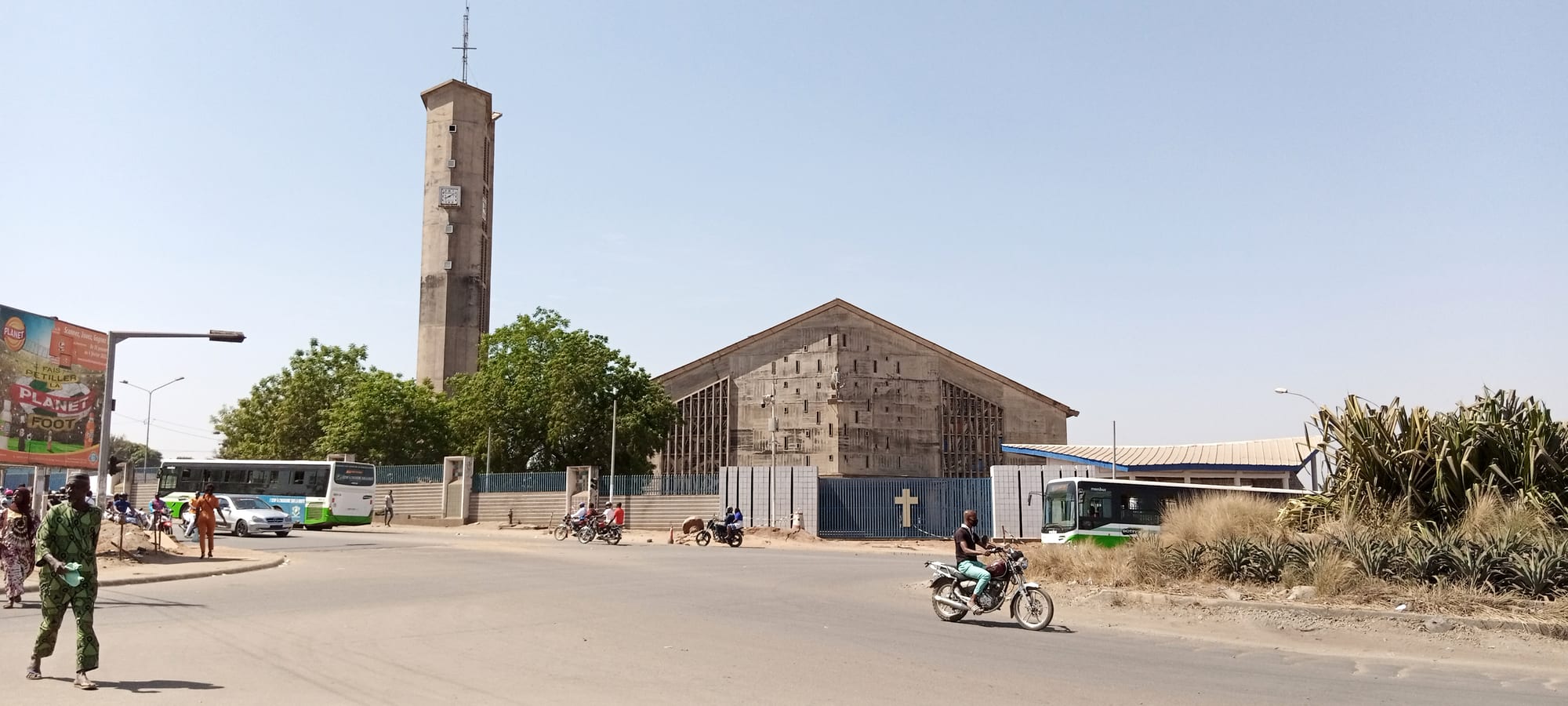
The centre around the market and the cathedral is flat and walkable, and that is where most of a visit happens. The city as a whole is large and spread out, with long, hot, dusty stretches between quarters and traffic of motorbikes and three-wheelers, so people use shared taxis for anything beyond the centre.
🛡️ Safety
Bouaké is generally calm, with pickpocketing and bag-snatching around the market and the bus stations the main concern. The city was the headquarters of the rebellion that divided the country from 2002 to 2011, and a mutiny of soldiers began here in January 2017; daily life has long since returned to normal. Traffic, especially motorbikes, is the everyday hazard.
Use hotel or app-based transport at night in Abidjan, avoid the northern border strip, and check current advice before travelling to the west. Keep bags closed and valuables out of sight in the market, avoid unlit streets after dark, and do not photograph soldiers, police or checkpoints. Check current official travel advice before travelling.
🌦️ Climate
A savanna climate in the drier wedge that reaches down into the centre of the country, hot all year with a long wet season and a dusty Harmattan period.
- Summer
- wet from April to October, typically 21–31°C, with heavy storms in May and June
- Winter
- dry from November to March, typically 19–35°C, with Harmattan haze and cooler nights
🤝 Local Customs
Greetings come first and are unhurried; the right hand is used for giving, receiving and eating. Baoulé chieftaincy and elders command respect, and funerals are the great social occasions, sometimes closing a whole quarter for a weekend. The city has large Christian and Muslim populations, so Friday prayers, Sunday services and the fasting month all shape the week.
Dress modestly in the market and the trading quarters, ask before photographing people or stalls, and accept that a small gift or fee is normal when visiting a village.
💳 Common Payment Methods
The currency is the West African CFA franc (XOF), pegged to the euro. Cash is used for almost everything — market stalls, taxis, maquis and small hotels. Cash machines are available in the centre and larger hotels may take cards, but nothing outside them should be relied on.