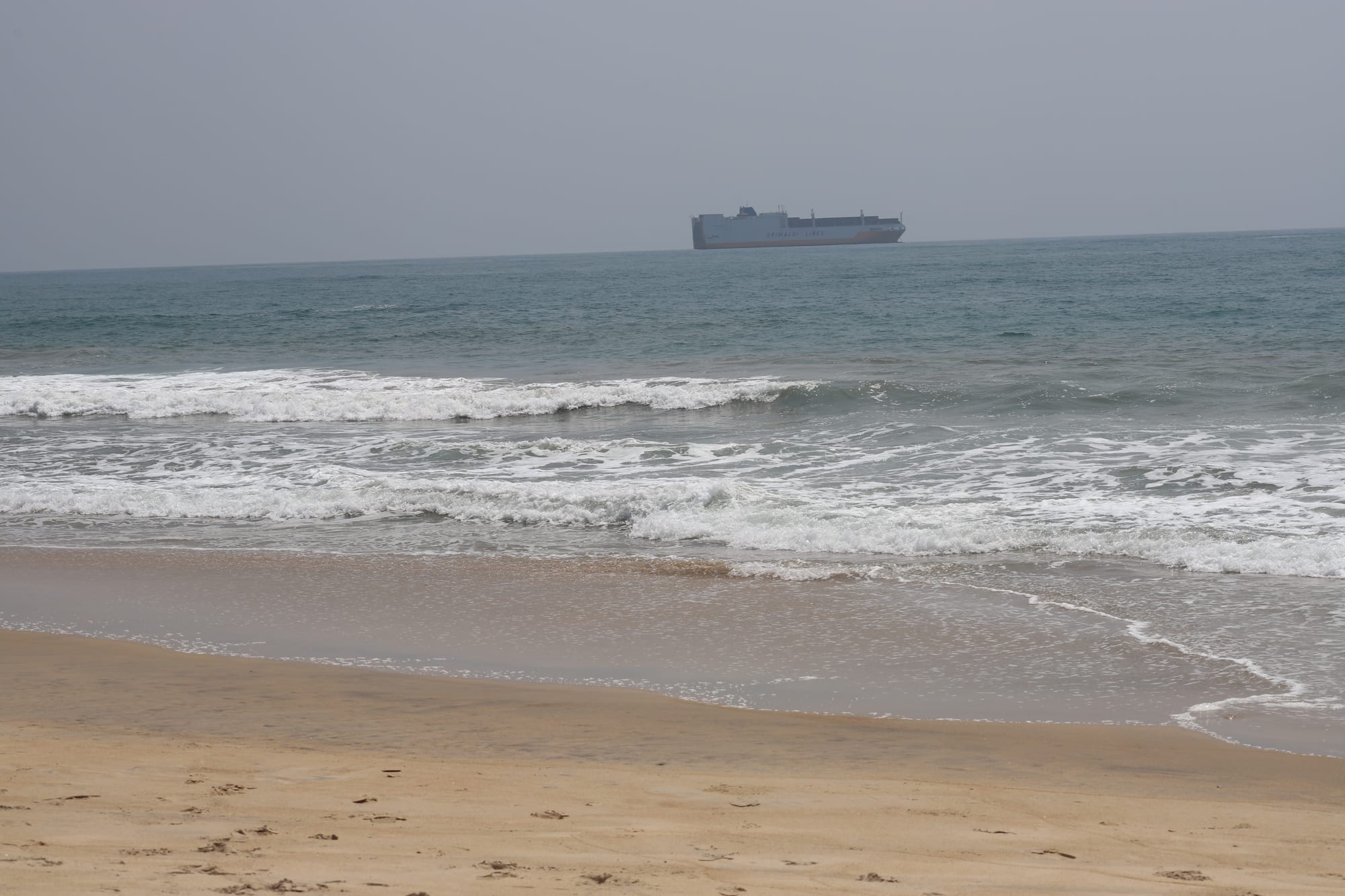
Waves breaking on an empty sandy beach with a large cargo ship anchored offshore under a hazy grey sky

San-Pédro & the Southwest Coast, Côte d'Ivoire

San-Pédro

The beach at San-Pédro, with a ship waiting offshore for the port. (Dadrik / Wikimedia Commons · CC0)

The main city of Côte d'Ivoire's south-west, built from almost nothing around a deep-water port that opened in the early 1970s. It became the outlet for the cocoa frontier cleared behind it and one of the world's leading cocoa-exporting harbours, and is now a working city of warehouses, markets and beaches, and the gateway to the Taï rainforest.

Neighbourhoods

  • Cité and the administrative centre
    • First-time visitors
    • Business district
    • Close to public transport

    The planned core laid out when the port was built, with the administration, banks, the larger hotels and the airport road. Its wide streets and low blocks make it the easiest part of the city to find a way around.

    Open in Maps
  • Bardo
    • Local life
    • Best for food
    • Nightlife

    The large popular quarter that grew with the port and absorbed most of its migrant workers. It holds the busiest markets, the maquis and the street grills, and it is where the city feels most crowded and most alive.

    Open in Maps
  • The port district
    • Industry and shipping

    Warehouses, cocoa stores, processing plants and lorry parks around the harbour and the fishing port. It is a place of work rather than a place to stay, though the artisanal fishing quay is worth a look for the boats and the catch.

    Open in Maps
  • The coast west of town
    • Beaches
    • Quiet and residential

    Sandy bays and rocky points along the road towards Grand-Béréby, with a scatter of guesthouses and beach places. The surf is strong and the coves are largely undeveloped.

    Open in Maps

Things to do

The port and the city

  • The port of San-Pédrotransit hub

    The deep-water harbour opened in the early 1970s, built to ship cocoa, timber, rubber and palm oil from the south-west; it is the country's second port after Abidjan and among the world's leading harbours for cocoa-bean exports.

    Open in Maps
  • The artisanal fishing portattraction

    The quay where wooden pirogues land their catch beside the commercial harbour, with fish sold, smoked and fried on the spot.

    Open in Maps
  • Stade Laurent Pokouattraction

    The city stadium, built between 2018 and 2023 for the 2023 Africa Cup of Nations and named after the Ivorian striker Laurent Pokou, with a capacity of 20,000.

    Open in Maps
  • San Pédro Airporttransit hub

    The city's airport, a short drive from the centre, with flights to Abidjan.

    Open in Maps

Beaches

  • The city beachesbeach

    Long stretches of sand east and west of the harbour, used for football and for weekend picnics; the Atlantic surf here is heavy and the currents strong.

    Open in Maps
  • Monogagabeach

    A village beside the Monogaga Classified Forest, which covers some 350 km² across the Sassandra and San-Pédro departments, with a wide, quiet beach backed by trees.

    Open in Maps

Short trips from the city

  • Grand-Bérébyattraction

    A Kru-speaking coastal town with sheltered sandy bays, a few beach hotels and sea-turtle nesting grounds nearby.

    Open in Maps
  • Taï National Parkpark

    A national park since 1972 and a UNESCO World Heritage Site since 1982, protecting one of the largest blocks of primary rainforest left in West Africa, known for chimpanzees that use tools and for pygmy hippos.

    Open in Maps
  • Sassandraattraction

    The old French port at the mouth of the Sassandra river, with buildings from the colonial period, a busy fishing beach and quiet coves nearby.

    Open in Maps
  • Tabouattraction

    A small Kru coastal town at the south-western tip of the country, with long beaches and a lagoon behind them.

    Open in Maps

Seasonal events

  • The cocoa main cropOctober to March

    Not a festival but the season that sets the city's pace: lorries queue from the plantations, warehouses fill and the port works at capacity.

  • Dry-season beach weekendsDecember to March, and August

    The drier months bring families out to Monogaga and the bays west of the city, and fill the beach maquis at weekends.

Eat and drink

Long-standing places and food districts in San-Pédro. Hours, ratings and directions come from your maps app, always current.

Fish and maquis

  • The fishing port stallsrestaurant

    Fish straight off the pirogues, fried or grilled at stands behind the quay and eaten with attiéké and a raw onion-and-chilli dressing.

    Open in Maps
  • Maquis in Bardorestaurant

    Open-air grills through the city's busiest quarter serving grilled fish and chicken, choukouya mutton and alloco late into the evening.

    Open in Maps
  • Beach grills west of townrestaurant

    Simple places along the coast road cooking prawns, crab and whole fish beside the sand.

    Open in Maps

Markets

  • Bardo marketmarket

    The main produce market, piled with cassava, plantain, chillies, smoked fish and the attiéké made in the villages nearby.

    Open in Maps
  • Grand Marché de San-Pédromarket

    The central market of the planned town, selling food, cloth and household goods, with cooked-food stalls around its edges.

    Open in Maps

Experience San-Pédro

History

There was no city here until the state decided to build one. The site at the mouth of the San-Pédro river was a stretch of Kru-speaking coast, with fishing villages and thick forest behind and no road of consequence. Portuguese and later other European ships had traded along this shore since the 15th century, and the men of the Kru coast were known across West Africa as sailors and dockworkers, but the colonial economy ran through Grand-Bassam and then Abidjan, far to the east.

In the late 1960s the government of Félix Houphouët-Boigny set out to open the south-west. An authority was created to plan a port, a city and the roads to serve them, the harbour opened in the early 1970s, and a town was laid out on a grid beside it with an administrative centre, industrial zones and residential districts. Settlers from all over Côte d'Ivoire and from Burkina Faso, Mali and Guinea arrived to clear forest for cocoa and coffee, and the port grew into the main outlet for the crop.

Growth outran the plan. Bardo and other quarters spread beyond the designed city as workers arrived faster than housing, and land disputes between newcomers and the original inhabitants sharpened during the conflict that split the country from 2002 and the post-election crisis of 2010–11, though the region stayed on the government-held side. Since then the port has been enlarged and deepened, a stadium was built for the 2023 Africa Cup of Nations, and cocoa processing has been added to the trade in raw beans.

Culture & Customs

San-Pédro is a city of arrivals. The coastal Kru-speaking peoples, whose villages line the shore east and west, are the original inhabitants, and their attachment to fishing, to lineage elders and to the sea shapes the older settlements. The city itself was filled by everyone else: Baoulé, Senufo, Malinké and Bété Ivorians, along with Burkinabè, Malian and Guinean families, so that Dioula is the language of the market and French of everything official.

Fanti fishing families from Ghana are part of that mixture, and their painted pirogues, net-fishing and fish-smoking are visible along the coast, with women running the smoking and the sale of the catch. Mosques and churches of several denominations stand within streets of one another, and the religious calendar of both is marked openly.

Life is organised around work. The port runs in shifts, the cocoa season sets the tempo from October, and football is the shared passion, with the stadium a source of local pride since the 2023 tournament. Evenings belong to the maquis, where grilled fish, coupé-décalé and zouglou make the city's nightlife. Manners are West African and unhurried: greetings before requests, respect for age, and patience with the negotiations that precede almost any arrangement.

Daily Life

The city had about 165,000 people at the 2014 census, the sixth-largest in the country, with about 262,000 in the sub-prefecture around it, and it is still growing as migration from the interior continues. Most live in the popular quarters, Bardo above all, rather than in the planned centre, and housing, water and drainage have not kept up with the arrivals.

The port dominates the economy: cocoa beans above all, along with cashews, rubber, palm oil, timber and, increasingly, processed cocoa products, plus the fishing fleet, the warehouses, the hauliers and the customs and shipping businesses that depend on them. Plantation agriculture surrounds the city, and a small mining sector inland adds traffic.

The working day begins early on the quays and in the markets and slows in the afternoon heat. Rain shapes the year more than temperature, flooding low-lying streets in the long wet season. The persistent local issues are deforestation as cocoa has pushed into the last forest reserves, child labour on some farms, which the industry and the government are trying to tackle, land disputes between communities, and the strain that port growth places on a city built for far fewer people.

Food

The coast eats fish, and San-Pédro eats a great deal of it. Whole fish — carp, capitaine, tilapia, barracuda, sole — is grilled over wood and served with attiéké, the fermented cassava couscous, and a dressing of raw onion, tomato and chilli. Prawns, crab and lobster come from the small ports along the coast, and smoked fish from the Fanti smokehouses goes into sauces and stews.

Sauces carry the home cooking of the south-west. Sauce graine, made from the pulp of palm nuts, is cooked with smoked fish or meat and eaten with rice or foutou, pounded plantain and cassava; sauce claire is built on aubergine and seasoned with akpi; and leafy sauces of cassava leaves or other greens are common. Placali, a sticky fermented cassava dough, is the accompaniment in many households. Kedjenou, chicken sealed in a pot with peppers and tomato, is the celebration dish, and choukouya, spiced grilled mutton, is a maquis standard.

Garba — attiéké with fried tuna — is the cheap everyday plate, and alloco, ripe plantain fried in palm oil with a chilli-onion relish, is sold from evening grills. Drinks are bangui, the palm wine tapped across the region, koutoukou distilled from it, gnamakoudji ginger juice, bissap from hibiscus, coconut water and cold local lager. Little of the cocoa that passes through the port is eaten here: almost all of it leaves as beans.

Planning tools

Budget

San-Pédro is cheaper than Abidjan, though its hotels are priced for the port and cocoa trade rather than for tourism, which keeps mid-range rooms dearer than the size of the city suggests. Food is inexpensive, especially fish, and the main cost for anyone exploring is a hired car or driver, since buses do not reach the beaches or the forest.

Daily Budget Midrange
USD 85–190 (business hotel in town or a beach place, restaurants, a hired car for the coast)
Daily Budget Shoestring
USD 35–60 (simple guesthouse, grilled fish and attiéké, coaches and shared taxis)

Withdraw CFA francs here before heading west or towards the park, as cash machines are scarce outside the city.

Best Time to Visit

December to March is the driest and easiest time, with passable forest tracks and calmer seas. A short drier spell falls in August and September. The long rains from May to July are heavy in this, the wettest corner of the country, and turn unpaved roads to mud.

Suggested Number of Days

The city itself needs a day or two. Most visitors are here for what lies around it, and the coast and the rainforest add several more, with travel times rather than opening times deciding the total.

First Visit
1–2 days
With Surroundings
4–6 days

Transportation

Shared taxis and motorbike taxis cover the city, which is spread out between the port, the centre and Bardo. Coaches run to Abidjan along the coastal road and north to Soubré, and shared taxis serve the towns west and east. The beaches, the fishing villages and the edge of the park need a hired car or a driver, and many tracks are difficult in the rains.

Hire a driver who knows the local tracks, and avoid driving at night, when unlit lorries and livestock share the road.

Airport & Station Connections

San-Pédro lies about 350 km west of Abidjan; coaches take roughly six to eight hours along the coastal road through Sassandra, and the small airport a short drive from the centre has flights from Abidjan. Roads run west to Grand-Béréby and Tabou towards the Liberian border and north through the cocoa country to Soubré.

Walkability

The centre is flat and laid out on a wide, modern plan, so short distances are comfortable on foot, and Bardo is walkable in the way a crowded quarter is. The city as a whole is spread out, the port road carries heavy lorry traffic, pavements are intermittent and the humidity is constant, so most people use shared or motorbike taxis between districts.

Safety

The city is generally calm, with petty theft and scams the usual concerns, especially around the markets, the bus stations and the port at night. The sea is the greater danger: strong waves and rip currents make most beaches here unsafe for swimming. Lorry traffic on the port roads is heavy, and some governments advise extra caution in the far west near the Liberian border.

Swim only in sheltered bays, travel by day, and ask locally about conditions before heading towards the Liberian border. Check current official travel advice before travelling.

Climate

The wettest part of Côte d'Ivoire, hot and humid throughout the year, with rain in most months and sea breezes on the coast. The heaviest downpours come between May and July, and a drier spell falls around August and September.

Summer
the long rains from May to July, 24–30°C, humid, with storms that can cut unpaved roads
Winter
the drier months from December to February, 25–32°C, sunny with occasional showers

Local Customs

French is the working language, Kru languages are spoken along the coast and Dioula in the markets, reflecting a population drawn from across the country and West Africa. Greetings come before business, elders are addressed first, and dress is modest away from the beach. The port, the airport and official buildings should not be photographed.

Ask before photographing people, boats or catches, and expect identity checks at road checkpoints, so carry a passport or a copy. Tipping is modest and not expected.

Common Payment Methods

The currency is the West African CFA franc (XOF), pegged to the euro. Cash runs daily life; markets, maquis, taxis and boatmen take nothing else. Cash machines and bank branches are concentrated in the city centre, with few beyond it, and cards are accepted only at larger hotels. Mobile money is widely used for small payments.