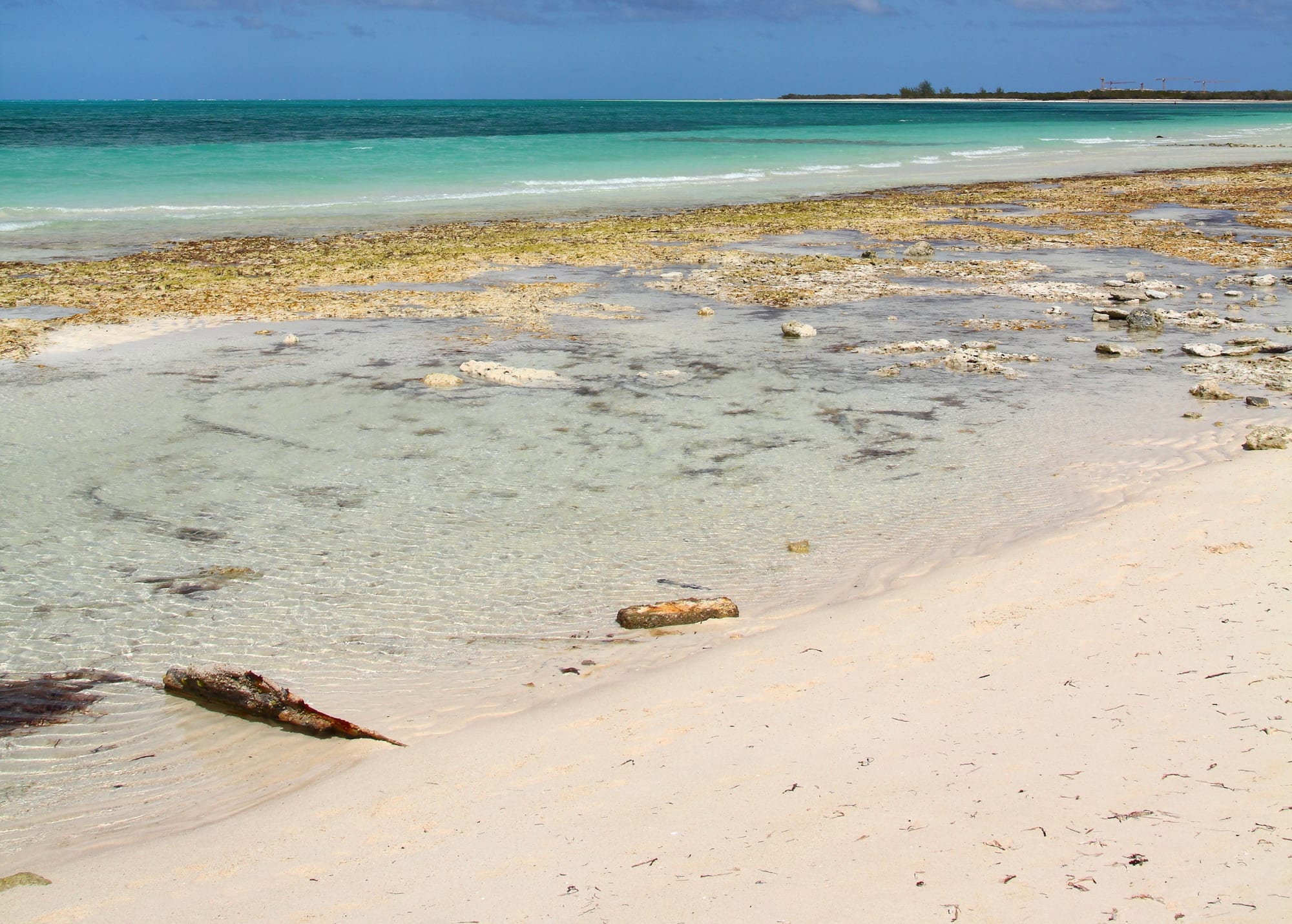
Pale sand and clear shallow water over a rocky reef flat, with turquoise sea and a low wooded shore on the horizon

Camagüey & the Centre-East, Cuba

Cayo Coco

A sandy beach and the reef on Cayo Coco, in the Jardines del Rey cays. (Marek Ślusarczyk (Tupungato) Photo portfolio / Wikimedia Commons · CC BY 3.0)

A low, largely wild island of 370 square kilometres off the north coast of Ciego de Ávila province, part of the Jardines del Rey cays. Once a refuge for buccaneers and a few fishermen and charcoal burners, it was joined to the mainland by a 27-kilometre causeway in 1988 and is now a strip of all-inclusive resorts on long white beaches facing a coral reef.

Neighbourhoods

  • The north-shore beaches
    • Beaches
    • First-time visitors

    All of Cayo Coco's hotels stand in the same area along the north shore, about a quarter of an hour from the airport, behind long beaches of white sand with the reef offshore. There is no town: the resorts supply meals, entertainment and transport, and tour desks arrange trips beyond.

    Open in Maps
  • Cayo Guillermo
    • Beaches
    • Quieter stays

    The smaller cay to the west, joined to Cayo Coco by a short causeway, with its own string of resorts and, at its western end, Playa Pilar, named after Hemingway's boat. Deep-sea fishing made it famous in the 1960s, before the hotels.

    Open in Maps
  • The interior and the Bay of Dogs
    • Nature
    • Birdwatching

    Away from the beaches the island is still largely wild, with swamps and scrubland roamed by wild cattle. On the south side lies the shallow Bay of Dogs, crossed by the causeway, where wild flamingos feed and can often be seen from the road.

    Open in Maps

Things to do

Beaches

  • Playa Largabeach

    One of the Cayo Coco beaches counted among the most beautiful in Cuba.

    Open in Maps
  • Playa Flamencosbeach

    Another of the cay's beaches counted among the most beautiful in Cuba.

    Open in Maps
  • Las Coloradasbeach

    A third Cayo Coco beach counted among the most beautiful in Cuba.

    Open in Maps
  • Playa Pilarbeach

    At the western end of Cayo Guillermo, often called one of the best beaches in Cuba and named after Ernest Hemingway's fishing boat; Cubans who can afford the trip come here too.

    Open in Maps

Nature and the other cays

  • Cayo Guillermoattraction

    The neighbouring cay to the west, reached by a short causeway, which provided the setting for the climax of Hemingway's last novel, Islands in the Stream.

    Open in Maps
  • Parque Natural El Bagapark

    A small nature park on the site of the island's earlier airport, reclaimed as a park after the new airport opened in 2002.

    Open in Maps

Short trips from the cay

  • Cayo Romanoattraction

    The largest cay of the Jardines del Rey, in Camagüey province, joined to the east end of Cayo Coco by a short causeway.

    Open in Maps
  • Morónattraction

    The closest town on the mainland, where many hotel workers live — a quick way to see more of ordinary Cuban life than the resorts allow.

    Open in Maps
  • Laguna de Lechepark

    The largest natural freshwater lake in Cuba, in the wetlands north of Morón, with bars and a restaurant on stilts on its shores.

    Open in Maps
  • Ciego de Ávilaattraction

    The provincial capital on the central highway, whose municipality had 156,322 people in 2022, visited on day tours from the resorts.

    Open in Maps

Eat and drink

Long-standing places and food districts in Cayo Coco. Hours, ratings and directions come from your maps app, always current.

Cayo Coco classics

  • Resort restaurants and snack barsrestaurant

    Almost every meal on the cay is taken in the resorts, where buffets, snack bars and à la carte restaurants serve chicken, pork and fish.

    Open in Maps
  • Eating in Morónneighborhood

    The nearest mainland town, where small private restaurants serve everyday Cuban food at local prices.

    Open in Maps

Experience Cayo Coco

History

In the early colonial period Cayo Coco was a hideout for buccaneers, and for centuries afterwards it was home only to a small settlement of fishermen and charcoal producers. The island takes its name from the white ibis, known locally as the coco bird. Its neighbour, Cayo Guillermo, gained fame among deep-sea fishermen in the 1960s, and both cays and their waters provided settings for Ernest Hemingway, in Islands in the Stream and The Old Man and the Sea.

Development began with the causeway. Built in 16 months from some 3 million cubic metres of stone, it runs 27 km across the Bay of Dogs and opened on 26 July 1988. It worried environmentalists by blocking the tides and changing the salinity and temperature of the bay, and gaps were later cut to restore some of the flow. The first resort opened in 1993. On neighbouring Cayo Guillermo, Cubans were for some years not allowed unless they worked at the resorts or had special permission, a rule lifted after 2000.

An earlier airport on the island was replaced in December 2002 by Jardines del Rey Airport, and direct international flights followed. On 9 September 2017 Hurricane Irma devastated the strip of hotels and the airport. The cay remains one of Cuba's main resort destinations, though the fuel shortages of 2026 have hit flights and visitor numbers across the island.

Culture & Customs

Cayo Coco has no town and no long-settled community, and it is hardly typical of Cuba. Its culture is that of the resorts — music and dance shows in the evenings, dancing lessons and water aerobics by day, and a nightclub built inside a cave. Visitors who want to see more of the country take a taxi or a tour to Morón, the nearest town, or further to the provincial capital, Ciego de Ávila.

The literary connection is the one most often mentioned. Playa Pilar on Cayo Guillermo carries the name of Hemingway's boat, and the climax of Islands in the Stream is set on that cay. For Cubans the beaches carry a different meaning: for years Cubans could not visit Cayo Guillermo unless they worked there, and since the rule was lifted, Cubans who can afford motor transport often visit Playa Pilar.

The people who make the resorts run are Cubans from the mainland. Many travel every day along the causeway from Morón and Ciego de Ávila, and tips matter to their income. Spanish is the everyday language, though most hotel staff speak some English, and many speak several languages, thanks to Cuba's free education system.

Daily Life

Cayo Coco has no permanent town, and no resident population is recorded for it; it is administered by the municipality of Morón on the mainland. Daily life on the island is the life of its hotels: about a dozen large international resorts with around 5,000 rooms between them, a clinic for visitors, the airport and a few roads, set among swamps and scrubland where wild cattle roam. Long-term plans for the Jardines del Rey envisage many more rooms.

The workforce lives on the mainland. Many staff commute from Morón, in buses provided for them. Importing goods from Europe is expensive, so the resorts work with what is available.

The pressures facing Cuba reach the cays too. Since the United States began blocking fuel shipments to the island in early 2026, Cuba has stopped refuelling airliners, several foreign airlines have suspended routes and visitor numbers have fallen steeply, leaving the resorts that depend on international flights quieter than before. On the mainland, the towns that supply the workers live with long power cuts, rationing and queues.

Food

Food on Cayo Coco is resort food. Most hotels are all-inclusive, with buffets, snack bars and à la carte restaurants, and meals feature a lot of chicken, pork and fish, plenty of vegetables and some fruit. Cuban cooking is not spicy, and with resources limited and imports expensive, dishes can be plain, so some visitors bring their own seasoning.

The Cuban staples appear on most menus: rice and black beans, together as moros y cristianos or congrí, roast pork, fried plantain as crisp tostones or sweet maduros, and yuca with mojo, a garlic and citrus dressing. Ciego de Ávila province is identified with the pineapple and also grows citrus and plantains.

Rum is the drink of celebrations across Cuba, and the mojito and the daiquirí are its best-known cocktails; strong, sweet coffee in small cups punctuates the day. For everyday Cuban food at local prices, the small private restaurants of Morón are the nearest alternative to the hotels.

Planning tools

Budget

Cayo Coco is a separate world of all-inclusive resorts with no local housing, so almost every visitor comes on a package that covers room, food and drink. Packages bought abroad are much cheaper than rooms booked on arrival. Excursions, catamaran trips, diving and taxis to the mainland cost extra and are usually paid in cash.

Daily Budget Midrange
USD 120–200 (an all-inclusive resort on a package, with an excursion or two)
Daily Budget Shoestring
USD 60–90 (staying in Morón and visiting the cay on a day trip)

Resorts on the cays are much cheaper as part of a package bought abroad than when booked on arrival.

Best Time to Visit

December to April, when the weather is dry and warm and the beaches are at their best; the cays are busiest with Canadian and European visitors in the northern winter. Summer is hotter and wetter, and September and October carry the highest hurricane risk on this flat, exposed coast.

Suggested Number of Days

Most visitors come for a week of beach time on a package. A few extra days allow trips to the mainland towns and lakes. Flights can be disrupted by fuel shortages, so allow some slack around arrival and departure.

First Visit
5–7 days
With Surroundings
7–10 days

Transportation

There is no public transport to speak of. Resorts move guests by bus from the airport, and a hop-on, hop-off tourist bus that stops at every resort links the hotels with Playa Pilar on Cayo Guillermo. Taxi drivers organise inexpensive tours of the mainland for small groups.

Carry a passport on any trip off the cay: access to the causeway is controlled by a security checkpoint.

Airport & Station Connections

Jardines del Rey Airport, on the island itself, opened in December 2002 and receives international flights, chiefly from Canada and Europe; the hotels are about a quarter of an hour away by bus. Before it opened, visitors flew into Máximo Gómez Airport near Ciego de Ávila, about 70 km to the south. By road the cay is reached from Morón by a causeway 27 km long across the Bay of Dogs. Fuel shortages have disrupted flights since 2026, and several foreign airlines suspended routes to Cuba.

Walkability

Within a resort and along the beach everything is on foot, and the sand makes for long walks. The hotels are spread along the shore and the roads between them are built for buses and cars, so moving between resorts or to Cayo Guillermo means the tourist bus or a taxi.

Safety

Cuba has low levels of violent crime and is generally very safe for visitors. On the cays, theft from rooms and beaches and sunburn are the main concerns. Power cuts and water shortages are frequent in the mainland towns, and island-wide blackouts have recurred through 2026.

Use the room safe, keep an eye on belongings on the beach, protect against the sun and drink plenty of water. Check current official travel advice before travelling.

Climate

Tropical, with the cays cooled by the trade winds. The dry season runs from November to April; the wet season from May to October brings heavy storms, and the flat northern coast and cays are exposed to hurricanes — Hurricane Irma struck in September 2017.

Summer
hot and humid, a little cooler on the cays than the 32–34°C of the region's inland plains, with afternoon storms
Winter
warm and dry, around 26–28°C by day in the region

Local Customs

Spanish is the language of the island, and most resort staff speak some basic English; outside the hotels a little Spanish goes a long way. Many of the people who work in the resorts commute from Morón and Ciego de Ávila, and tips matter to their income. Cuban food is not spicy.

Respect the wildlife: flamingos and other birds in the lagoons and the bay should be watched from a distance.

Common Payment Methods

The currency is the Cuban peso (CUP), but tourist services on the cays are priced in US dollars or euros. Bring cash in euros or US dollars for extras and tips; ATMs are unreliable, US-issued cards do not work, and there are several official exchange rates and a far weaker informal one.