💰 Budget
Morón is far cheaper than the cays across the causeway, and staying in a casa particular here is the budget way to see the beaches. Casas and paladares in the region's towns are among the cheaper in Cuba. Prices shift fast because of the exchange rates and the shortages, and almost everything is paid in cash.
- Daily Budget Midrange
- USD 80–150 (a good casa, paladar dinners, taxis to the lake and a day on the cays)
- Daily Budget Shoestring
- USD 30–55 (casa particular, home-cooked meals, bicycle taxis and trains)
Agree the fare before getting into a bicycle taxi or a taxi, and bring all the cash needed in euros or US dollars.
📅 Best Time to Visit
December to April is dry and warm, the best time for the lake and for day trips to the beaches on the cays. The wet season from May to October brings heavy storms, and September and October carry the highest hurricane risk on this flat northern coast.
⏳ Suggested Number of Days
A day or two covers the town and the lake. Allow three or four days to add the beaches of the cays as day trips from a base in the town. Fuel shortages can disrupt taxis and trains, so a spare day helps.
- First Visit
- 1–2 days
- With Surroundings
- 3–4 days
🚆 Transportation
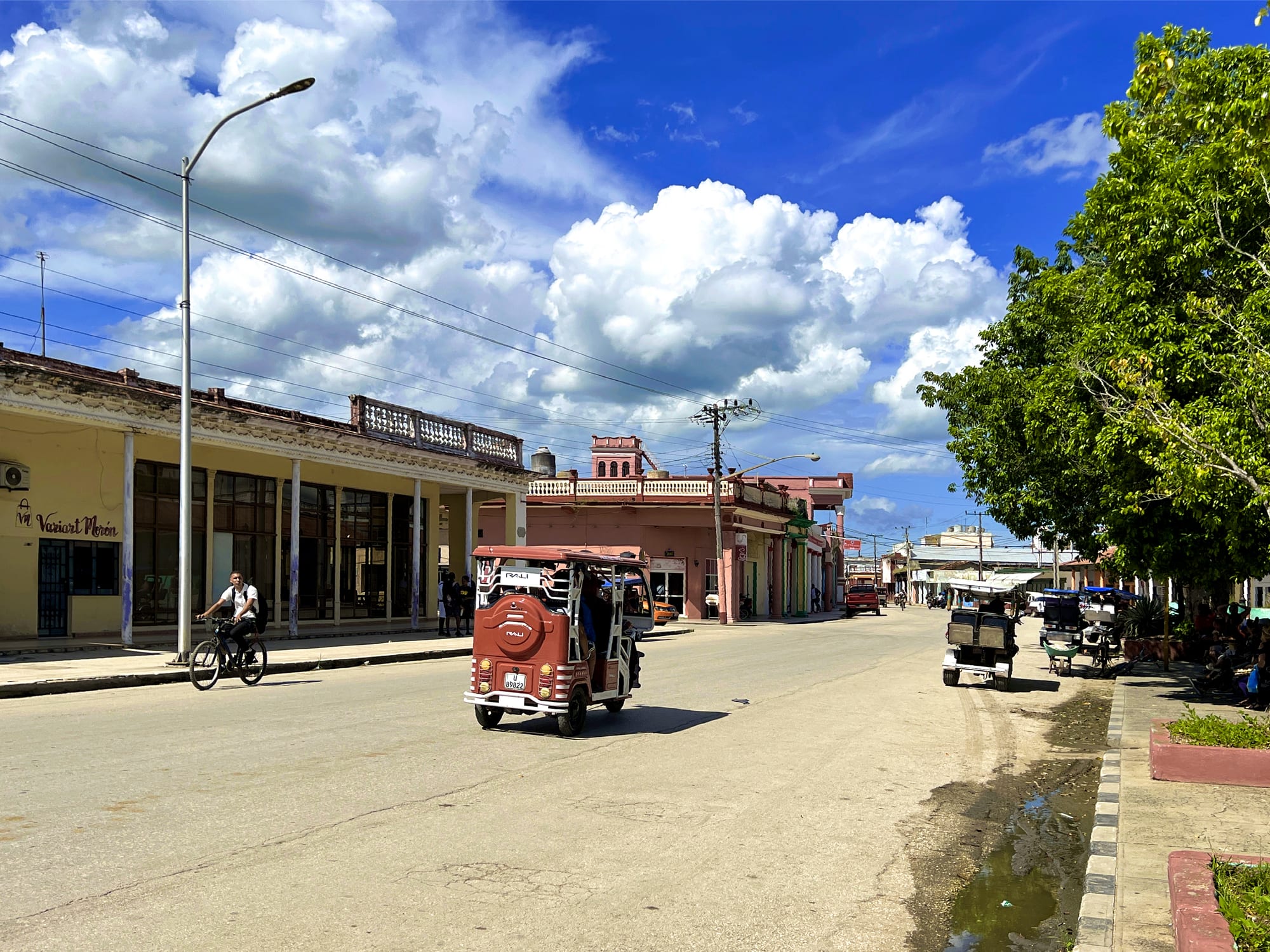
Bicycle taxis dominate the streets and seat two passengers each; agree the fare first, as operators try to charge visitors more. Taxis run to the lake and across the causeway to the cays, and taxi drivers on the cays organise tours to the town. Trains run to Ciego de Ávila and on the line between Santa Clara and Nuevitas.
Carry a passport when crossing to the cays: access to the causeway is controlled by a security checkpoint.
🛬 Airport & Station Connections
Morón is served by Jardines del Rey Airport on Cayo Coco, across the causeway to the north, which receives international flights for the resorts. The main road from Ciego de Ávila and the Carretera Central to Cayo Coco skirts the town, the northern highway, the Circuito Norte, passes through it, and there are regular trains from Ciego de Ávila. Fuel shortages have disrupted flights and transport since 2026.
🚶 Walkability
The town is flat and compact, and the centre, the main square and the station are easy on foot. The Laguna de Leche is a walk of under two hours from town or a short taxi ride, and the cays need a car or a taxi.
🛡️ Safety
Cuba has low levels of violent crime and is generally very safe for visitors. The region around Morón is calm and crime against visitors is uncommon; the realistic issues are overcharging and petty theft. Power cuts and water shortages are frequent, and island-wide blackouts have recurred through 2026.
Agree fares in advance, keep valuables secure, and keep a torch for blackouts. Check current official travel advice before travelling.
🌦️ Climate
Hot and tropical on the plains, with the coast and the cays cooled by the trade winds. The dry season runs from November to April; the wet season from May to October brings heavy storms, and the flat northern coast is exposed to hurricanes — Hurricane Irma struck the area in September 2017.
- Summer
- hot and humid, around 32–34°C by day inland in the region, with heavy storms
- Winter
- warm and dry, around 26–28°C by day in the region, with cool nights inland during cold fronts
🤝 Local Customs
Morón is proud of its rooster, and the old Spanish saying 'like the rooster of Morón, plucked and still crowing' is attached to the town. Many residents work in the resorts on the cays, so tourism and tips matter to local incomes. Spanish is the language of daily life, and English is limited outside tourism.
Ask before photographing people, and expect friendly approaches offering rooms, taxis or tours — a polite no is enough.
💳 Common Payment Methods
The currency is the Cuban peso (CUP), but many tourist services are priced in US dollars or euros. Bring cash in euros or US dollars and change small amounts at a time; there are several official rates and a far weaker informal one. ATMs are unreliable and US-issued cards do not work.