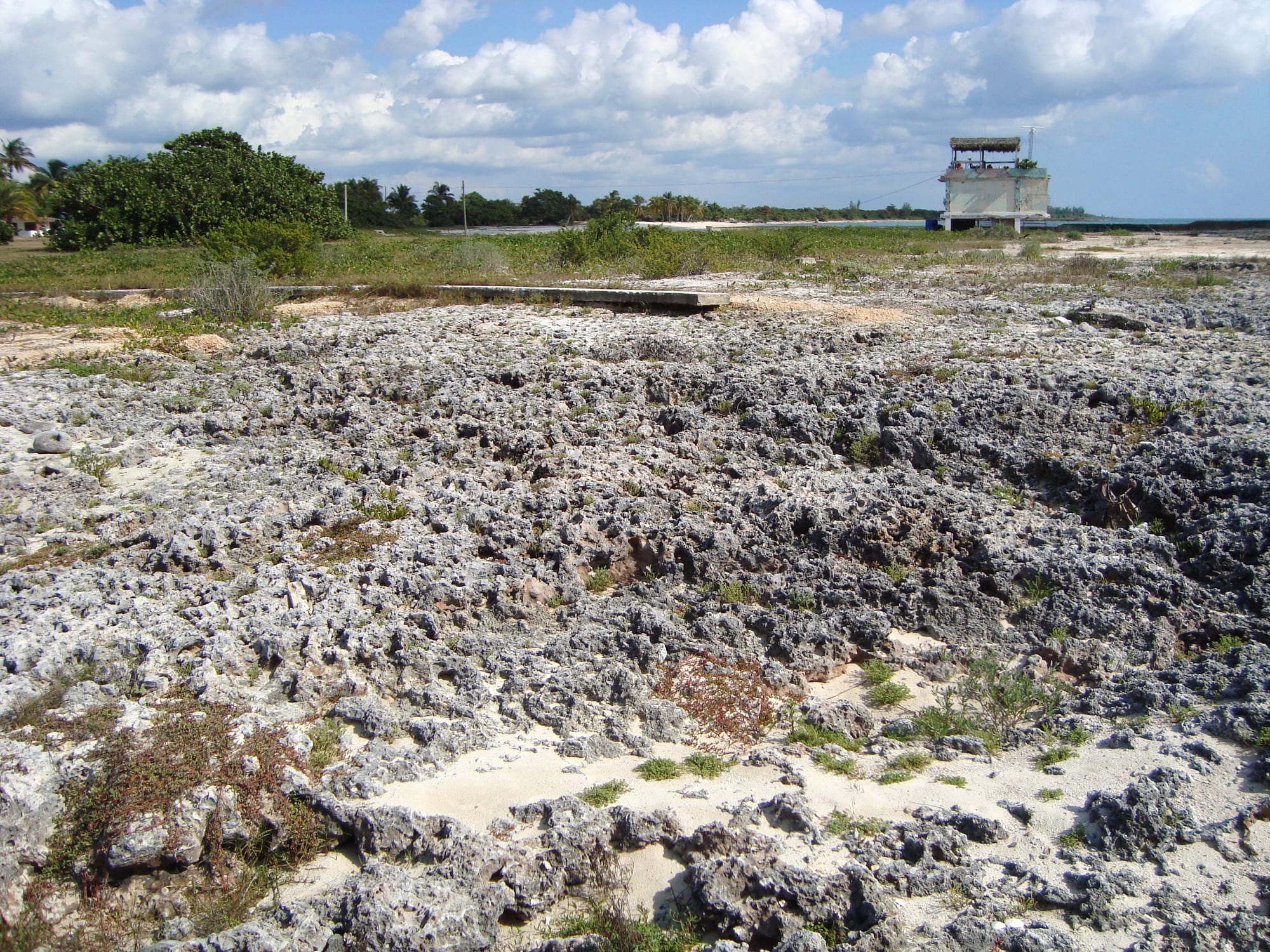
Rough grey coral rock along the shore at Playa Girón, with scrub, palm trees and a small lookout building under a cloudy sky

Varadero & Matanzas, Cuba

Playa Girón

The coral-rock shore of the Bay of Pigs at Playa Girón. (Adam Jones from Kelowna, BC, Canada / Wikimedia Commons · CC BY-SA 2.0)

A beach and small village on the east shore of the Bay of Pigs, on Cuba's south coast, inside the Zapata Swamp. It is known above all as the place where the 1961 invasion by Cuban exiles ended, and today it is a quiet base for reef diving, birdwatching in the swamp and family homestays.

Neighbourhoods

  • Playa Girón village
    • History
    • Diving
    • Quiet and residential

    The small village and beach at the eastern side of the bay, with the Museo Girón and a dive centre working from the shore. Family homestays here cook for their guests, and the coast's dive and snorkel sites lie along the road to the north-west.

    Open in Maps
  • Playa Larga
    • Birdwatching
    • Beaches
    • Close to public transport

    The seat of the Ciénaga de Zapata municipality, at the head of the Bay of Pigs about 35 km north-west of Girón. It has its own dive centre and homestays and is the more convenient base for trips into the swamp.

    Open in Maps
  • Caletón
    • Beaches
    • Homestays

    The village just west of Playa Larga, where many of the casas particulares stand right by the water and the evenings are very quiet.

    Open in Maps

Things to do

The Bay of Pigs

  • Museo Girónmuseum

    A small museum dedicated to the 1961 invasion, telling the Cuban government's account of the fighting.

    Open in Maps
  • Bay of Pigsattraction

    The inlet of the Gulf of Cazones whose shores saw the 1961 landings; it is now a quiet diving area with a dozen dive sites and visibility of 20 to 40 metres.

    Open in Maps

Diving and the coast

  • Cueva de los Pecesattraction

    A flooded tectonic fault beside the coast road, about 70 metres deep, popular for snorkelling and diving, with a reef of hard coral and a sunken wreck across the road on the sea side.

    Open in Maps
  • Caleta Buenabeach

    A cove on the coast of the bay, one of the three places along it with a dive centre.

    Open in Maps
  • Playa Maquinabeach

    A beach just east of Playa Larga, also called Caleta del Rosario, with white coral sand, calm shallow water and limestone sinkholes along the shore.

    Open in Maps

Short trips into the Zapata Swamp

  • Zapata Swamppark

    The best-preserved wetland in the Antilles and a Ramsar site, home to the bee hummingbird, the Zapata wren and the Cuban crocodile, and visited by 65 species of migrating birds.

    Open in Maps
  • Crocodile farm near Playa Largaattraction

    A crocodile breeding farm on the road between the Australia junction and Playa Larga, where visitors see the animals at close range.

    Open in Maps
  • Guamá and the Laguna del Tesoroattraction

    A boat ride from the crocodile farm across the Treasure Lake to Guamá, an island with a reconstructed Taíno village and 32 sculptures of Indigenous life.

    Open in Maps

Eat and drink

Long-standing places and food districts in Playa Girón. Hours, ratings and directions come from your maps app, always current.

Playa Girón classics

  • Homestay dinners in Playa Girónneighborhood

    Family homestays serve fish, shrimp and, when available, lobster, cooked with garlic and lime — the main way to eat well along this coast.

    Open in Maps
  • Homestay dinners in Caletón and Playa Larganeighborhood

    Casas in the villages at the head of the bay cook dinners for their guests, which can include chicken, fish, lobster and local specialities such as crocodile and jutía, a large native rodent.

    Open in Maps
  • Restaurant at Cueva de los Pecesrestaurant

    A simple restaurant beside the snorkelling pool, used by divers between swims.

    Open in Maps

Experience Playa Girón

History

The village of Girón takes its name from Gilberto Girón, a French pirate of around 1604. Before 1959 the Zapata Peninsula, a land of swamp, forest and coral rock, was among the poorest parts of Cuba. Until 1976 the Bay of Pigs belonged to the old province of Las Villas; it was then reassigned to Matanzas Province.

In April 1961 Playa Girón was one of two landing sites in the Bay of Pigs Invasion, when more than 1,400 armed Cuban exiles of Brigade 2506, trained and financed by the US CIA, came ashore in an attempt to overthrow the government of Fidel Castro. The main force landed at Playa Girón on the night of 17 April. Over 72 hours fighting spread across the Ciénaga de Zapata, and Playa Girón was the last area held by the invaders before they were defeated by Cuban government forces. In Cuba the whole episode is known as Girón, and the Museo Girón in the village tells the government's account of it.

After the revolution the peninsula was among the first areas the new government developed, with roads, schools and a hospital, and its people have long supported the state. Today the village also draws visitors — divers for the clear water of the bay and birdwatchers for the swamp.

Culture & Customs

The battle shapes local identity. Roadside memorials recall the fighting, and since 1962 Cuba's national amateur boxing championship has carried the beach's name, won over the years by champions including Teófilo Stevenson. The singer-songwriter Silvio Rodríguez named a song after a fishing boat called Playa Girón, on which he worked in 1969 and 1970, its title also recalling the battle.

Everyday culture is that of a small rural community in a vast wetland. People on the peninsula live in scattered villages with a strong sense of their swamp; once home mostly to charcoal burners and fishermen, they now also have park guides, dive instructors and homestay hosts. The swamp is the home of the Cuban crocodile, which in the wild is restricted to Zapata.

Music and dominoes fill the evenings much as elsewhere in Cuba, at a slower pace. Birdwatching has become part of the local way of life too: guides take visitors into the swamp in search of the tocororo, or Cuban trogon, the national bird, and the bee hummingbird, the smallest bird on the planet.

Daily Life

The village is part of the municipality of Ciénaga de Zapata, the largest in Cuba by area, which had about 10,000 people in 2022 spread over more than 4,000 square kilometres; Playa Larga, at the head of the bay, is the municipal seat. A large part of the municipality is protected as the Zapata Swamp, after which it is named, and it has the lowest population density in Cuba. Settlements are small and far apart, linked by the coast road and the road north through the swamp.

Most people work in farming or in the growing tourism sector — homestays and services for birdwatchers and divers, with dive centres at Playa Larga, Playa Girón and Caleta Buena.

Daily life follows the national pattern of low state wages, shortages and long power cuts, made harder by distance: transport is thin, and fuel shortages make getting in and out harder still. Like the rest of Matanzas, the area has lost many young people to emigration.

Food

Food on the peninsula is cooked mostly in family homestays rather than restaurants. Fish and shrimp from the bay come grilled or stewed with garlic and lime, and lobster appears when available, alongside the national staples of rice and beans, pork, chicken, yuca and plantain. Homestays commonly offer breakfast and dinner to their guests.

The swamp adds its own specialities. Crocodile meat is served at the restaurant of the crocodile farm near Playa Larga and in some homestays, and jutía, a large native rodent, is an old rural dish for the adventurous. Casabe, the flat cassava bread with Taíno roots, is still made in parts of the province.

Drinks are simple: strong sweet coffee in the morning, fresh fruit juices, and rum and beer in the evening, with guarapo, pressed sugar-cane juice, sold at roadside stands in the cane country on the way in from the autopista. Beside the snorkelling pool at the Cueva de los Peces, a simple restaurant feeds divers between swims.

Planning tools

Budget

Playa Girón and Playa Larga have simple family homestays that include meals, and they are the cheapest way to stay. Dives, snorkelling trips and guided excursions into the swamp are the main extra costs, and taxis add up because public transport is thin. Bring cash for everything: Cuba is essentially a cash economy for visitors.

Daily Budget Midrange
USD 90–180 (a good casa with meals, a dive or two, a guided swamp trip, private taxis)
Daily Budget Shoestring
USD 35–60 (casa particular with meals, snorkelling with own gear, local buses)

Bring all the cash needed in euros or US dollars; there is little chance of finding a working ATM on the peninsula.

Best Time to Visit

December to April is dry and best for diving and for birdwatching, when migrant birds winter in the swamp. Summer is hot, wet and buggy, with heavy rain in the swamp, and September and October carry the highest hurricane risk.

Suggested Number of Days

A night or two covers the village, the museum and the coast. Divers and birdwatchers often stay three or four days, and the number grows when transport is disrupted by fuel shortages.

First Visit
1–2 days
With Surroundings
3–4 days

Transportation

Public transport on the Zapata Peninsula is thin. A local bus links Playa Larga and Playa Girón, but the national park and the dive sites are much easier with a car, a taxi or a tour, and most visitors come by one of these. Homestays can arrange taxis and dive trips.

Arrange transfers in advance, and fill up the tank whenever fuel is available.

Airport & Station Connections

Víazul buses run from Havana to Playa Larga and Playa Girón and on to Cienfuegos and Trinidad, and the peninsula is about two hours' drive from Havana, off the autopista to the south. Fuel shortages regularly disrupt buses and taxis, and Cuba stopped refuelling airliners at its airports in February 2026.

Walkability

The village itself is small and easy on foot, with the museum and the beach close together. The dive sites, the other beaches and the swamp are spread along many kilometres of coast road, so walking is not a practical way to reach them, especially in the heat.

Safety

Cuba has low levels of violent crime and is generally very safe for visitors. On the Zapata Peninsula the risks are natural ones — mosquitoes, heat, crocodiles in the lagoons — and the whole province faces power cuts and hurricanes.

Use insect repellent in the swamp, swim only where local people do, carry water and a torch, and keep valuables locked away. Check current official travel advice before travelling.

Climate

Hot, humid and tropical. The wet season from May to October is hotter, with heavy rain in the swamp and thick mosquitoes; November to April is drier and milder.

Summer
Around Playa Girón and the Zapata Swamp, May to October averages about 30°C, with heavy rain
Winter
Around Playa Girón and the Zapata Swamp, November to April averages about 20°C and is drier

Local Customs

Playa Girón is a place of national memory in Cuba, where the 1961 fighting is known simply as Girón, and roadside memorials mark where people died. Life on the peninsula is rural and quiet. Spanish is the everyday language, and English is limited outside the dive centres.

Treat the memorials with respect, ask before photographing people and homes, and tip guides, divers and casa hosts in cash.

Common Payment Methods

The currency is the Cuban peso (CUP), but most services for visitors are priced in US dollars or euros. Bring cash; US-issued cards do not work, ATMs are unreliable, and change only small amounts at a time.