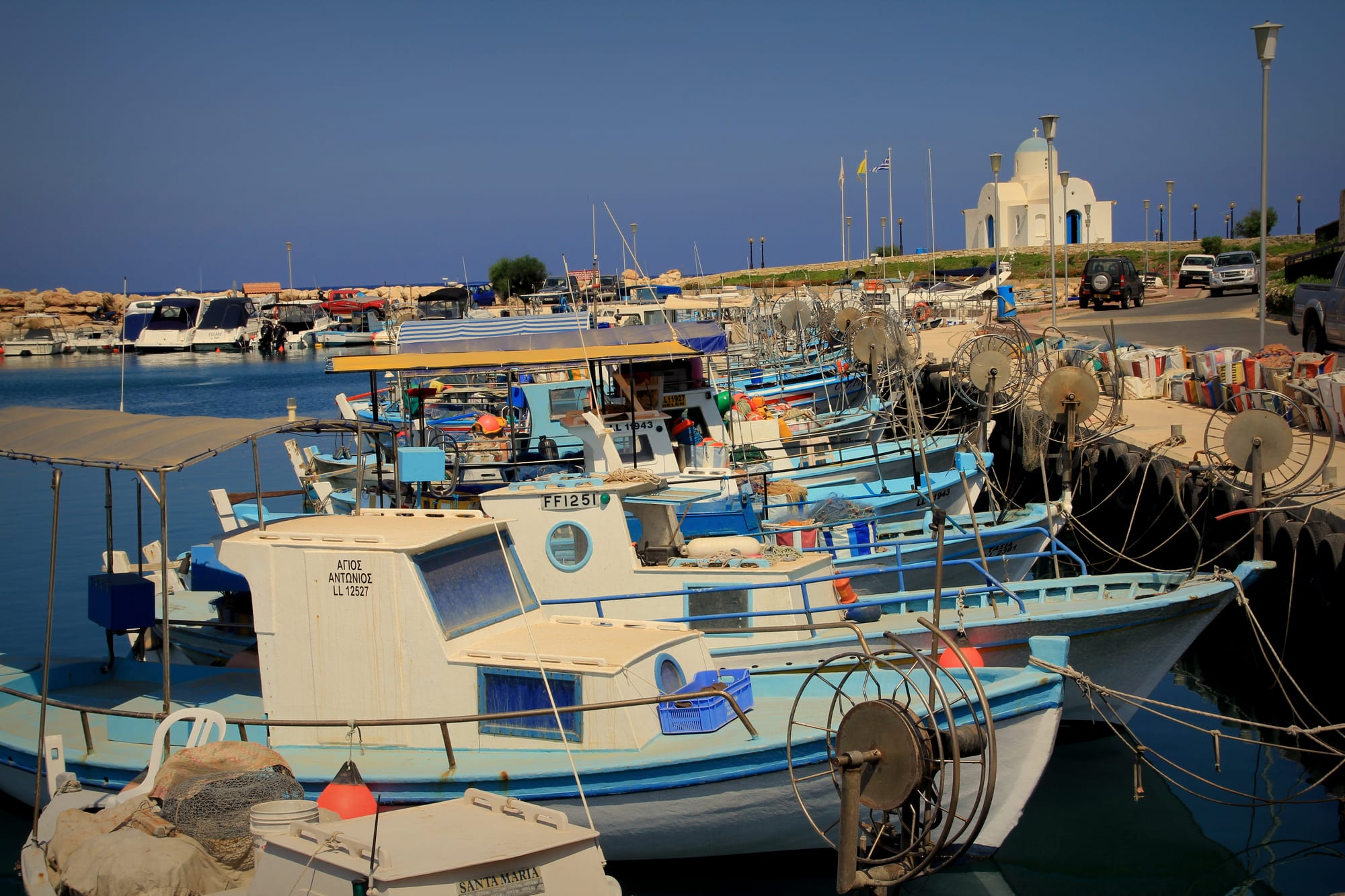
White and blue fishing boats with net winches moored tightly in Ayia Napa harbour, a small white domed chapel on the shore behind

Cyprus

Ayia Napa

Fishing boats in the harbour at Ayia Napa. (Wojciech Biegun / Wikimedia Commons · CC BY-SA 3.0)

A resort town at the far eastern end of Cyprus's south coast, near Cape Greco, named after the Venetian-era monastery at its centre. Once a place of fishermen and farmers, it grew on its beaches into a clubbing resort, and has since added a marina and an underwater sculpture museum.

Neighbourhoods

  • The town centre and the Square
    • Nightlife
    • First-time visitors

    The centre grew around the medieval monastery, and the square beside it is now the heart of the clubbing scene, almost empty until late evening and busy until daybreak in summer.

    Open in Maps
  • The harbour and the town beaches
    • Beaches
    • Families

    The small fishing harbour, with the closest sandy beach to the centre stretching along three coves to its east, and quieter beaches such as Vathia Gonia and Katsarka along the shore.

    Open in Maps
  • Nissi Beach
    • Beaches
    • Nightlife

    A 500-metre Blue Flag beach about 3 km west of the town centre, sheltered by a small islet that can be reached on foot through the shallows, known for its beach-bar parties and water sports.

    Open in Maps
  • Protaras
    • Families
    • Beaches
    • Diving

    The neighbouring resort about 10 km to the north-east, beyond Cape Greco, quieter and with less of a club scene, popular with families and Cypriot holidaymakers, with Fig Tree Bay its best-known beach.

    Open in Maps

Things to do

In town

  • Ayia Napa Monasterylandmark

    The medieval monastery in the centre that gave the town its name, with wall sections from before 1191 and buildings mostly of the 14th to 18th centuries; it now houses a museum.

    Open in Maps
  • Thalassa Municipal Museummuseum

    The municipal museum of the sea, one of two marine museums run by the town.

    Open in Maps
  • Makronissos Tombslandmark

    An archaeological site of ancient rock-cut tombs with an adjacent sanctuary and quarry, within walking distance of the town.

    Open in Maps
  • Museum of Underwater Sculpturesattraction

    Opened in 2021 off Pernera Beach, with 93 works by the British sculptor Jason deCaires Taylor on the seabed, explored by divers and snorkellers.

    Open in Maps

Beaches and the coast

  • Nissi Beachbeach

    The town's best-known beach, where excavations found fire-lighting equipment about 12,000 years old, among the earliest signs of people on the island.

    Open in Maps
  • Makronissos Beachbeach

    A beach a little further out than Nissi.

    Open in Maps
  • Konnos Beachbeach

    A sandy beach sheltered from the wind.

    Open in Maps
  • Cape Grecopark

    The headland between Ayia Napa and Protaras, a national forest park, with sea caves cut into its limestone cliffs; in antiquity its hill was sacred to Aphrodite.

    Open in Maps

Short trips from the town

  • Fig Tree Baybeach

    The best-known beach in Protaras, named Europe's third-best beach by TripAdvisor in 2011.

    Open in Maps
  • Paralimnineighborhood

    The town just north of Ayia Napa that grew after 1974 with refugees from the north, now the commuter base for the resorts' workers and the temporary administrative centre of the Famagusta District.

    Open in Maps

Seasonal events

  • Ayia Napa International Festivalusually the last weekend of September

    An annual festival held since 1985 in Seferis Square by the monastery.

Eat and drink

Long-standing places and food districts in Ayia Napa. Hours, ratings and directions come from your maps app, always current.

Ayia Napa classics

  • The Squareneighborhood

    The bars and clubs around the square by the monastery, the first stop for a night out; the scene picks up after 11 at night and many clubs open after 1.

    Open in Maps
  • Nissi Bay beach barcafe

    The beach bar at Nissi Beach, popular with locals and visitors, with DJs through the day in summer.

    Open in Maps
  • Fish meze by the harbourneighborhood

    Fish meze — calamari, octopus, cuttlefish, red mullet and sea bass among many small dishes — is the coast's way of eating fish, near the fishing harbour.

    Open in Maps

Experience Ayia Napa

History

According to local legend, a hunter chasing his prey found an icon of the Virgin Mary in a cave, and a monastery dedicated to her was built around it; the name Virgin Mary of Napa was later shortened to Ayia Napa. Another story tells of a Venetian noblewoman who, forbidden to marry a commoner, came to live there as a nun. The oldest surviving parts of the monastery are wall sections from before 1191, and most of its buildings date from the 14th to the 18th centuries.

Local tradition holds that the area, apart from the monastery, was empty until about 1790, when Nikolaos Kemitzis of Thessaloniki, in conflict with the Ottoman authorities, settled in the village of Panayia nearby. The population once consisted mainly of fishermen and farmers, in a district known as the Kokkinochoria, the Red Villages, after the red soil. Far older traces exist: excavations at Nissi Bay in 2005 found fire-lighting equipment about 12,000 years old.

Tourism began with visitors drawn by the beaches, many of them from Scandinavia, and grew into a nightlife resort. Between 1999 and 2003 Ayia Napa was the summer holiday destination of UK garage music. Since 2013 the town has shut down problem venues, upgraded its infrastructure, hotels and restaurants, and added new attractions: the foundation stone of the Ayia Napa Marina was laid in 2016, and the Museum of Underwater Sculptures opened in 2021. It remains a town of the Famagusta District, in the part of the district still controlled by the Republic of Cyprus.

Culture & Customs

Ayia Napa's culture has two faces. By night it is a clubbing resort, its square beside the monastery the centre of a scene that runs until daybreak; DJs from the UK garage era played here, BBC Radio 1 has broadcast beach parties from Nissi Beach, and the national tourism strategy of 2017 set the aim of making the town one of Europe's top three beach and nightclubbing destinations.

By day and out of season it is a Greek Cypriot town built around its monastery. The Ayia Napa International Festival, first held in September 1985, takes place each year in Seferis Square by the monastery. In 2010 the town's youth council founded a free music festival with headliners chosen by the public, and on 16 September 2007 Ayia Napa set a Guinness world record for the longest chain of dancers performing the syrtaki to "Zorba's Dance".

The sea is part of its identity too. Two municipal marine museums, the Thalassa Museum of the Sea and the Tornaritis-Pierides Museum of Marine Life, sit in the town, and the underwater sculptures off Pernera Beach have turned the seabed itself into a gallery.

Daily Life

Ayia Napa is overwhelmingly a tourist town, and its year follows the season. From late spring to autumn the hotels, beaches, bars and water-sports centres are full and the Square is busy until dawn; in winter the town is quiet. The beaches are run by the municipality.

Many of the people who work in the resorts live in Paralimni, about 6 km to the north, which has grown since 1974 with refugees from the north and is now the main commuter town for Ayia Napa and Protaras, as well as the temporary administrative centre of the Famagusta District. Bigger supermarkets are found there or in Larnaca rather than in the resort itself.

The night has its own timetable: the Square is nearly deserted until about half past nine, most clubbers do not go out until after eleven, and most clubs open after one in the morning. Mornings belong to the beaches.

Food

The resort's restaurants serve every kind of international food, but Cypriot cooking is close at hand. A meze is the fullest way to try it: olives, tahini, skordalia (potato and garlic dip), taramosalata and ttalattouri, with bread and salad, then grilled halloumi, lountza (smoked pork tenderloin), keftedes (meatballs), sheftalia — minced meat with parsley and onion wrapped in caul fat and grilled — and loukaniko sausages.

On this fishing coast the fish meze is the natural choice, with calamari, octopus, cuttlefish, red mullet, sea bass and gilt-head bream; cuttlefish may be cooked like octopus in red wine with onions. The most traditional fish of all is salt cod, once baked in outdoor beehive ovens with potatoes and tomatoes. Souvlaki, meat grilled on skewers over charcoal, is the quick meal.

Halloumi, a semi-hard brined cheese of goat's and sheep's milk, may be eaten fresh, grilled or fried. For dessert there are loukoumades, fried dough balls in syrup, and baklava. Cypriot brandy is drunk with meze and is the base of the brandy sour, created on the island in the late 1930s, and zivania is the local grape spirit.

Planning tools

Budget

Ayia Napa is a summer resort, and prices for rooms and drinks peak in July and August. Drinks offers and promoters are everywhere around the Square; the beaches themselves are free, though sunbeds and water sports cost extra. Out of season prices fall and the resort is far quieter.

Daily Budget Midrange
USD 125–230 (mid-range hotel, beach sunbeds, restaurant meals, hire car)
Daily Budget Shoestring
USD 60–100 (budget apartment, snacks and kebabs, buses)

Promoters around the Square offer drinks deals for bars and clubs, but they are paid to sell, so compare before committing.

Best Time to Visit

June to September is the season for beaches and clubs, with the Square at its busiest in July and August. May, late September and October are warm, quieter and good for swimming and walking at Cape Greco. Winter is quiet.

Suggested Number of Days

Most stays are beach holidays of several days. Three or four are enough for the town and its coast; five to seven allow for the neighbouring resort, the villages inland and a day in Larnaca or Nicosia.

First Visit
3–4 days
With Surroundings
5–7 days

Transportation

The town is small enough to be roughly walkable, and taxis are easy to find; agree a fare or make sure the meter is on before setting off. Intercity Buses and OSEA run regular services to the main cities. Cyprus drives on the left, and a hire car makes the coast and villages easier to reach.

Each beach has a water-sports centre, so keep within the marked swimming areas, away from the powerboat zones.

Airport & Station Connections

Most visitors fly into Larnaca International Airport, about 45 minutes away by taxi. Intercity buses and shared service taxis link Ayia Napa with Larnaca and the other main towns.

Walkability

The centre, the harbour and the town beaches are within walking distance of one another; Nissi Beach, about 3 km west of the centre, is a longer walk or a short ride. Summer days are hot, so most walking happens in the morning and the evening.

Safety

Cyprus is a very safe country with low levels of crime. In Ayia Napa the risks are those of a busy nightlife resort: drink, late nights, and the promoters who work the streets around the Square, including for the island's main strip clubs.

Keep an eye on drinks in clubs, and use metered or pre-agreed taxis late at night. Check current official travel advice before travelling.

Climate

Nearby Larnaca has a hot semi-arid climate, sometimes described as Mediterranean, with low annual rainfall, hot, dry summers and humid winters.

Summer
hot and dry — in July and August the average maximum on the Cyprus coast is around 37°C by day and around 28°C at night
Winter
mild and humid — in January and February coastal places other than Limassol are generally 16–18°C by day and 9–11°C at night

Local Customs

The town takes its name from the Virgin Mary of Napa, and its medieval monastery, now housing a museum, stands in the middle of the nightlife district. English is widely spoken. Greek Cypriot Easter usually falls on a different date from Western Easter, and on Easter Sunday many museums close and buses run reduced services.

The nightlife runs late: the Square is nearly empty before 9.30 in the evening, and most clubs open after 1 in the morning.

Common Payment Methods

The currency is the euro. Turkish lira are not generally accepted in the south. Carry some cash for small purchases; on some buses cash is the preferred way to pay.