History
Two places have carried the name Paphos. Old Paphos, at today's Kouklia on a hill east of the modern city, was the seat of one of the ancient city-kingdoms of Cyprus and the centre of the worship of Aphrodite, whose sanctuary stayed in use until Theodosius I outlawed pagan cults in 391. Nea Paphos, New Paphos, was founded on the coast beside a natural harbour in the late 4th century BC and became the island's capital under much of Ptolemaic and Roman rule, a major trading port of the eastern Mediterranean. According to the Acts of the Apostles, it was here that the Roman proconsul Sergius Paulus was converted, and here that Saul is first called Paul.
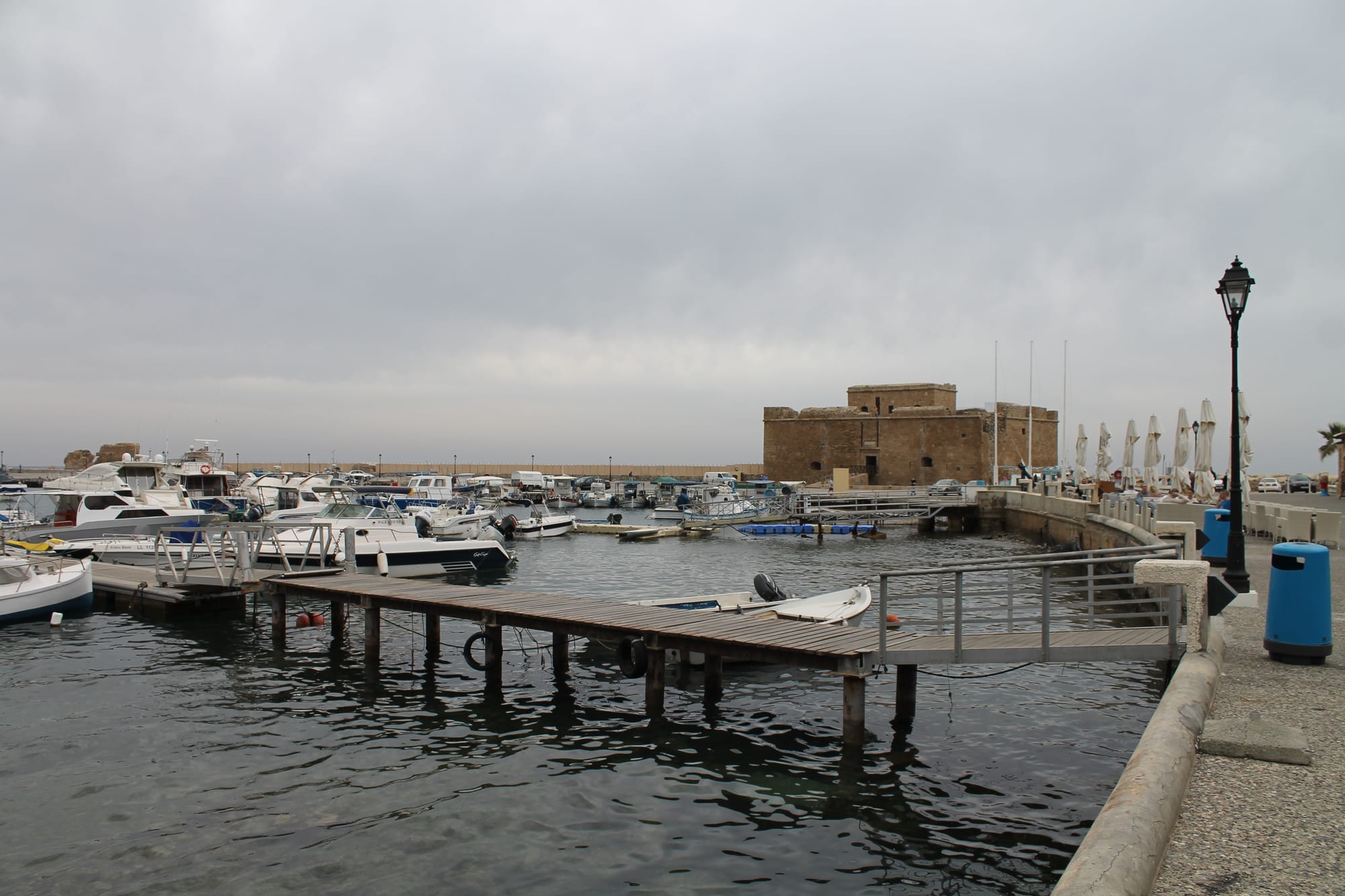
Earthquakes struck again and again — in 76 AD and, most destructively, in 1222, when the Byzantine fortress of Saranta Kolones was ruined and replaced by a new castle at the harbour. As Nicosia and the port of Larnaca grew more important, Paphos declined through the Middle Ages and Ottoman rule, and under British rule many of its people left for Limassol, Nicosia and abroad.
The turn came after 1974. Tourism grew quickly, above all in Kato Paphos, and the government built dams, roads and Paphos International Airport, which opened in 1982. In 1980 UNESCO inscribed Nea Paphos, the Tombs of the Kings and Palaepaphos as a World Heritage Site. In 2017 Paphos was European Capital of Culture alongside Aarhus in Denmark, and the city centre was improved in the years before it. Strong earthquakes in 1953, 1995, 1996 and 2022 are a reminder of the old danger.