💰 Budget
Mikulov is cheaper than Prague and much cheaper than nearby Vienna. Pensions and family winery guesthouses offer good-value rooms, and cellar tastings remain modest in price. Rooms fill up and prices rise during the wine harvest festival.
- Daily Budget Midrange
- USD 100–180 (winery guesthouse, restaurant dinners, tastings, château and cave tours)
- Daily Budget Shoestring
- USD 45–75 (pension room, pub lunches, trains and buses)
Buy wine directly from the cellars, and book early for the harvest festival weekend.
📅 Best Time to Visit
May to October. Spring and early summer are good for walking the Pálava hills; summer is hot and lively; autumn brings the harvest, the wine festival and burčák, partly fermented grape must. Winters are quiet, with some sights closed.
⏳ Suggested Number of Days
The town itself fills a day, or two with a relaxed pace and time for cellars. Three or four days allow time for the surrounding wine villages, the Pálava hills and the Lednice-Valtice landscape, which are best reached by bike, bus or train.
- First Visit
- 1–2 days
- With Surroundings
- 3–4 days
🚆 Transportation
The town centre is walkable. Mikulov is on the railway line between Znojmo and Břeclav, and buses link the wine villages; the region's local trains, buses and bikes make it possible to visit cellars without a car. The I/52 road runs through the town to the Austrian border crossing at Drasenhofen, and the I/40 links it with Břeclav. The Iron Curtain Trail for cyclists passes through the town.
Leave the car behind for cellar tastings; local trains, buses and bikes connect the wine villages.
🛬 Airport & Station Connections
Mikulov is about 42 km south of Brno, whose airport is the nearest, and about 18 km north-west of Břeclav, from where direct trains take under half an hour; from Brno the usual route is by train to Šakvice and on by bus. Vienna is about an hour away by car across the Austrian border.
🚶 Walkability
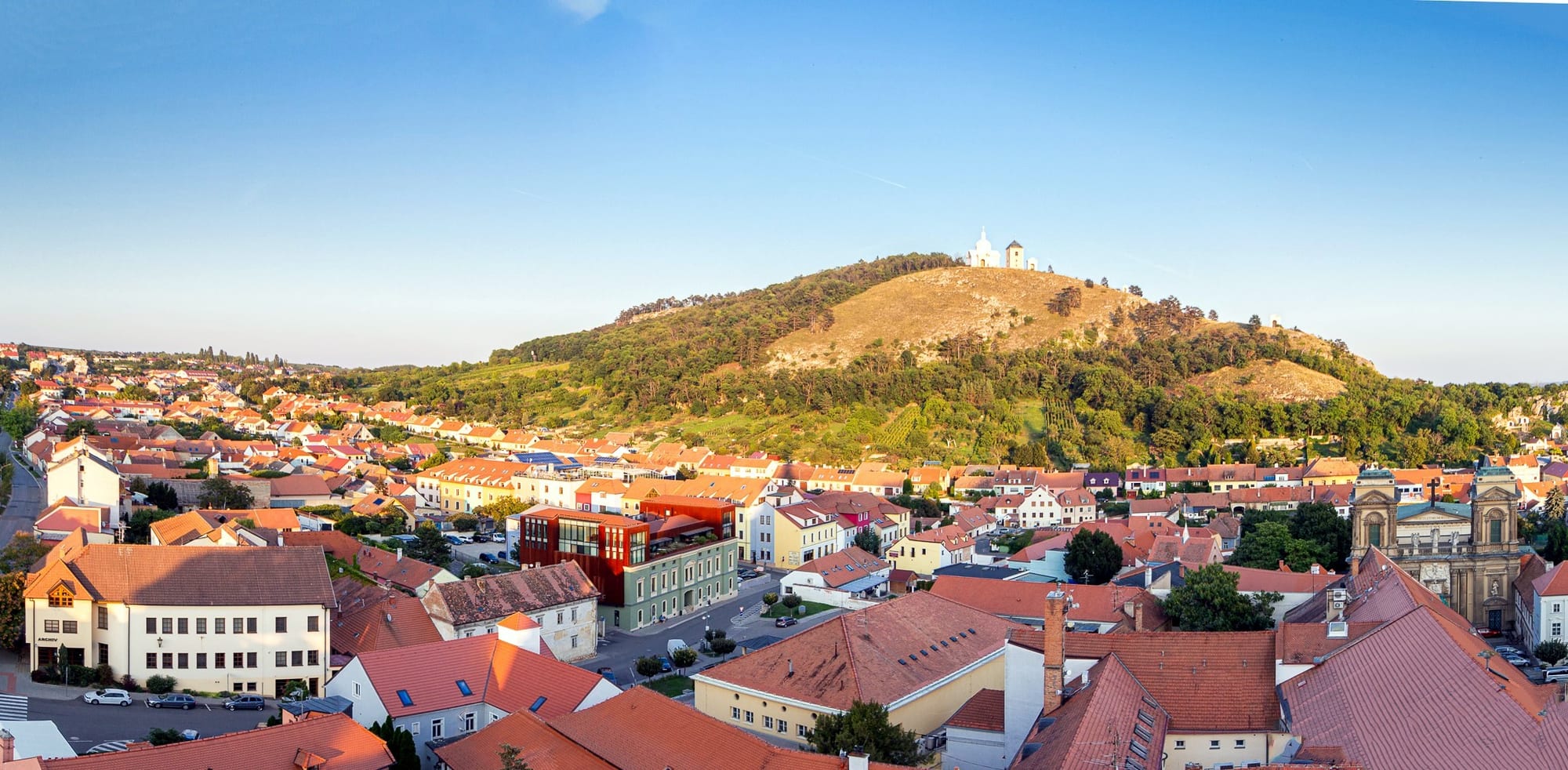
The historic centre is compact and easy on foot, though steep in places: the château, the Jewish quarter and the cemetery climb the slopes above the square, and the path up Holy Hill is a stiff walk in summer heat. Good shoes help on cobbles and the rocky hill paths.
🛡️ Safety
Czechia is a safe country with low levels of violent crime. Mikulov is a small, quiet town; the main risks in wine country are the temptation to drive after tastings and the summer heat on the exposed limestone hills.
Plan transport before a wine tasting, and carry water on the walk up Holy Hill and in the Pálava hills in summer. Check current official travel advice before travelling.
🌦️ Climate
A humid continental climate with cold winters and warm to hot summers, as in Brno, 42 km to the north; in the South Moravian lowlands the annual average temperature is as high as 10°C. The climate is one reason the town became a centre of Czech wine-making.
- Summer
- warm to hot; in nearby Brno, days above 30°C are relatively common
- Winter
- cold; in nearby Brno January, the coldest month, averages about −2.5°C
🤝 Local Customs
Tipping is customary but modest: Czechs usually round the bill up, and about 10 per cent is standard in restaurants used to foreign visitors; the tip is given to the waiter when paying rather than left on the table. It is polite to say 'Dobrý den' (good day) on entering a small shop and 'Na shledanou' (goodbye) on leaving. Evenings in the south often end in a family wine cellar, the sklep, rather than the pub.
Dress modestly in churches and the synagogue, and remove shoes when invited into a Czech home.
💳 Common Payment Methods
The currency is the Czech koruna (CZK), often written 'Kč', even though Austria is a few kilometres away. Cards are accepted almost everywhere, but a little cash is useful for small cellars, pubs and rural buses. A cash machine is called a bankomat.