History
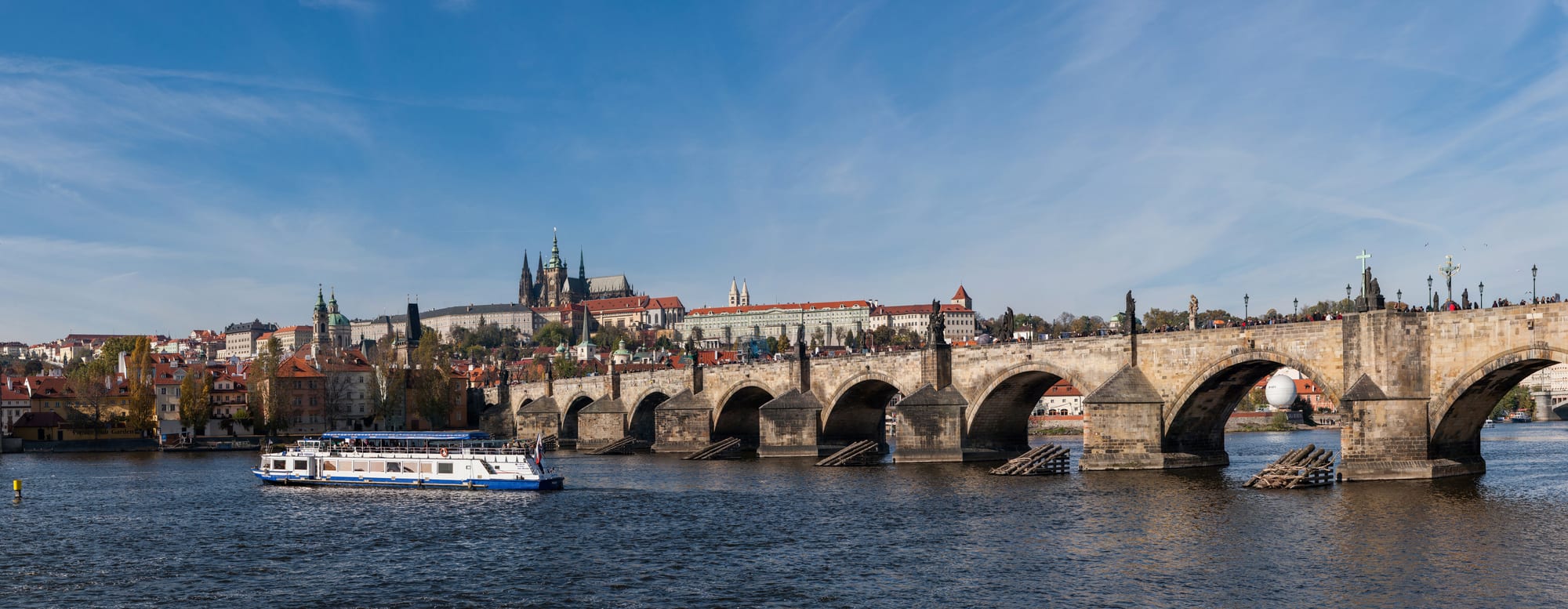
The Czech lands were united under the Přemyslid dukes and kings from the ninth century as the Duchy and later Kingdom of Bohemia, which reached its height in the fourteenth century under Charles IV, who made Prague an imperial capital and founded its university, the oldest in Central Europe. In the fifteenth century the reformer Jan Hus was burned at the stake, triggering the Hussite Wars and a long tradition of religious dissent.
From 1526 Bohemia and Moravia came under the Catholic Habsburgs, and the defeat of a Protestant Bohemian revolt in 1620 began three centuries of rule from Vienna and a strong Germanising pressure, resisted by a nineteenth-century Czech national revival. In 1918, out of the collapse of Austria-Hungary, Czechs and Slovaks formed Czechoslovakia, the most stable democracy in interwar Central Europe.
The 1938 Munich Agreement handed the German-speaking borderlands to Hitler, and Nazi occupation followed, along with the destruction of the Jewish community. After the war the German population was expelled, and a 1948 coup brought Communist rule. The 1968 "Prague Spring" reform movement was crushed by a Warsaw Pact invasion. The 1989 "Velvet Revolution" ended Communism peacefully, and in 1993 Czechoslovakia split amicably into the Czech Republic and Slovakia. Czechia joined NATO in 1999 and the EU in 2004.
- Why does Prague's astronomical clock still run after 600 years? — It has stopped many times. A long line of keepers, a Victorian precision upgrade and a rescue after the 1945 fire have kept Prague's clock going.
- Czechia: The Heart of Europe — The Bohemian kingdom and its heretics, three centuries under the Habsburgs, a democracy crushed twice, and the Velvet Revolution