History
West Bohemia grew up on the route between Prague and the German lands. Cheb (Eger) was an imperial territory in its own right, and the Holy Roman Emperor Frederick Barbarossa built a palace there in the 12th century; it was only pledged to the Bohemian crown in 1322. Plzeň was founded by King Wenceslas II in 1295 and stayed Catholic during the Hussite wars, withstanding Hussite sieges. In 1634 the imperial general Albrecht von Wallenstein was murdered in Cheb.
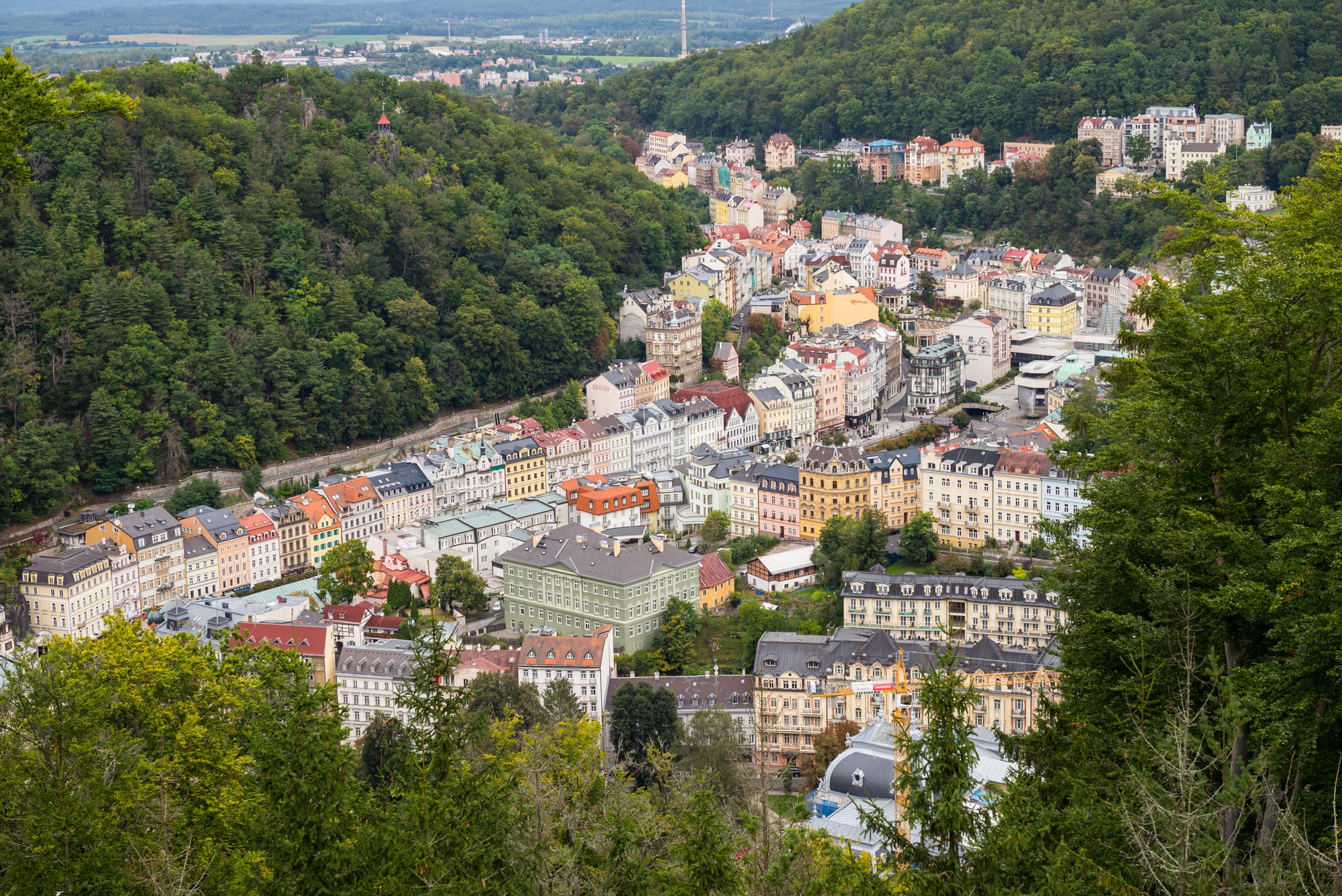
Silver made the Ore Mountains rich: the coins struck at Jáchymov from 1520, the Joachimsthalers, gave their name to the thaler and ultimately the dollar. The springs of Karlovy Vary, which tradition says Charles IV founded in the 14th century, drew visitors for centuries, and between the late 18th and early 19th centuries Františkovy Lázně and Mariánské Lázně were laid out as spa towns. By 1900 the three together formed a playground of European royalty, writers and composers, from Goethe to Edward VII.
Plzeň industrialised in the 19th century: its burghers' brewery first produced pilsner lager in 1842, and Emil Škoda built the Škoda Works into one of the empire's great arms makers. Most of the region spoke German until 1945, and after the Munich Agreement the borderlands were annexed to Germany. In May 1945 the US Army liberated Plzeň and western Bohemia; the German population was then expelled, and in the 1950s Jáchymov's uranium mines were worked by political prisoners in labour camps.