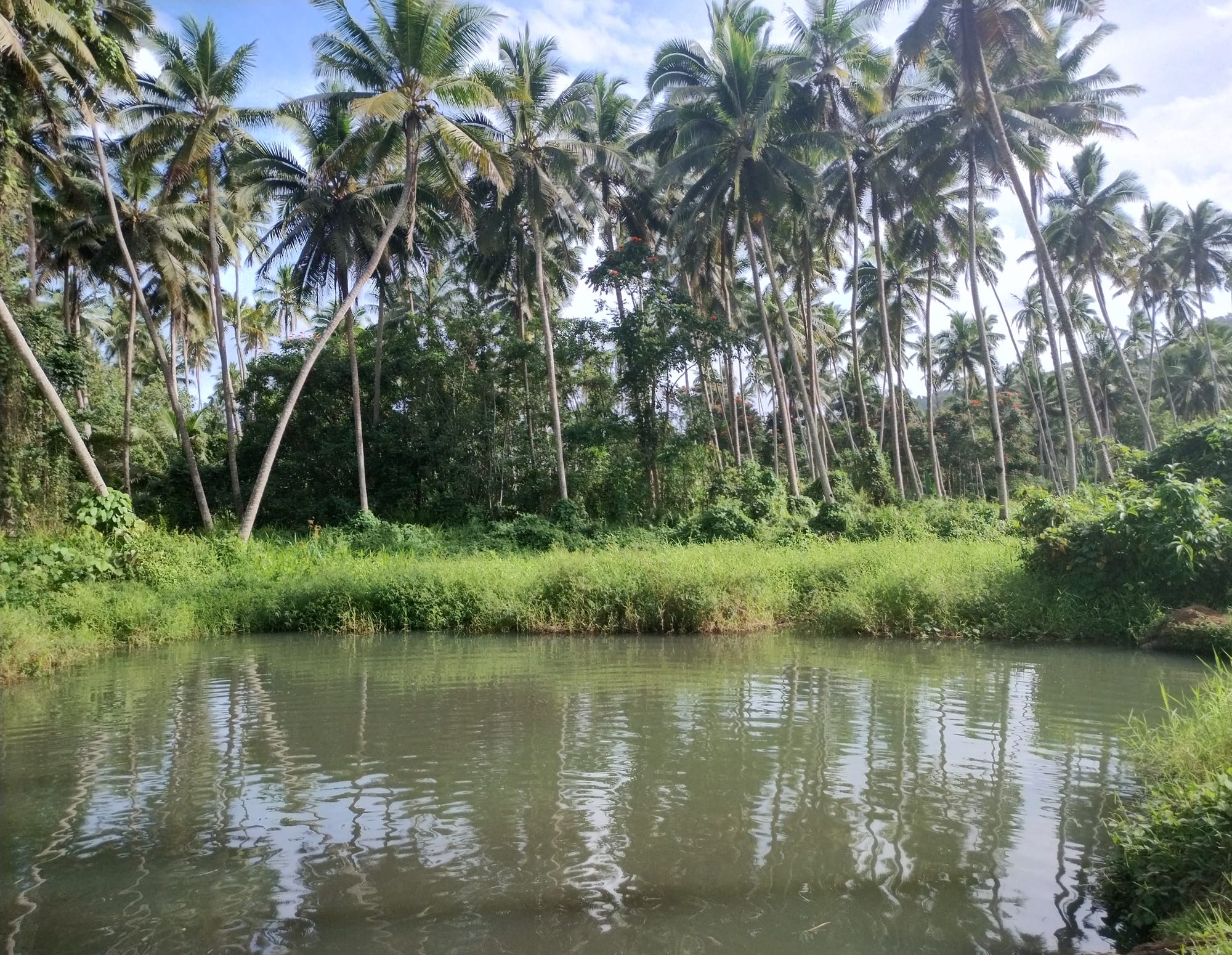
A still, pale green pool fringed by grass and dense bush, with tall coconut palms leaning over it under a blue sky

Vanua Levu, Taveuni & the North, Fiji

Savusavu

A mud pool among coconut palms at Levuka village near Savusavu, on the south coast of Vanua Levu. (Spicy / Wikimedia Commons · CC BY 4.0)

A small port town on the south coast of Vanua Levu, set on a sheltered bay behind a screen of islands. Built as the copra centre of southern Vanua Levu by 19th-century planters, it now lives from farming, government offices, diving and the cruising yachts that fill its moorings, with hot springs steaming beside its one main street.

Neighbourhoods

  • Main Street and the market
    • First-time visitors
    • Best for food
    • Close to public transport

    The town is one street running along the shore, with shops, banks, the market, the bus stand and eating houses in a few hundred metres. Everything practical happens here, and the pavement is where news is exchanged.

    Open in Maps
  • The marinas and the waterfront
    • Views
    • Bars
    • Sailing

    A short stretch of jetties, moorings and yacht club buildings — including a converted copra shed — where cruising boats clear in and crews come ashore. The bay, the island opposite and the hills across the water are all in view.

    Open in Maps
  • Nakama and the hot springs
    • Local life

    Immediately behind the main street, hot water rises in pools and channels and steam drifts across gardens. Villagers still cook food in the steam here, and houses climb the slope above the springs.

    Open in Maps
  • The Hibiscus Highway coast
    • Quiet and residential
    • Beaches

    East of town the coast road runs past copra plantations, villages, small dive lodges and a handful of resorts strung along the shoreline. It is quiet, green and dependent on a car, taxi or bus for anything in town.

    Open in Maps

Things to do

In and around town

  • Nakama hot springsattraction

    Thermal springs behind the main street whose water approaches boiling point, used for generations by local families to cook taro, breadfruit and other food, and now landscaped with stone walls, steps and signs.

    Open in Maps
  • Copra Shed Marinalandmark

    A copra shed of the 19th century on the waterfront, renovated as a marina with moorings and now home to the Savusavu Yacht Club, the social centre of the cruising fleet.

    Open in Maps
  • Savusavu marketmarket

    The town's produce market, where growers bring dalo, cassava, greens, fruit and kava from the plantations and hills behind the coast.

    Open in Maps

Reefs, beaches and the bay

  • Savusavu Bayattraction

    The broad, deep bay west of the town, a safe anchorage in most weather and the base for dive and fishing boats working the south coast.

    Open in Maps
  • Namena Lalaattraction

    A volcanic islet some forty kilometres offshore, four square kilometres in area, with a single resort, a nature reserve and a seabird colony, and reefs that make it one of Fiji's better-known dive areas.

    Open in Maps

Forest

  • Waisali Forest Reservepark

    Rainforest in the hills inland of the town, one of the parks managed by the National Trust of Fiji, with walking trails, native trees and forest birds.

    Open in Maps

Short trips from the town

  • Labasaattraction

    The largest town on Vanua Levu, with some 28,500 people, reached by a mountain road; its sugar mill dates from the 1890s and is the only one on the island, and its heavily Indo-Fijian centre is full of curry houses and sari shops.

    Open in Maps
  • Natewa Bayattraction

    A long inlet running deep into the east of Vanua Levu and carving out the Loa peninsula, with villages along its shores and, on the Natewa and Tunuloa slopes above it, the island's largest surviving tracts of old-growth forest.

    Open in Maps
  • Rainbow Reefattraction

    A reef in the Somosomo Strait between Vanua Levu and Taveuni, among the most famous dive sites in the South Pacific, its Great White Wall named for the pale coral between about fifteen and sixty-five metres down.

    Open in Maps

Seasonal events

  • The yachting seasonMay to October

    Cruising boats crossing the Pacific clear in at Savusavu through the drier months, filling the moorings and the marina bars before most leave ahead of the cyclone season.

  • Fiji Day10 October

    The national holiday marking a double anniversary — the cession of 1874 and independence in 1970, both on 10 October — with church services, school displays and village gatherings.

  • DiwaliOctober or November

    The Hindu festival of lights, a public holiday observed by the town's Indo-Fijian families with lamps, sweets and open houses.

Eat and drink

Long-standing places and food districts in Savusavu. Hours, ratings and directions come from your maps app, always current.

Savusavu eating

  • Savusavu marketmarket

    Root crops, greens, coconuts, tropical fruit, kava and cheap cooked snacks, with fish sold nearby when the boats have been out.

    Open in Maps
  • Main Street eating housesneighborhood

    Small Indo-Fijian and Chinese-influenced kitchens along the street serving curry and roti, chop suey, fried fish and cassava chips.

    Open in Maps
  • The marina waterfrontneighborhood

    Cafés and bars beside the moorings, catering to yacht crews and divers as well as locals, with pizza, burgers, curries and fresh fish.

    Open in Maps

Experience Savusavu

History

Savusavu lies in Cakaudrove, whose paramount title, the Tui Cakau, is the chiefly title of the province and of the Tovata confederacy and is historically tied to the village of Somosomo across the strait on Taveuni. The bay's shelter and deep water made the place useful to outsiders from early in the 19th century: the town began as a trading post for sandalwood, bêche-de-mer and copra, on an island Europeans once called Sandalwood Island.

What made the town was copra. From the 1860s settlers from Australia and New Zealand planted coconuts around Savusavu, intermarried with Fijian families and produced a mixed-race planting elite, and the town became the point where the dried coconut flesh was bought, stored in waterfront sheds and loaded onto ships; a large copra mill still works here. Planters' families, Indo-Fijian traders and Chinese storekeepers gave the single street its shops, and the plantations shaped the landscape east along what is now the Hibiscus Highway, where rows of old palms still stand.

Copra prices collapsed with the Great Depression of the 1930s and the trade declined through the rest of the century, and Savusavu reinvented itself. Diving on the reefs off the south coast, above all around Namena, brought the first tourism, and the sheltered bay made the town a natural stop for yachts crossing the Pacific, with the old copra shed renovated as a marina and yacht club. Government offices, the airport and a small hotel and lodge sector followed, and building around the bay continues. Cyclones remain the recurring setback: Winston passed just south of the island in February 2016, cutting power across the whole of Vanua Levu and driving a storm surge onto the south coast.

Culture & Customs

Savusavu is a village-centred place with an unusually international edge. The surrounding land belongs to iTaukei clans whose protocols govern access to beaches, waterfalls and forest, and where a visitor's first act is a sevusevu — presenting a bundle of kava to be received by the village. Kava drinking in the evening, from a tanoa bowl passed around a circle, is the standard way of spending time together, and church on Sunday, with Methodist hymn singing in harmony, sets the pace of the week.

Onto that is layered a cruising community from a dozen countries, dive crews and a scattering of foreign residents, which has made the little town more used to outsiders than its size suggests. There are Indo-Fijian families with shops and farms, a smaller Chinese business community, and returning Fijians who have worked in New Zealand or Australia. English is widely spoken alongside Fijian and Fiji Hindi.

Local identity is tied to Cakaudrove and to the north generally: people distinguish themselves from Suva and the resort west, value the slower pace, and take pride in the reefs and forest around them, several of which are protected by community agreements rather than by government. Rugby dominates the sporting calendar, with village and school sides taken seriously; meke dancing and lovo feasts mark weddings, church openings and visits by chiefs.

Daily Life

The town and its immediate surroundings hold roughly 5,000 people, which makes Savusavu small even by Fijian standards, though it serves a much larger rural area. Work comes from government offices and the school and hospital, from shops and transport, from copra, dalo, kava and vegetable farming in the hills behind the coast, from fishing, and from diving and tourism along the shore.

The day begins early: carriers bring produce in for the market, boats go out at first light, and offices and shops open soon after. By late afternoon the street is quiet again, stores shut early, and kava circles form in houses and halls. Sunday is close to silent apart from church. Many households rely partly on money sent home by relatives in Suva, Australia or New Zealand.

The pressures are those of a remote small town. Transport is expensive and weather dependent, the mountain road to Labasa is tiring, medical treatment for anything serious means a flight to Suva, and power and water supplies can be interrupted. Young people leave for the capital or overseas; at the same time the building around the bay has brought construction work, and property prices are followed closely.

Food

Savusavu eats from its gardens and its reef. Dalo (taro) and cassava are the staples, boiled or baked, with rourou — taro leaves cooked in coconut cream — and palusami, leaf parcels baked with coconut cream. Fish is the main protein: reef fish grilled or fried, walu and tuna when the boats have been lucky, octopus, mud crab and freshwater prawns from the streams. Kokoda, raw fish cured in lime juice and coconut cream, is on almost every menu.

Two things are particular to the town. The hot springs behind the main street are still used as a cooker, with taro, breadfruit and other food wrapped in leaves and lowered into water that comes close to boiling — a practice visitors are sometimes shown. And the coconut that built the place remains everywhere in the cooking: as cream in stews and puddings, as fresh drinking nuts, and as oil.

Indo-Fijian food is the everyday alternative, with curries of fish, chicken and vegetables, dhal and roti, and snacks such as bhajia sold at the market; Chinese cooking has left chop suey on local tables. Bakeries sell bread and coconut buns in the morning, roadside stalls sell mango, papaya and pineapple in season, and kava, grown in the hills of Vanua Levu, is the drink that matters most, alongside Fiji Bitter and tea.

Planning tools

Budget

Savusavu spans a wide range. Guesthouses and backpacker cottages in and near town are cheap, and market and street food costs very little, while the dive lodges and the handful of boutique resorts along the coast are expensive. Diving is the main discretionary cost, and the flight or ferry from Viti Levu is a fixed part of any budget.

Daily Budget Midrange
USD 110–250 (mid-range resort or dive lodge, a day's diving, taxis or a hire car)
Daily Budget Shoestring
USD 40–65 (guesthouse or backpacker cottage, buses and carriers, market and eating-house meals)

Draw cash in town before heading along the coast or into the villages, where there are no machines and little card acceptance.

Best Time to Visit

May to October is drier, less humid and the main diving season, with the calmest seas for Namena and the Somosomo Strait, and it is when the cruising yachts are in. The wet months from November to April bring greener hills, fuller waterfalls, heavier rain and the risk of cyclones, and some lodges and boats reduce their operations.

Suggested Number of Days

Two or three days suit the town and a day on the water. Divers and anyone travelling further along the coast or across the island should allow four to six. Flight and ferry timings, and the weather, can add a day at either end.

First Visit
2–3 days
With Surroundings
4–6 days

Transportation

The town itself is walked. Buses and shared carriers run east along the Hibiscus Highway, west around the bay and over the mountains to Labasa, with services timed around markets and schools rather than visitors. Taxis wait near the market and are used for the airport, the beach and the nearer villages. Hire cars are available in small numbers, and boats are arranged through the marinas and lodges.

Unsealed side roads are rough and can be impassable after heavy rain, so choose a vehicle with high clearance and ask locally about conditions.

Airport & Station Connections

Small aircraft fly from Viti Levu to Savusavu Airport, a short drive from the town and the fourth busiest in the country; this is how most visitors arrive. Ferries from Viti Levu serve Vanua Levu, with passenger and cargo services to the town and vehicle ferries landing elsewhere on the island. The mountain road from Labasa takes a couple of hours.

Walkability

Very easy: the shops, market, bus stand, banks and marinas lie along a single flat street of a few hundred metres, and the hot springs are a short walk behind it. Beyond the town there are no footpaths, verges are narrow and traffic includes buses and trucks, so walking the coast road is not comfortable for long distances.

Safety

The north of Fiji is calm and serious crime is rare, with occasional opportunistic theft in town. The real hazards are natural and practical: strong tidal currents on the offshore reefs, dive sites a long way from a decompression chamber, small boats in open water, hot springs that can scald, slippery trails and river crossings after rain, and cyclones and flooding between November and April.

Dive with established local operators who know the tides, keep clear of the hottest springs and steam vents, carry any medicines needed, and ask permission before crossing village land. Check current official travel advice before travelling.

Climate

Tropical and warm all year. The south coast of Vanua Levu is wetter than the sugar country around Labasa but not as wet as Taveuni's mountains, with showers in any month and heavier, more sustained rain in the wet season. Southern-hemisphere seasons mean summer falls in December to February.

Summer
hot and humid — November to April brings daytime highs near 30°C, heavy rain, thunderstorms and cyclone risk
Winter
warm and drier — May to October brings highs of about 26–29°C, with south-east trade winds and the clearest water for diving

Local Customs

Greet people: 'bula' to anyone passed on the street is normal, and conversation comes before business. Dress modestly in town and in villages, with shoulders covered and long shorts or a sulu, and remove hats and sunglasses in a village. Waterfalls, beaches and forest tracks usually lie on village land, so a visit begins with a sevusevu, a presentation of kava to the head of the village. Sunday is quiet and given to church.

Tipping is not expected; ask before photographing people or ceremonies; take off shoes before entering a house; and accept kava with a clap and both hands.

Common Payment Methods

The currency is the Fijian dollar. Banks and cash machines in town serve the whole south coast, and cards are taken by resorts, dive operators, supermarkets and the marina businesses. Buses, carriers, taxis, market stalls and village visits need cash, and machines occasionally run dry, so it is wise to keep a reserve of small notes.