💰 Budget
Bonn falls between the dearer cities of Cologne and Düsseldorf and the cheaper Ruhr in price, and during the big trade fairs in those cities a room here can cost far less. Walks along the Rhine, the Hofgarten and the old centre cost nothing.
- Daily Budget Midrange
- USD 140–250 (mid-range hotel, brewpub and restaurant dinners, museum tickets, a ride up to the Drachenfels)
- Daily Budget Shoestring
- USD 65–110 (hostel or budget hotel, bakery and Imbiss meals, a day ticket for buses and the Stadtbahn)
Several museums on the Museum Mile sit within a short walk of each other and of one Stadtbahn stop, so it is worth grouping them.
📅 Best Time to Visit
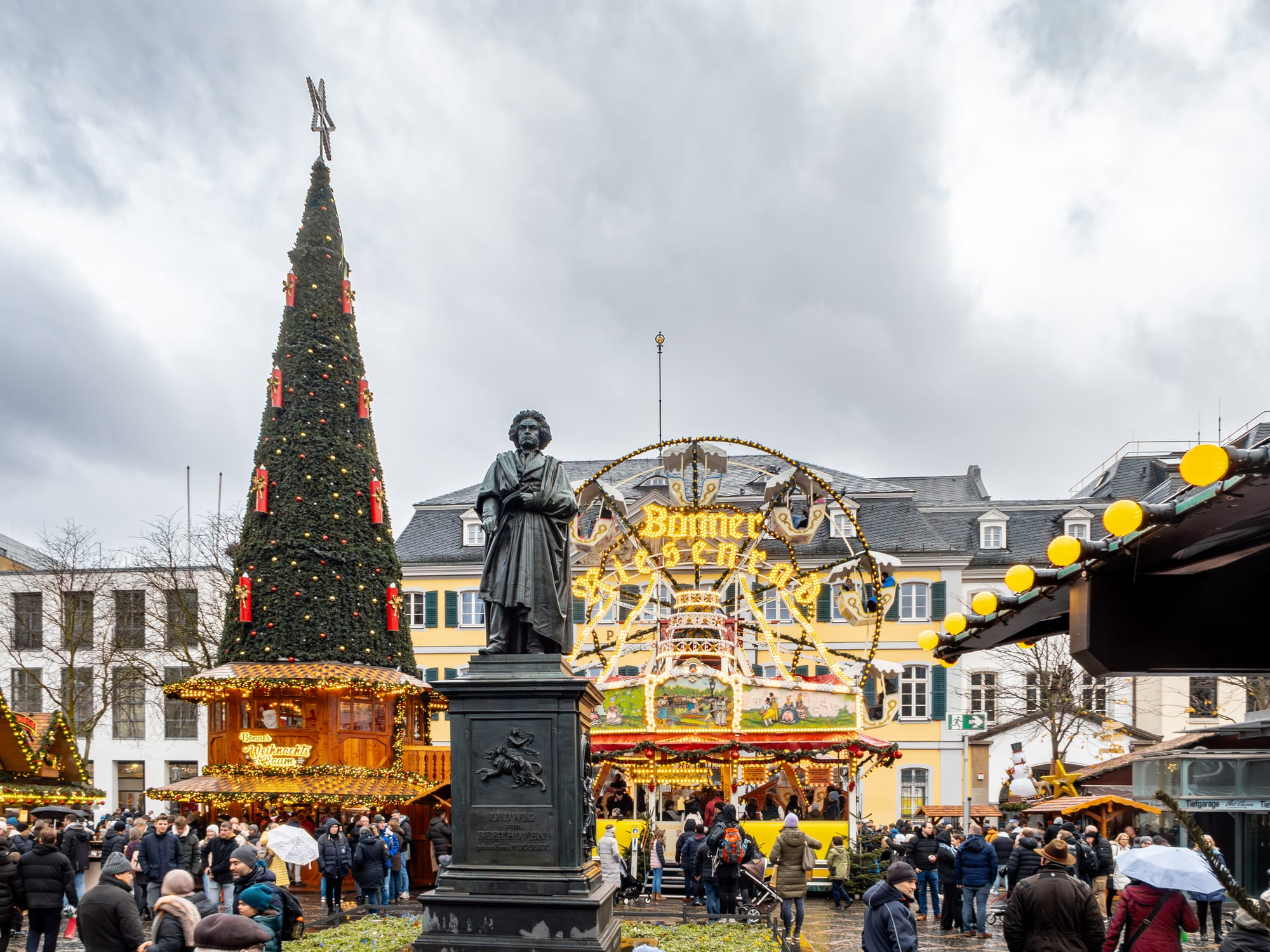
April and May bring the cherry blossom in the Altstadt and the fireworks of Rhein in Flammen; summer is the season for beer gardens on the Rhine and walks in the Siebengebirge; September has Pützchens Markt and the Beethovenfest. Carnival fills the streets in February or early March, and the Christmas market takes over the Münsterplatz in winter.
⏳ Suggested Number of Days
One or two days are enough for the centre and the main museums. Three or four allow time for the Siebengebirge across the river, Bad Godesberg and the palaces at Brühl. Bonn also works as a quieter base for visiting Cologne.
- First Visit
- 1–2 days
- With Surroundings
- 3–4 days
🚆 Transportation
The Stadtbahn links the main station with the Museum Mile, Bad Godesberg and Beuel, and buses fill the gaps. Regional trains and two Stadtbahn lines run to Cologne, and the Rhine-Ruhr network makes day trips easy without a car.
Tickets of the Rhine-Sieg transport association, including 24-hour passes, are valid on the Stadtbahn, trams, buses and regional trains within their zone; validate paper tickets before boarding.
🛬 Airport & Station Connections
Cologne Bonn Airport, named after Konrad Adenauer, lies about 15 km north-east of the centre. Most visitors arrive by train at the Hauptbahnhof, a short walk from the market square, or fly into Düsseldorf or Frankfurt and continue by rail.
🚶 Walkability
The centre is small and flat, and the market square, the Minster, Beethoven's birthplace, the palace and the river are a few minutes apart. The Rhine promenade makes a long, easy walk south towards the Museum Mile and Bad Godesberg. Cycling is popular, and cycle lanes should be left clear.
🛡️ Safety
Germany is a safe country with low levels of violent crime. Bonn is calm by big-city standards, but carnival and Christmas-market crowds call for care with bags and phones.
Keep bags secure in crowds and on public transport, stay out of marked cycle lanes on foot, and never swim in the Rhine. Check current official travel advice before travelling.
🌦️ Climate
A mild climate in a sheltered basin, with winters that bring little snow and summers that can be close and humid. The average annual temperature is about 10°C, and the city centre is several degrees warmer than the surrounding countryside on summer days.
- Summer
- warm and often humid; July averages about 17.6°C, with occasional heatwaves
- Winter
- mild and grey; January averages about 2°C, with frost on around 56 days a year but few days that stay below freezing
🤝 Local Customs
Rounding up the bill in restaurants and pubs is usual. The local dialect, Bönnsch, is close to Cologne's but softer, and less spoken in daily life. Bonn has a strong international flavour from the United Nations, embassies past and present and the university.
Most shops close on Sundays. Greet with a handshake and surname until invited otherwise, and say hello when entering small shops.
💳 Common Payment Methods
The currency is the euro. Cards and contactless payment are widely accepted, though some pubs, bakeries and kiosks still prefer cash, and cash machines are easy to find.