History
The Slavic Hevelli held a stronghold called Brenna here at a crossing of the Havel, and at the Assembly of Princes in Magdeburg in 948 a bishopric of Brandenburg was founded. The Slav uprising of 983 drove the Germans out, and only in 1157 did Albert the Bear take the fortress for good and found the Margraviate of Brandenburg, bringing settlers from the Harz, the Netherlands, the Rhineland and Westphalia. The foundation stone of the cathedral was laid on the island in 1165.
The town spread from the west bank to the east bank of the Havel in 1196, and for centuries it was regarded as three separate towns — the Old Town, the New Town and the cathedral district, which was only added to the town in 1928. Brandenburg was the capital of the margraviate until Berlin replaced it in 1417. Huguenots who settled here after 1685 brought tanning and leatherwork, and in the late 19th century the town became a major industrial centre, with steelworks and bicycle factories making the Brennabor, Corona and Excelsior brands.
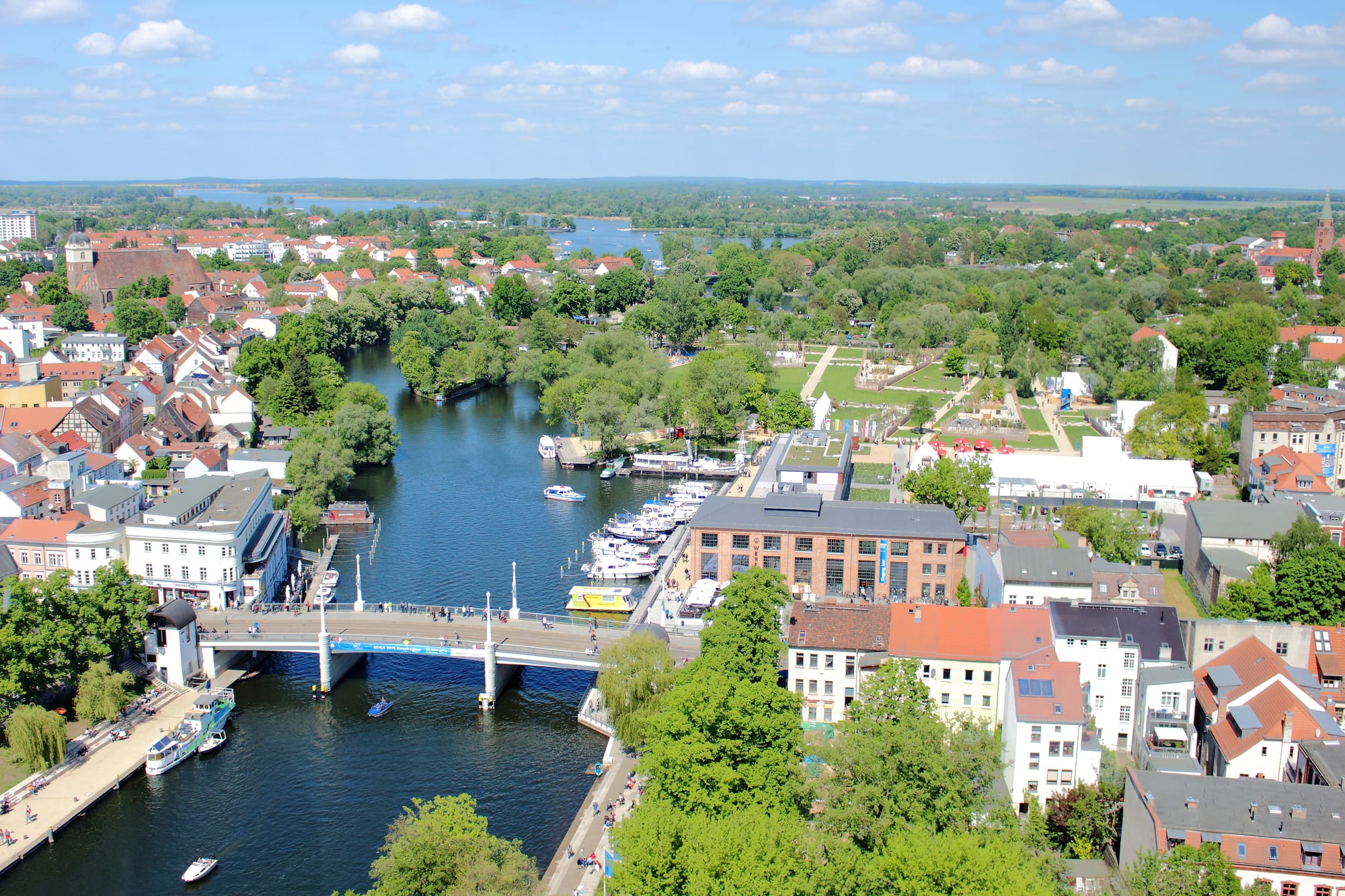
Under the Nazis the town became a place of murder. The old prison was turned in 1939 into one of the first killing centres of the euthanasia programme, where people with psychiatric illnesses were gassed, and between 1940 and 1945 more than 1,700 people were executed in the Brandenburg-Görden prison, built in 1927–35 to be the most secure and modern prison in Europe. In East German times the steel and rolling mill dominated the town. After 1990 most industry closed, and the population fell from around 100,000 in 1989 to roughly 75,000 by 2005. In 2015 the town was one of the sites of the Federal Garden Show.