History
Potsdam began as a Slavic settlement of the Hevelli tribe around a castle, and is first mentioned in 993 as Poztupimi, when Emperor Otto III gave the territory to Quedlinburg Abbey. It remained a small market town for centuries — about 2,000 people in 1573 — and lost nearly half its population in the Thirty Years' War. The Edict of Potsdam of 1685, which invited persecuted French Protestants to Brandenburg, made the town a centre of immigration and set off its recovery.
Prussia's kings then made Potsdam their residence. Frederick William I, the 'soldier king', made it a garrison town and from 1734 had the Dutch Quarter built for craftsmen from the Netherlands. His son Frederick the Great built Sanssouci in the 1740s and, after the Seven Years' War, the New Palace. His successors added the New Garden, the Russian colony of Alexandrowka and Babelsberg Palace, and the town was planned as a balance of architecture and landscape, meant to be 'a picturesque, pastoral dream'. It remained a residence of the kings and emperors until 1918.
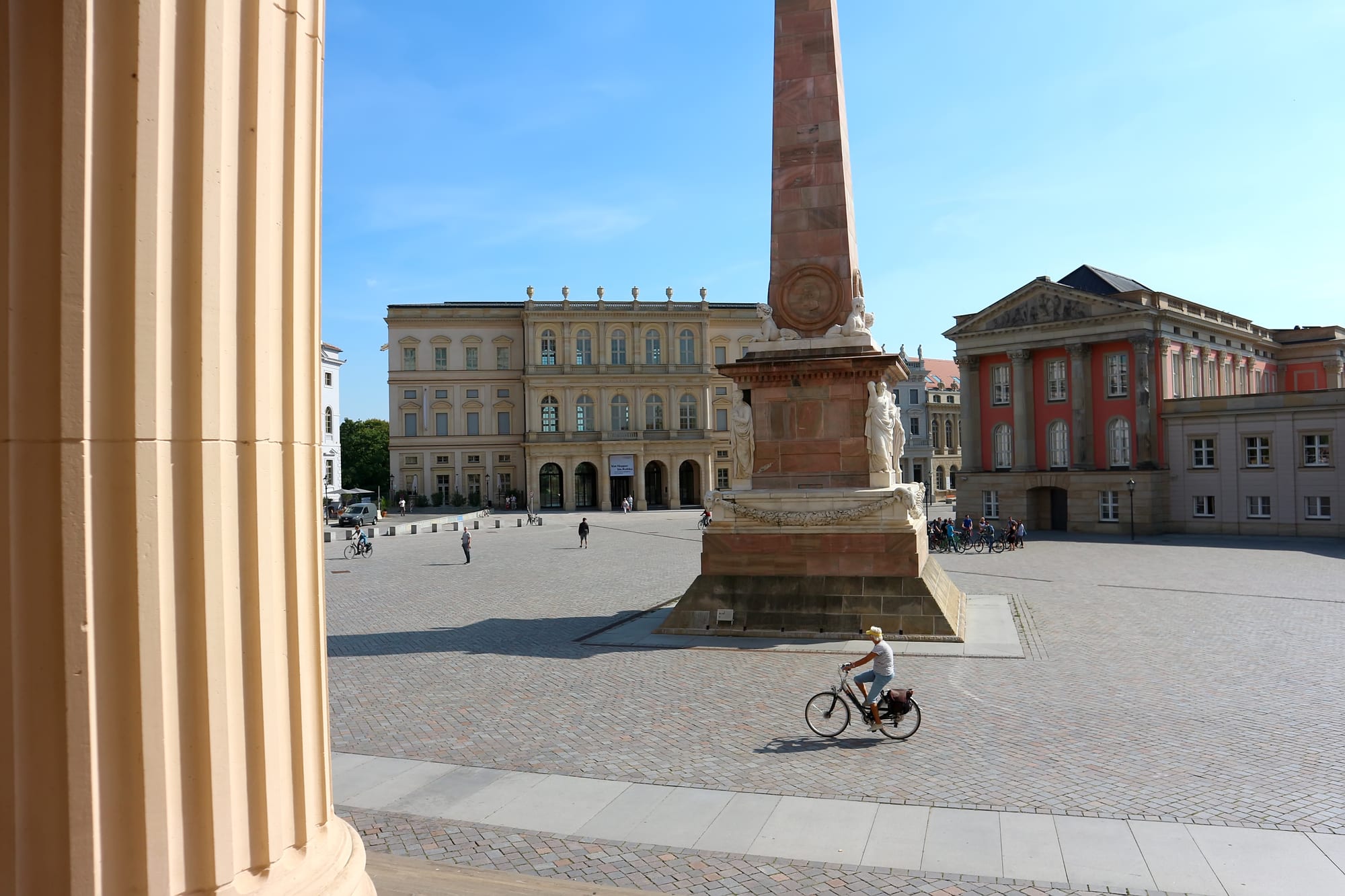
The 20th century gave Potsdam a darker fame. On 21 March 1933 the 'Day of Potsdam' at the Garrison Church staged a handshake between President Hindenburg and the new chancellor Hitler, and from 17 July to 2 August 1945 the victorious Allies met at the Cecilienhof to decide Germany's future. In East German times the government removed symbols of 'Prussian militarism', while the Glienicke Bridge on the border with West Berlin became the scene of spy exchanges. Since 1990 Potsdam has been the capital of Brandenburg; the palaces and parks became a World Heritage Site that year, and the old centre has been partly rebuilt, with the City Palace reconstructed as the Landtag in 2014.