💰 Budget
Olympia is one of the cheaper bases in the Peloponnese. The village is small, with modest guesthouses and tavernas aimed at site visitors, and the main extra costs are the ticket for the site and museum and the travel to reach it.
- Daily Budget Midrange
- USD 100–190 (guesthouse or mid-range hotel, taverna dinners, site and museum tickets, a hire car)
- Daily Budget Shoestring
- USD 50–85 (simple room or campsite, grill-house and bakery meals, KTEL buses)
Stay the night in the village to reach the site at opening time, before the coach groups and the midday heat.
📅 Best Time to Visit
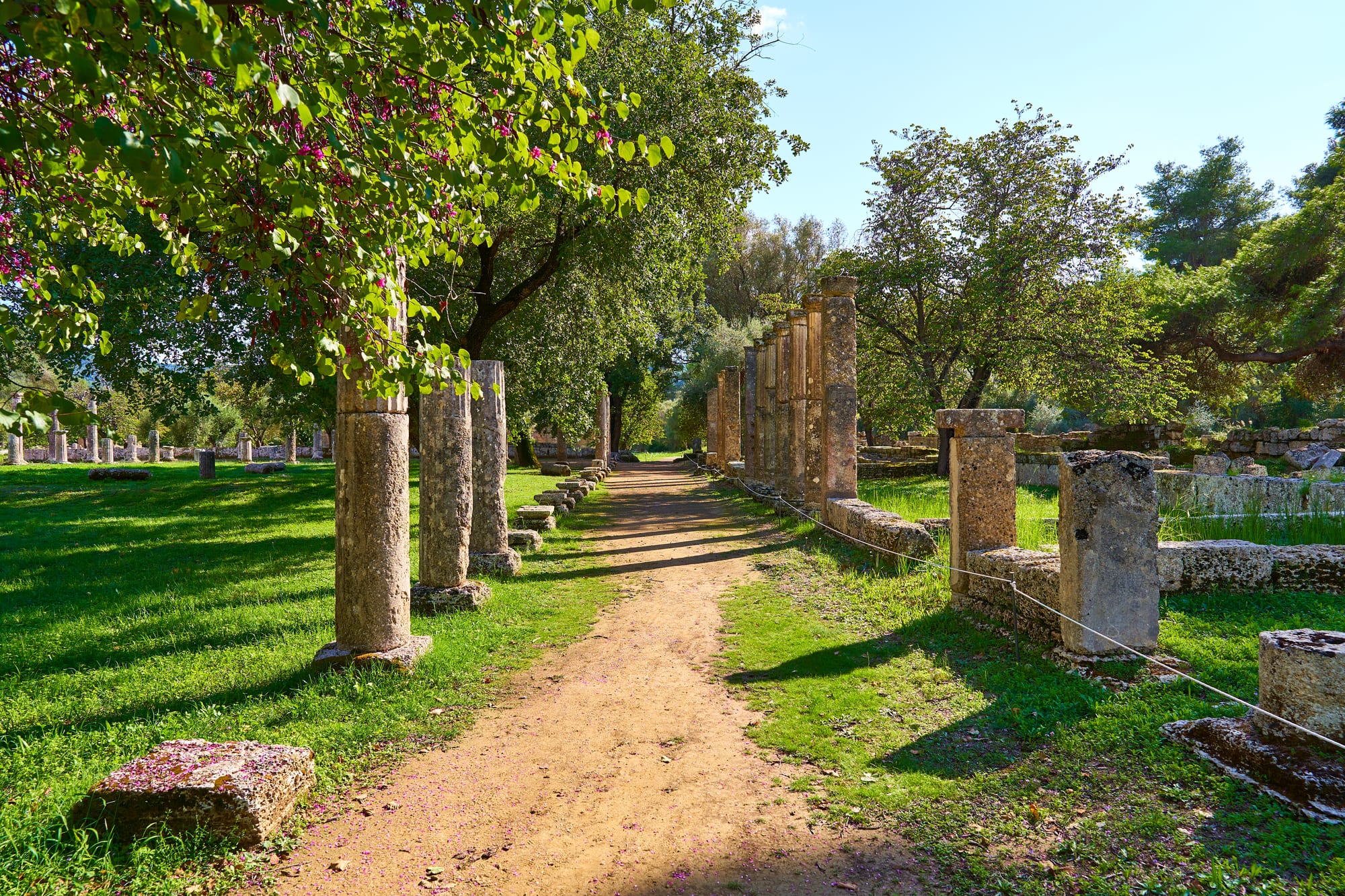
April to mid-June and September to October, when the site can be walked in comfort and spring brings wildflowers and the pink blossom of the Judas trees among the ruins. July and August are hot and crowded at an open-air site with little shelter; rainy days in winter are quiet but wet.
⏳ Suggested Number of Days
One full day covers the site and the museums, and a night in the village allows an early start. Adding a day or two allows for the Ionian coast nearby; travelling by bus rather than car adds time.
- First Visit
- 1–2 days
- With Surroundings
- 2–3 days
🚆 Transportation
The village is small enough to walk, and no private vehicles are allowed within the archaeological site, which is entered across a bridge over the Kladeos and needs extensive walking. A car is useful for the coast and the surrounding countryside; local KTEL buses link Olympia with Pyrgos.
Wear sturdy shoes and carry water inside the site, which is spread out and offers little shelter from sun or rain.
🛬 Airport & Station Connections
Olympia is about 20 km from Pyrgos, the capital of Elis. Intercity KTEL coaches link Pyrgos with Athens, and buses from Patras via Pyrgos take about two hours; buses also run from the ferry port of Kyllini. The town's railway station is the terminus of the branch line from Pyrgos, with regional trains to Katakolo via Pyrgos. The nearest sizeable airport is Kalamata, about an hour and a half away by road.
🚶 Walkability
Very walkable: the village is a few streets long, and the archaeological site is about a twenty-minute walk from the centre. Within the site the paths are unpaved and the distances long, and summer heat is the main difficulty.
🛡️ Safety
Greece is a safe country for visitors, with low levels of violent crime. Olympia is a quiet village. The hazards are natural: summer wildfires — those of 2007 threatened the town and the site, although no damage was reported — heat at the open-air site, and earthquakes, which have shaped the region.
Visit the site early in summer with water and a hat, obey wildfire road closures and the 112 alerts sent to mobile phones, and avoid driving mountain roads at night. Check current official travel advice before travelling.
🌦️ Climate
A Mediterranean climate on the green Ionian side of the Peloponnese, which catches the winter rain. Summers are hot and dry, winters mild and wet, and thunderstorms are common in the region.
- Summer
- hot and dry; nearby Pyrgos has recorded 44.2°C, in August 1957
- Winter
- mild, with heavy rain; winter averages are around 10°C in the low-lying parts of Western Greece
🤝 Local Customs
The surrounding villages are Greek Orthodox, and churches expect modest dress, with shoulders and knees covered. A handshake with eye contact is the usual greeting, and older people are addressed as Kyrios or Kyria. Name days are often celebrated more than birthdays, with a wish of 'chronia polla'.
Treat the ruins with care — do not climb on the stones — and accept food or drink when offered, since a flat refusal can seem rude. An upward tilt of the head means 'no'.
💳 Common Payment Methods
Greece uses the euro. Cards are accepted almost everywhere after reforms to curb tax evasion, but carry some cash for kiosks and small tavernas. The village has ATMs, though fewer than a larger town.