💰 Budget
Patras is good value all year, cheaper than Athens and far cheaper than the islands, with a large student population that keeps cafés and tavernas affordable. Prices rise in the carnival weeks, when rooms fill up. Ferry tickets to Italy and the islands are the main extra cost for travellers passing through.
- Daily Budget Midrange
- USD 110–200 (mid-range hotel in the centre, taverna dinners, museum tickets, a hire car for the region)
- Daily Budget Shoestring
- USD 50–85 (simple room, souvlaki and bakery meals, city buses and the suburban train)
Book rooms early for the carnival's final weekend; the castle grounds, the squares and the stairways cost nothing.
📅 Best Time to Visit
Spring and autumn are pleasant for walking the upper town and the seafront. Summer is hot and brings the international festival and evenings at Rio. The carnival, from 17 January to Clean Monday, is the big event of the year, though winter is the wettest season.
⏳ Suggested Number of Days
Two days cover the city itself. Four or five allow time for the towns across the bridge and the rack railway along the coast; many visitors simply pass through for a night between a ferry and the rest of Greece.
- First Visit
- 2 days
- With Surroundings
- 4–5 days
🚆 Transportation
City buses cover most of the city and run out to the university and Rio hospital. A suburban railway runs about every hour along the coast from Agios Vasileios through the centre to Kato Achaia, with shuttle buses to the university. Taxis are maroon. A car is the practical way to explore the region beyond the city.
Use the suburban train to reach Rio and the beaches along the coast; it is quicker and more comfortable than the city buses.
🛬 Airport & Station Connections
Patras is 215 km west of Athens by road, on the motorway via Corinth. KTEL coaches from Athens arrive at the bus station near the port; the Athens suburban railway covers part of the route, with a connecting bus for the rest. Araxos airport, 40 km south, takes only seasonal charter flights, so most visitors fly into Athens, 250 km away. Ferries link the south port with Ancona, Bari, Brindisi and Venice in Italy and with Corfu, Kefalonia and Igoumenitsa.
🚶 Walkability
The lower town is flat and easy on foot, with squares and pedestrian streets close together. The upper town and the castle are a stiff climb up the public stairways. Rio, the university and the south port are further out and best reached by train or bus.
🛡️ Safety
Greece is a safe country for visitors, with low levels of violent crime. Patras is a working port and university city where crime against visitors is uncommon. The Gulf of Corinth is earthquake country, and the hills around the city face wildfire risk in summer; the crowded final weekend of the carnival calls for the usual care with belongings.
Keep an eye on bags in the carnival crowds and around the port, and obey wildfire road closures and the 112 alerts sent to mobile phones. Check current official travel advice before travelling.
🌦️ Climate
A hot-summer Mediterranean climate with mild, wet winters and hot, dry summers; spring and autumn are pleasant transitional seasons, and autumn is wetter than spring. Snow is extremely rare in the city but more common on the surrounding mountains.
- Summer
- hot and dry; across the gulf in Missolonghi summers are long, hot and humid, rarely passing 40°C
- Winter
- mild and wet, with high humidity; winter highs in the low-lying parts of Achaea are around 10°C
🤝 Local Customs
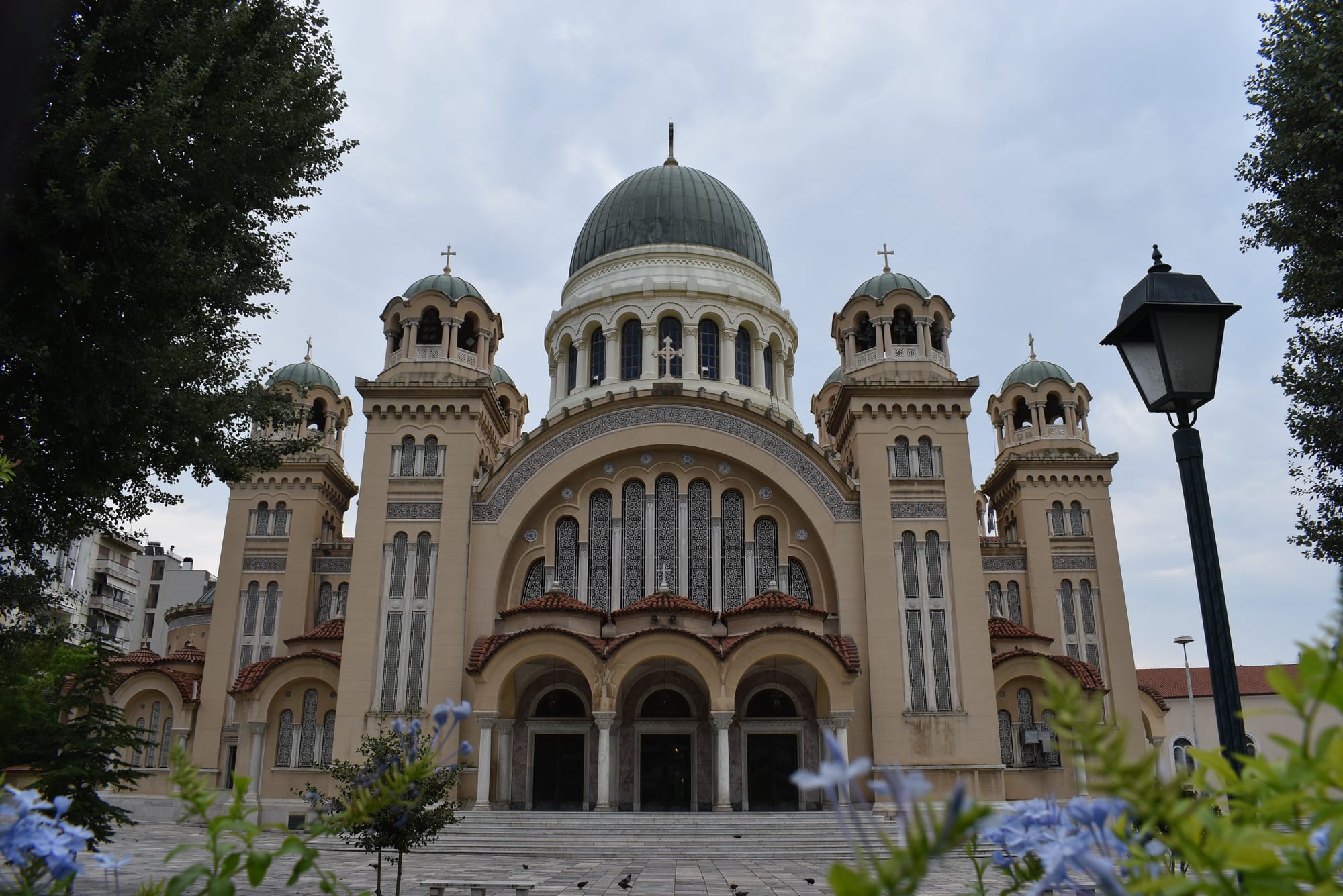
Patras is Greek Orthodox, and Saint Andrew is its patron; churches expect modest dress, with shoulders and knees covered. A handshake with eye contact is the usual greeting, and older people are addressed as Kyrios or Kyria. Name days are often celebrated more than birthdays, with a wish of 'chronia polla'.
Dress modestly to visit Saint Andrew's, a place of pilgrimage, and look for signs or ask before taking photographs inside. Accept food or drink when it is offered.
💳 Common Payment Methods
Greece uses the euro. Cards are accepted almost everywhere after reforms to curb tax evasion, though kiosks and some small tavernas still prefer cash. ATMs are easy to find throughout the centre.