💰 Budget
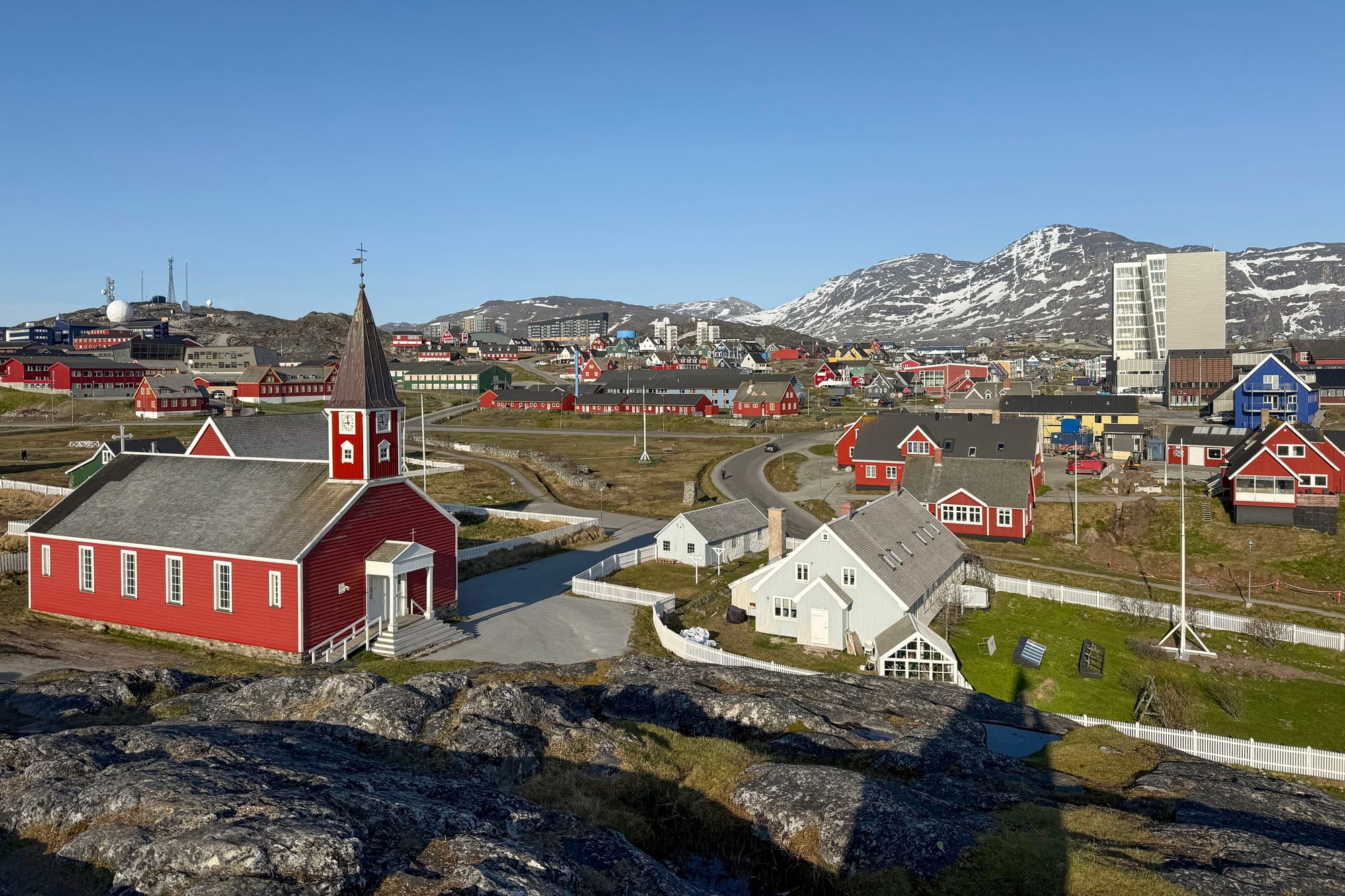
Nuuk is expensive: nearly everything is imported, and restaurant meals and beer are expensive. Boat trips into the fjord and whale watching are the main extra costs. Supermarkets, the fish market and the free walks around Old Nuuk and the mountains keep the daily cost down.
- Daily Budget Midrange
- USD 290–580 (hotel, restaurant meals, one boat trip into the fjord; flights extra)
- Daily Budget Shoestring
- USD 100–170 (guesthouse or hostel, supermarket food and the fish market, buses and walking)
Old Nuuk, the cathedral and the marked mountain walks cost nothing; reserve summer boat trips and rooms well ahead.
📅 Best Time to Visit
June to September for the longest light, open water for boat trips and the easiest hiking; around midsummer the nights never grow fully dark, and National Day on 21 June brings crowds to the old town. Winter is dark — on the shortest day the sun rises late in the morning and sets mid-afternoon — but brings snow, skiing on Lille Malene and the snow festival.
⏳ Suggested Number of Days
Two or three days cover the old town, the museums and a mountain walk. Allow four to six days to add boat trips into the fjord system or a stay in one of its settlements. Weather delays flights and boats, so a spare day is wise.
- First Visit
- 2–3 days
- With Surroundings
- 4–6 days
🚆 Transportation
No roads connect Nuuk with any other town, but the city has about 80 km of its own, Greenland's only traffic lights, and most of its buses and cars. The city bus service, Nuup Bussii, links the centre with the airport and the outer districts of Nuussuaq, Qinngorput and Quassussuup Tungaa, and taxis are easy to find. Boats are the way into the fjord.
The Arctic Umiaq coastal ferry calls at Nuuk twice a week for most of the year, linking it with other towns on the west coast.
🛬 Airport & Station Connections
Nuuk Airport is about 3.7 km north-east of the centre, a short bus or taxi ride. Its extended 2,200 m runway opened on 28 November 2024, and Air Greenland then moved its hub and its Copenhagen route there from Kangerlussuaq. Seasonal routes to Newark and further Danish cities began in 2025, and Icelandair flies from Reykjavík–Keflavík. The new airport had many weather and staffing cancellations in its first year, and Kangerlussuaq served again as a temporary hub at least three times in 2025.
🚶 Walkability
Old Nuuk and the centre are close together and easy to walk, though the town is hilly and built on rock. The outer districts of Nuussuaq and Qinngorput are 4–5 km out and better reached by bus. Pavements are snowy and icy for much of the year, and the mountain trails begin at the edge of town.
🛡️ Safety
Towns are safe, with little serious crime, though alcohol-related problems and, more privately, high rates of suicide and social distress are part of the picture. In Nuuk the risks visitors meet are mostly the weather and the terrain, especially on the mountain trails.
Tell someone before hiking unmarked routes such as Store Malene, carry warm layers whatever the season, and take boat trips only with licensed operators. Check current official travel advice before travelling.
🌦️ Climate
A maritime-influenced tundra climate with long, cold, snowy winters and short, cool summers; winters are milder than in Alaska or Siberia at the same latitude. Monthly averages range from about −9°C to 7°C, and autumn brings the most rain and snow.
- Summer
- cool — July averages about 7°C, and the record high is 26.3°C
- Winter
- cold and dark — the coldest months average about −9°C, and the record low is −32.5°C
🤝 Local Customs
Nuuk has the highest share of Danes of any Greenlandic town, but Greenlandic is the main language and Inuit culture is celebrated openly. The kaffemik, an open house with coffee and cake for a birthday or other milestone, is the main social custom, and visitors may be invited.
Ask before photographing people; seal is sold openly at the fish market, and seal and whale appear on restaurant menus. Greenlandic and Danish are spoken, with English common in tourism.
💳 Common Payment Methods
The currency is the Danish krone. Cards are accepted almost everywhere in the city, and ATMs are easy to find. Carry some cash for the fish market and trips to small settlements.