💰 Budget
Prices in Pointe-à-Pitre are French prices in the Caribbean, with much of what is sold imported. Market food, bokit and lolo meals are far cheaper than sit-down restaurants, and a hire car is the largest extra cost for anyone exploring beyond the town.
- Daily Budget Midrange
- USD 150–300 (hotel or good gîte, restaurants, car hire, museum tickets and excursions)
- Daily Budget Shoestring
- USD 65–105 (gîte or guesthouse, market and lolo food, local buses)
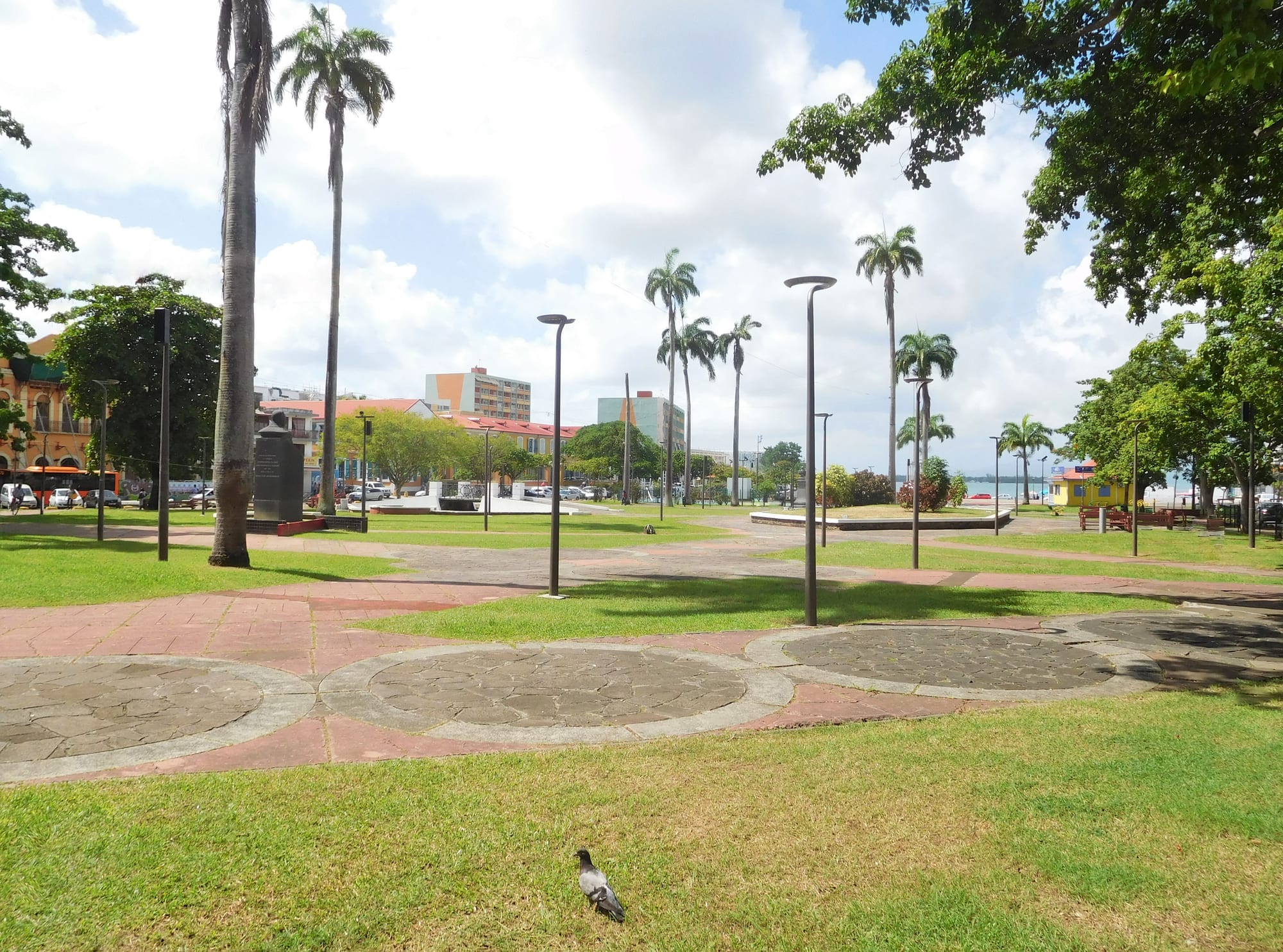
Eat at the markets and lolos to keep costs down; the squares, the markets and the statues of the old town cost nothing to see.
📅 Best Time to Visit
December to April is the peak season and the driest part of the year, busiest around Christmas, carnival and Easter; carnival builds to its big Pointe-à-Pitre parade on Dimanche Gras. May and November are quieter. The wetter months run from July to December, with the hurricane risk highest from August to October.
⏳ Suggested Number of Days
The town itself needs a day or two. As the hub of the islands it makes a practical base, and most visitors stay longer to take in the beaches of Grande-Terre and the volcano and forests of Basse-Terre, which need a car.
- First Visit
- 1–2 days
- With Surroundings
- 4–6 days
🚆 Transportation
A hire car is the practical way around Guadeloupe, and the two main islands, which meet near the town, are linked by bridges over the Rivière Salée channel. There is a basic bus network. The commune is small and congested, and traffic in and out of it can be slow.
Hire a car at the airport for trips out of town, but leave it parked and walk within the old centre.
🛬 Airport & Station Connections
Guadeloupe Maryse Condé Airport, also known as Pointe-à-Pitre International Airport, is in the neighbouring commune of Les Abymes, about 2.4 km north-north-east of the town, with flights from Paris, other Caribbean islands and North America. The town's port is the islands' main port of call for passengers as well as cargo.
🚶 Walkability
The old centre sits on a limestone plateau and is compact enough to cover on foot, with the square, markets, museums and church close together. The heat and humidity make walking hard work in the middle of the day. Bas-du-Fort and the marina are easier to reach by car or taxi.
🛡️ Safety
Guadeloupe is broadly safe for visitors, with burglary of holiday rentals and cars, and some violent crime concentrated in parts of Pointe-à-Pitre and Les Abymes, the main concerns. Occasional social unrest and roadblocks occur, as during the 2021 protests. The busy streets of the centre by day and the marina in the evening see most visitors.
Leave no valuables in cars, use a taxi rather than walking through empty streets late at night, and keep up with news of strikes or roadblocks. Check current official travel advice before travelling.
🌦️ Climate
Tropical, on the border between monsoon and rainforest types. Rain falls through the year, with a wetter season from July to December that coincides with the hurricane season, and 1,500–2,000 mm a year in all. The north-east trade winds often temper the heat.
- Summer
- the wetter, hurricane-season months — hot and humid, with temperatures across the islands mostly between about 25 and 32°C, and frequent showers
- Winter
- the drier Carême season — still hot, with temperatures across the islands mostly between about 25 and 32°C
🤝 Local Customs
French is the official language and Guadeloupean Creole the everyday one; in Creole the town is Lapwent, and its people are called Pointois. English is understood in tourist areas but not widely. Slavery and its abolition are part of living memory and public life here, marked by statues, the Mémorial ACTe and the 27 May commemoration.
Ask before photographing people at the markets, dress modestly in churches, and treat memorial sites with respect.
💳 Common Payment Methods
The currency is the euro. Cards are widely accepted; carry some cash for lolos, market stalls and small shops.