💰 Budget
Les Saintes carry Guadeloupe's French prices with an island premium, and the ferry crossing adds to the cost of a day trip. Bakeries, snack bars and the stalls at the pier are the cheap way to eat; scooter or electric-cart hire is the main daily extra.
- Daily Budget Midrange
- USD 150–300 (small hotel or bungalow, restaurants, scooter hire and ferries)
- Daily Budget Shoestring
- USD 65–105 (guesthouse, bakery and snack-bar food, walking)
Buy ferry tickets ahead in high season, as the islands' ferries are busy, and eat at the bakeries and pier stalls.
📅 Best Time to Visit
December to April is the peak season, drier and busiest around Christmas, carnival and Easter, when the bay fills with day visitors and yachts. Mid-August brings the island's patronal festival. The hurricane risk is highest from August to October.
⏳ Suggested Number of Days
Many visitors come for a day by ferry, but the island is quieter once the last boats leave. A couple of nights allows a slower pace; longer stays take in the neighbouring island and the islets as well.
- First Visit
- 1–2 days
- With Surroundings
- 3–4 days
🚆 Transportation
Walking, bicycles, scooters and electric carts are the way to get around; only a few service vehicles share the narrow roads. The island has a small airfield, built in 1973, used by private and on-demand flights rather than scheduled services.
Hire a scooter or electric cart near the pier, and walk up to the fort and the hills in the cooler morning.
🛬 Airport & Station Connections
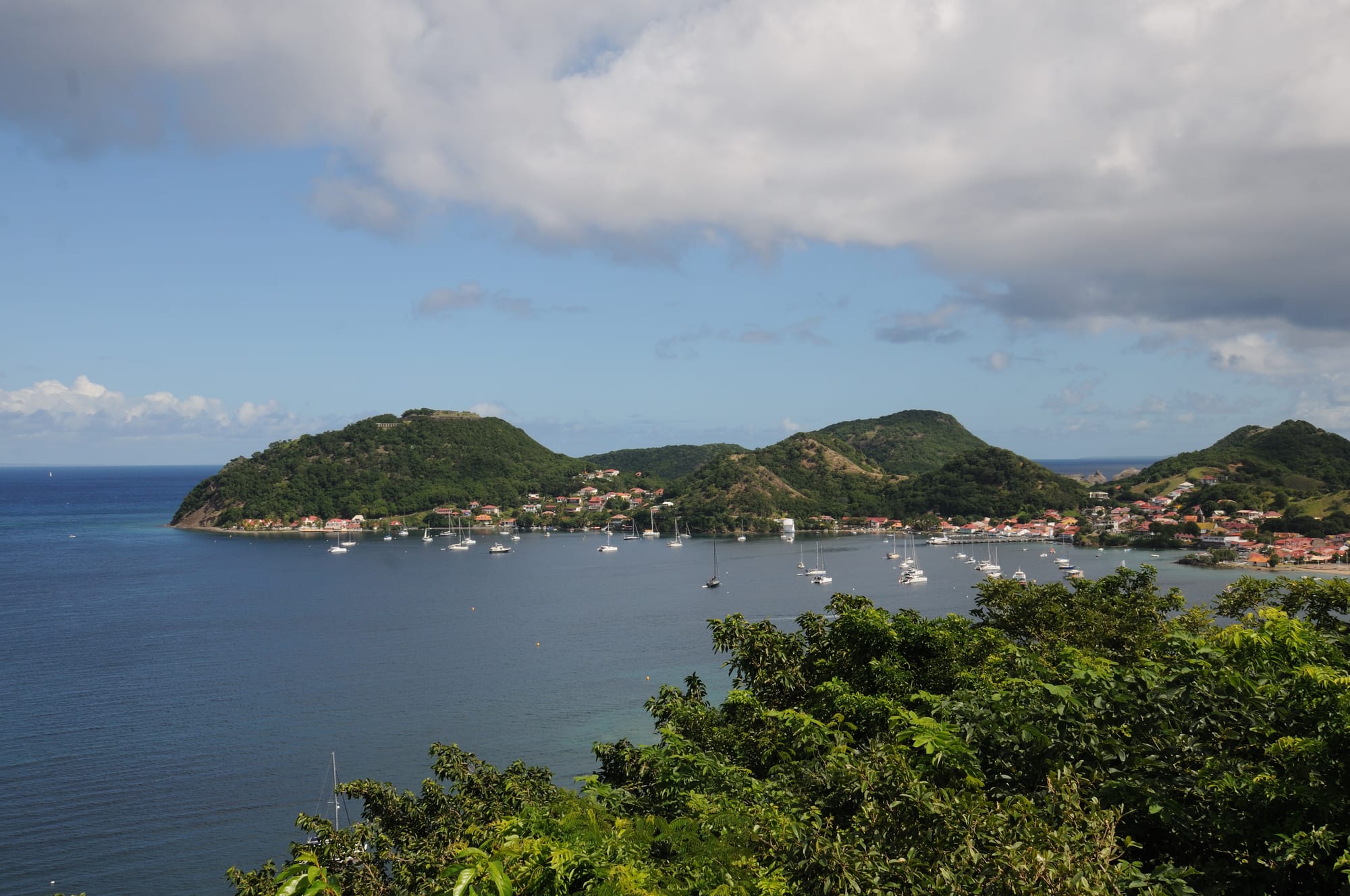
Ferries run from Trois-Rivières on Basse-Terre, a crossing of about 15 minutes, and from Pointe-à-Pitre, about an hour and a half; the maritime station at Basse-Terre also has a service to the islands. Cruise ships and yachts anchor in the bay.
🚶 Walkability
The village is compact and easily walked, but the island is hilly and the climbs to Fort Napoléon and the Chameau are steep and hot in the midday sun.
🛡️ Safety
Guadeloupe is broadly safe for visitors, with burglary of holiday rentals and cars, and some violent crime concentrated in parts of Pointe-à-Pitre and Les Abymes, the main concerns. On Terre-de-Haut the main hazards are natural: the islands were struck by a magnitude 6.3 earthquake in November 2004, and hurricanes threaten in late summer.
Take care on steep roads by scooter, carry water on hill walks, and leave nothing unattended on the beach. Check current official travel advice before travelling.
🌦️ Climate
Tropical and hot all year, with temperatures across the islands mostly between about 25 and 32°C. Les Saintes are dry enough for cacti and succulents to thrive on the hills.
- Summer
- the wetter hivernage, July to December — hot and humid, mostly about 25–32°C across the islands, with showers and the hurricane season
- Winter
- the drier Carême, January to June — sunny and hot, mostly about 25–32°C across the islands
🤝 Local Customs
The islanders are the Saintois, largely descended from settlers from Brittany, Normandy, Poitou, Saintonge and Anjou, and their Creole, with its very French pronunciation, differs from that of the neighbouring islands. The salako, a hat of bamboo fibres, and the saintoise fishing boat are local emblems.
Dress modestly in the church and the village away from the beach, and ask before photographing people.
💳 Common Payment Methods
The currency is the euro, and credit cards are easily accepted. Carry some cash for the pier stalls, bakeries and small shops.