💰 Budget
Lethem itself is modest in price — simple guesthouses, local food and walking — but getting there is the main cost: a flight from Georgetown or a long, hard overnight minibus ride. Trips onto the savannah need a guide and a 4x4, and stays at ranches and lodges in the Rupununi are premium-priced.
- Daily Budget Midrange
- USD 150–300 (better room, guided day trips by 4x4, more with lodge stays and flights)
- Daily Budget Shoestring
- USD 55–90 (simple guesthouse room, local food, walking and shared transport)
Bring enough cash: there are two banks in town, but cash in Guyanese dollars, reais or US dollars is what most places use.
📅 Best Time to Visit
September to April, when rain is moderate to light and the dirt roads and savannah tracks are passable. From May to August rain is heavy, the savannah floods and the road to the coast becomes slow and unpredictable. Easter brings the rodeo and the busiest weekend of the year.
⏳ Suggested Number of Days
The town itself needs little more than a day. Most visitors stay longer to explore the savannah, the mountains and the villages, and the total depends on road conditions and on how many trips by 4x4 are planned; in the rainy season everything takes longer.
- First Visit
- 1–2 days
- With Surroundings
- 4–7 days
🚆 Transportation
The town is small enough to walk around, and taxis cover longer hops, including to the bridge. Traffic drives on the left, roads are unlit and in poor condition, and locals avoid driving after dark. Getting onto the savannah means a 4x4 with a driver or a guided trip.
Agree trips onto the savannah with established local operators, and avoid driving at night.
🛬 Airport & Station Connections
Lethem Airport has scheduled flights to Georgetown, leaving from the smaller Ogle airport near the capital, with strict luggage weight limits. By road, Georgetown is about 423 km north along the route through Linden, unpaved for most of the way; overnight minibuses run daily and the journey is slow in the rains. From Brazil, a paved road runs 125 km from Boa Vista to Bonfim, and the Takutu River Bridge leads into town.
🚶 Walkability
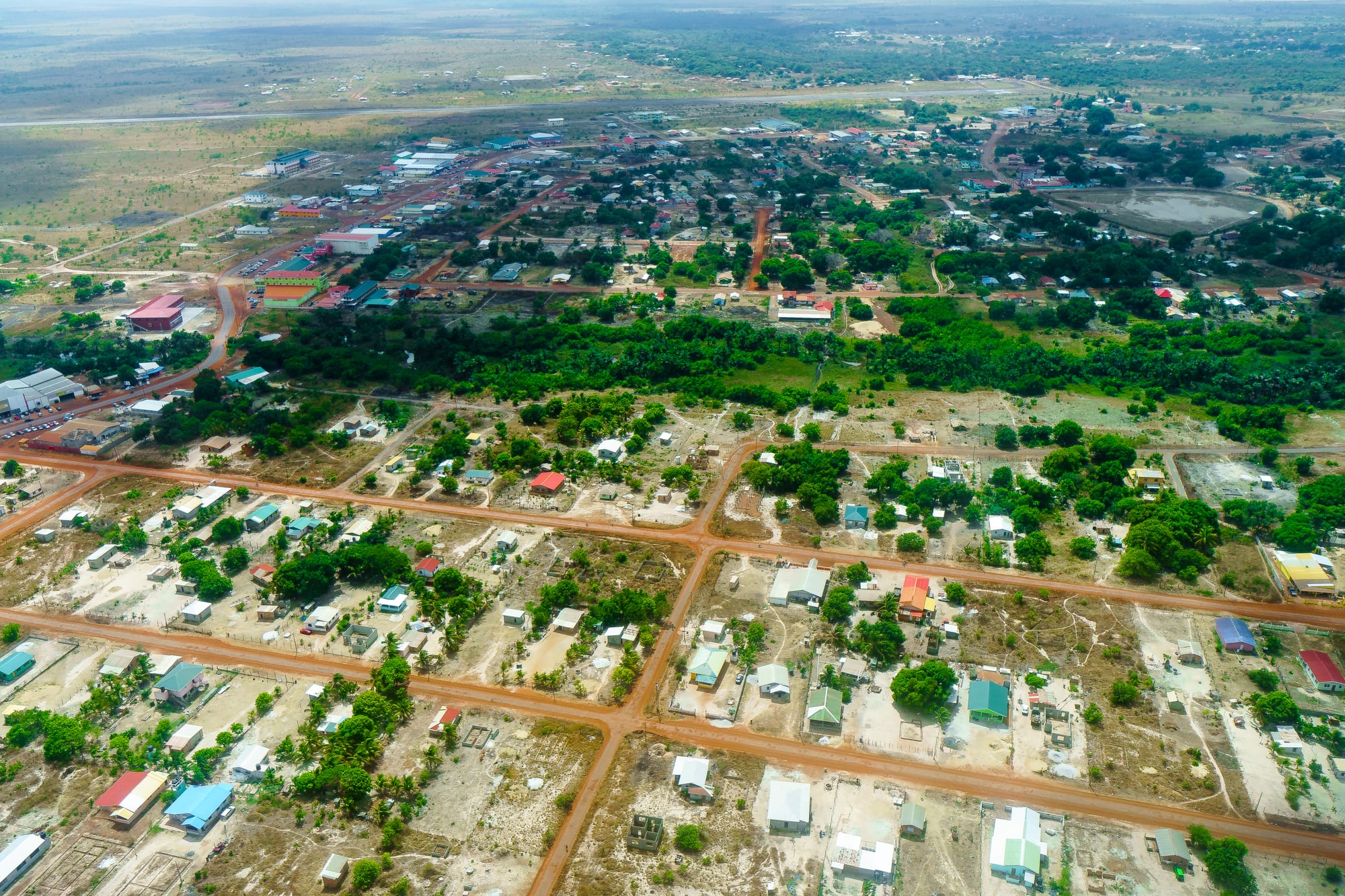
Lethem is compact and flat, and the centre, the shops and the bus station are within walking distance of each other. Streets are largely unpaved and dusty in the dry season, there is little shade, and the midday heat is strong. The bridge to Brazil and St. Ignatius are a longer walk, and streets are unlit at night.
🛡️ Safety
Georgetown has significant crime, including armed robbery and burglary, and visitors are advised to be cautious downtown and after dark and to avoid certain districts. Lethem is a small border town far from the capital; the main concerns here are health and travel conditions. Malaria is present in the area, some roadside food stands have poor hygiene, and unlit roads make night driving dangerous.
Arrive with malaria medication and insect repellent, drink bottled water, and carry proof of yellow fever vaccination when crossing into Brazil. Check current official travel advice before travelling.
🌦️ Climate
A tropical savanna climate, hot all year. Rain is moderate to light from September to April and heavy to very heavy from May to August, when much of the surrounding savannah floods.
- Summer
- the wet season runs roughly May to August — heavy rain, flooded savannah and difficult roads; daytime highs are just above 30°C all year
- Winter
- the drier months run roughly September to April; days stay just above 30°C and nights are about ten degrees cooler
🤝 Local Customs
English is the official language, but Portuguese is widely spoken in the Rupununi, where most trade is with Brazil, and Wapishana and Macushi are spoken in the villages. Amerindian villages such as St. Ignatius are governed by an elected council led by a toshao, and visits to communities are best arranged in advance. Ranch culture is strong, and the rodeo is the social event of the year.
Ask permission before photographing people or entering village land, dress modestly in churches, and carry a passport for flights and the border.
💳 Common Payment Methods
Guyanese dollars, Brazilian reais and, in some shops, US dollars are all accepted. The town has two banks, but cash is the practical choice, and street money changers' rates do not always match official ones. ATMs are scarce in the interior, so carry enough cash from Georgetown or Brazil.