💰 Budget
Masuleh is inexpensive apart from getting there, which for most visitors means hiring a car with a driver from Rasht or Tehran. Rooms are mostly in small guesthouses and homestays in village houses, and meals are simple and cheap. Prices rise sharply at Nowruz and in high summer, when the village is crowded. Sanctions mean foreign cards do not work, so everything is cash.
- Daily Budget Midrange
- USD 45–85 (better guesthouse, restaurant meals, a driver from Rasht for the day)
- Daily Budget Shoestring
- USD 20–35 (guesthouse room or homestay, village meals, shared transport from Fuman)
Bring enough cash from Rasht: there is nowhere in the village to change money and card payment is not possible for foreign visitors.
📅 Best Time to Visit
Late spring and early autumn, when the forest is green or turning and the air is clearer. Summer is humid and busy with Iranian holidaymakers, autumn is very wet, and winter brings snow that can cut the road for a time. That is the ordinary calendar: since 28 February 2026 Iran has been at war with the United States and Israel, and there is at present no good time to go.
⏳ Suggested Number of Days
The village itself is small and can be walked in a few hours, though staying a night is what most people remember. Add a day or two for the forest, the castle and the towns on the plain; weather changes how much is possible.
- First Visit
- half a day to 1 day
- With Surroundings
- 2–3 days
🚆 Transportation
There is no transport inside the old village: vehicles stop at the bottom and everything above is reached on foot, up steps and across roofs. Shared cars and taxis run from Fuman, which is connected by bus and shared car to Rasht. That is the peacetime picture: the war that began in February 2026 has disrupted aviation across the region, and a strike in April 2026 brought down a major bridge on the road between Tehran and Karaj.
A hired car with driver is the practical way to arrive; check what is open before relying on any route.
🛬 Airport & Station Connections
The village lies about 60 kilometres south-west of Rasht by road, roughly an hour and a half, with the last section climbing a narrow mountain road from Fuman. Most people come by hired car or shared taxi from Rasht, or on a day trip from Tehran, which is some four to five hours away over the Alborz. Luggage has to be carried up from the car park.
🚶 Walkability
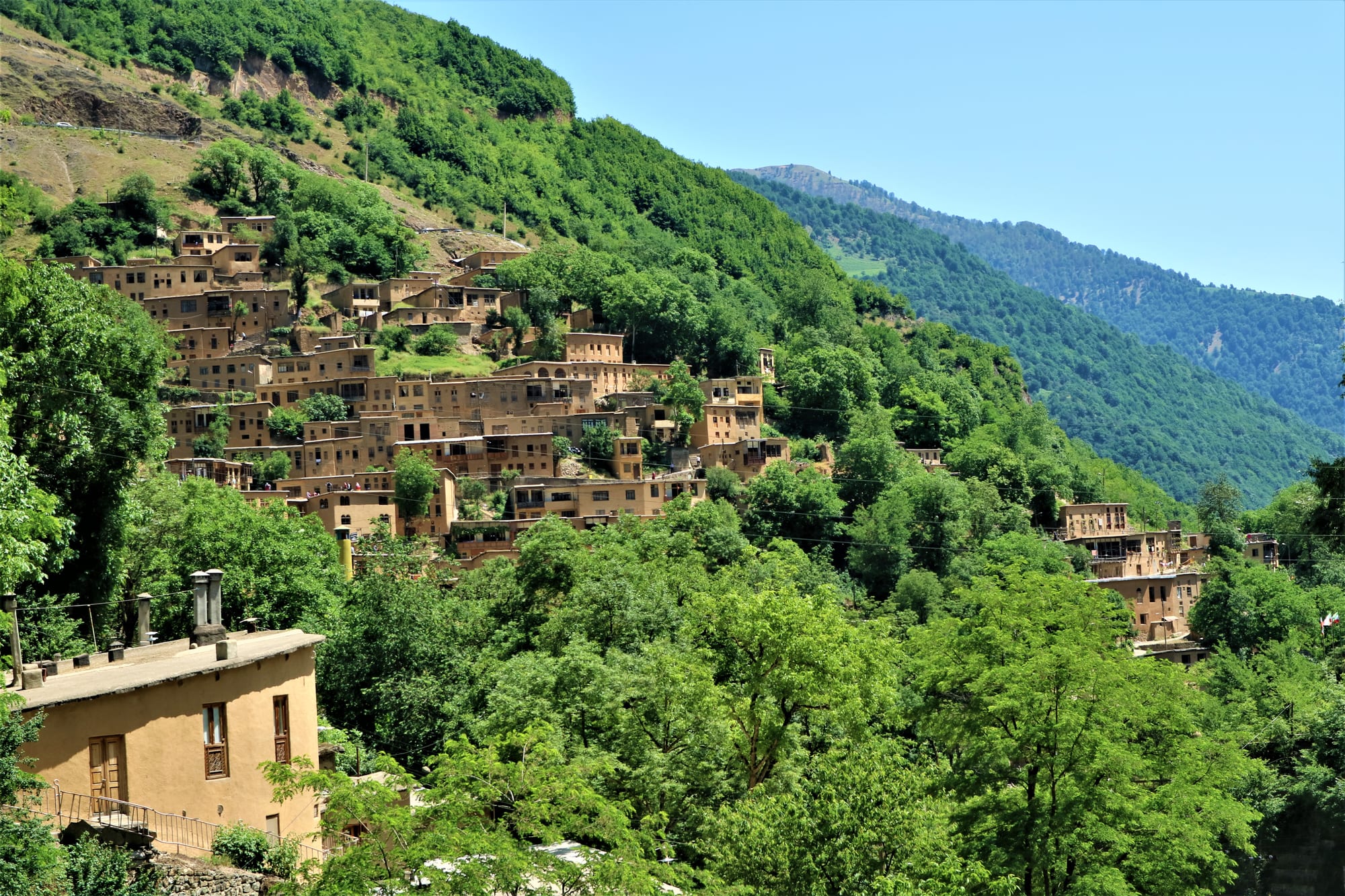
Everything in Masuleh is walked, and almost all of it is uphill: the village climbs steeply, the lanes are steps and roofs, and there are no vehicles inside it. Surfaces are uneven and can be slippery in rain or mist, which is frequent. Walking across roofs means walking over other households, and people ask visitors to be quiet and to keep away from windows and courtyards.
🛡️ Safety
Since 28 February 2026 Iran has been at war with the United States and Israel; a ceasefire agreed in April collapsed in July and hostilities resumed in September, and the national warnings apply here as everywhere. The village itself is quiet and crime is not a concern. The real risks are physical: steep steps, unfenced roof edges and drops between terraces, slippery stone in wet weather, and mountain weather that changes quickly, including fog and winter snow on the access road. Medical facilities are on the plain, not in the village.
Several governments strongly advise against travel to Iran, citing the risk of arbitrary arrest and detention of foreigners and dual nationals. Wear shoes with grip, take care near roof edges and with children, and do not set out on forest paths in fog. Check current official travel advice before travelling.
🌦️ Climate
Wet, green and mountainous, at about 1,050 metres on the seaward side of the Alborz, so moisture off the Caspian is pushed up the slope. Rain and low cloud are possible in any month, autumn is the wettest season, and the village is often above or inside the mist.
- Summer
- mild for Iran, around 20–27°C, humid, with frequent cloud and showers
- Winter
- cold and wet, roughly -2 to 8°C, with snow lying on the roofs and terraces
🤝 Local Customs
Masuleh is a working village as well as a visitor attraction, and the roofs that serve as streets are also people's homes. Talyshi and Gilaki are spoken alongside Persian. Iran's legal dress code applies: women cover their hair and wear a loose coat or tunic, and men do not wear shorts. Hospitality is pressed on visitors and taarof shapes every offer.
Keep noise down on the roofs, do not look into courtyards or windows, ask before photographing residents, and take shoes off when invited into a house.
💳 Common Payment Methods
The currency is the Iranian rial, with prices usually quoted in toman, one toman being ten rials. Foreign cards and international payment apps do not work because of sanctions. There is no exchange office in the village, so cash changed in Rasht or Tehran, or a prepaid local tourist card, is essential.