💰 Budget
Qazvin costs noticeably less than Tehran for rooms and food, and its monuments are cheap or free to enter. The main extra expense is transport into the Alamut valley, which realistically means hiring a car with a driver for a day. Sanctions mean foreign cards do not work, so all costs are paid in cash.
- Daily Budget Midrange
- USD 45–85 (mid-range hotel, restaurant meals, a driver for the Alamut valley)
- Daily Budget Shoestring
- USD 20–35 (guesthouse or simple hotel, bazaar food, shared taxis)
Change money in Qazvin or Tehran before heading into the mountains, where there is nowhere to do it.
📅 Best Time to Visit
April to June and September to October, when the plateau is mild and the Alamut valley is green or clear. Summer is hot and dry, winter cold with snow that can close mountain roads. That is the ordinary calendar: since 28 February 2026 Iran has been at war with the United States and Israel, and there is at present no good time to go.
⏳ Suggested Number of Days
The historic centre is compact and fits into a day or two. Add a day or more for the Alamut valley and its castles, which involve long mountain drives; winter snow and road conditions change what is possible.
- First Visit
- 1–2 days
- With Surroundings
- 3–4 days
🚆 Transportation
The centre is small enough to walk, and shared taxis running fixed routes, city buses and ride-hailing apps cover the rest of the city. Buses and shared cars leave for Tehran, Rasht and Zanjan from the terminals, and the railway between Tehran and Rasht passes through. That is the peacetime picture: the war that began in February 2026 has disrupted aviation across the region, and a strike in April 2026 brought down a major bridge on the road between Tehran and Karaj.
A hired car with driver is the practical way to reach Alamut; check what is open before relying on any route.
🛬 Airport & Station Connections
Qazvin sits on the main highway and railway between Tehran and the north-west, about 150 kilometres from the capital, which is roughly two hours by road and a little longer by train. Buses run frequently from Tehran, Rasht and Zanjan, and the newer railway line to Rasht crosses the Alborz from here. The nearest large airports are in Tehran.
🚶 Walkability
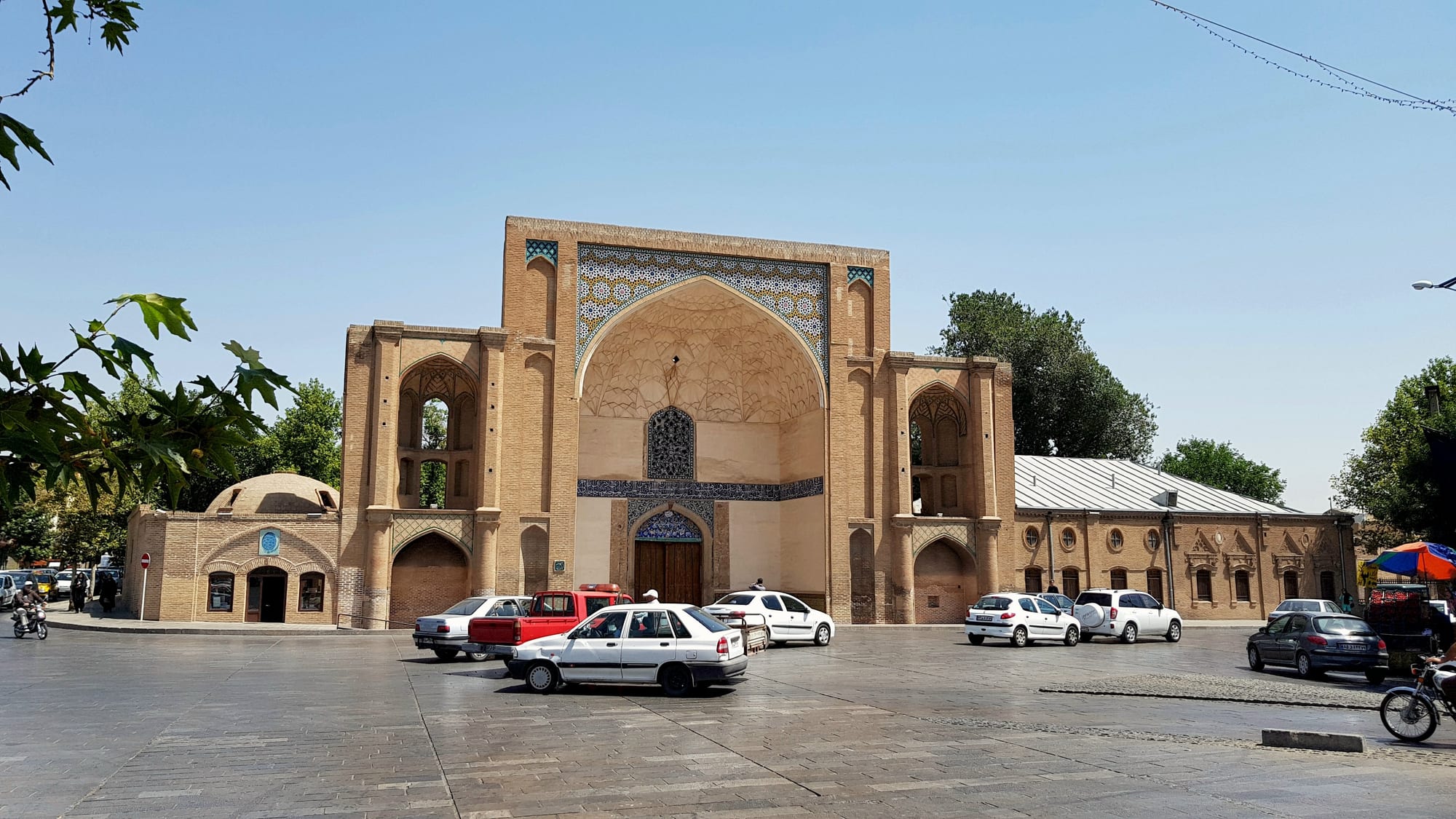
The old city is flat and easily walked: the gateway, the pavilion, the Friday Mosque, the shrines and the caravanserais lie within about a kilometre and a half of one another, and Sepah Street links most of them. Traffic is lighter than in Tehran but crossings still need care. The newer districts are spread out and best covered by taxi.
🛡️ Safety
Since 28 February 2026 Iran has been at war with the United States and Israel; a ceasefire agreed in April collapsed in July and hostilities resumed in September, and the national warnings apply here as everywhere. Qazvin is otherwise a quiet provincial city and street crime is low. The ordinary risks are traffic, summer heat, and mountain conditions on the road into the Alamut valley, where the route is narrow, high and often icy in winter and where help is a long way off.
Several governments strongly advise against travel to Iran, citing the risk of arbitrary arrest and detention of foreigners and dual nationals. Avoid all gatherings, do not photograph government or military buildings, and take a local driver rather than driving the Alamut roads unprepared. Check current official travel advice before travelling.
🌦️ Climate
A semi-arid plateau climate on high ground, drier than the Caspian side of the mountains and colder than Tehran in winter. Rain and snow fall mainly between November and April, and summer days are hot with sharp drops at night.
- Summer
- hot and dry, often 30–35°C by day, cooling noticeably after sunset
- Winter
- cold, around -5 to 7°C, with snow in the city and heavier falls on the mountain roads
🤝 Local Customs
The legal dress code applies: women cover their hair and wear a loose coat or tunic, and men do not wear shorts. Qazvin is a conservative provincial city, and dress in the bazaar and around shrines is watched more closely than in northern Tehran. Shoes come off indoors, hospitality is pressed on guests, and taarof governs offers and refusals.
Carry a scarf, ask before photographing people or inside shrines, and accept at least one offer of tea.
💳 Common Payment Methods
The currency is the Iranian rial, with prices usually quoted in toman, one toman being ten rials. Foreign bank cards and international payment apps do not work because of sanctions, so visitors bring euros or US dollars in cash and change them at an exchange office, or use a prepaid local tourist card. Nothing in the Alamut valley takes cards.