💰 Budget
Assisi is generally better value than the Tuscan hill towns, with pilgrim houses and small hotels in and around the town. Prices rise and rooms fill around Easter and the feast of St Francis in early October. A hire car is the main extra cost for anyone touring the surrounding towns.
- Daily Budget Midrange
- USD 140–250 (hotel in town or a farm stay, sit-down dinners, a hire car or taxis)
- Daily Budget Shoestring
- USD 65–110 (pilgrim hostel or simple B&B, trattoria lunch, trains and buses)
Book well ahead for Easter and early October, and stay overnight to see the town once day visitors have left.
📅 Best Time to Visit
April to June and September to October bring mild weather and green hills, with Calendimaggio in May and the feast of St Francis in October; both are busy. Summer is hot in the valley, though the hill town is less sultry than the plain. Winter is quieter, with cold days and fog in the valley below.
⏳ Suggested Number of Days
One full day covers the main basilicas and the old town, but two allow a slower pace and time on the hill above the town. Three or four days suit those adding the nearby towns of the Umbrian valley, especially with a car.
- First Visit
- 1–2 days
- With Surroundings
- 3–4 days
🚆 Transportation
The historic centre is best explored on foot; drivers use the public car parks just outside the walls. Local buses link the car parks, the Porta San Pietro area and the station in Santa Maria degli Angeli with the centre. Trains on the Foligno–Terontola line connect Assisi with Perugia, Foligno, Florence and Rome, and a car is the easy way to reach the smaller towns.
Bus line C connects the railway station with the town centre.
🛬 Airport & Station Connections
Assisi station, opened in 1866 on the Foligno–Terontola line, is in Santa Maria degli Angeli, about 5 km south-west of the old town; from Florence, travellers change at Terontola, and from Rome at Foligno. The nearest airport is Perugia San Francesco d'Assisi – Umbria International Airport, which serves the region.
🚶 Walkability
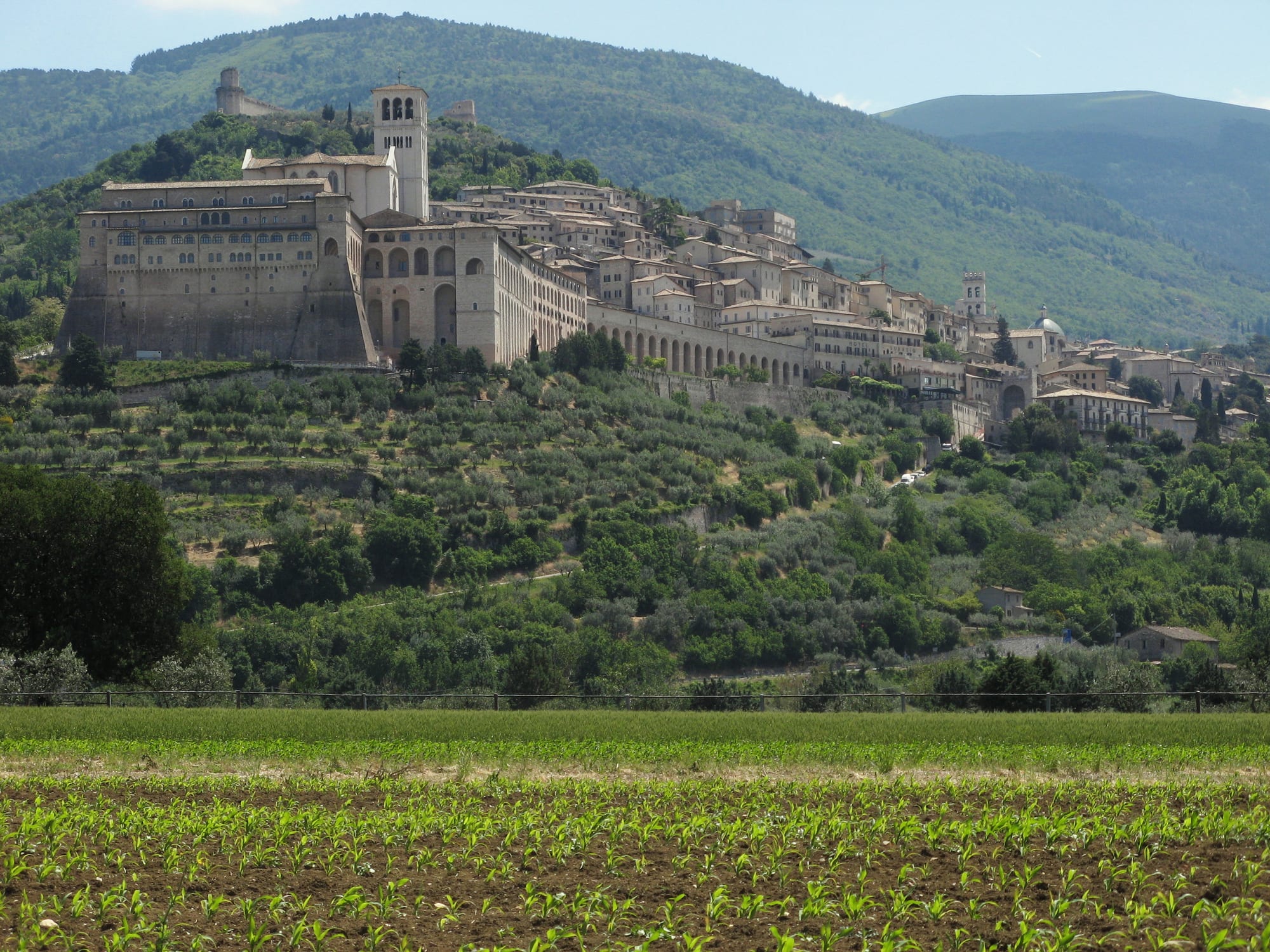
The old town is compact but built on terraces up the mountainside, so walking means steep streets and steps, slowly taken. Piazza del Comune, the basilicas of San Francesco and Santa Chiara and the cathedral are all within walking distance of one another; the Rocca Maggiore and the Eremo delle Carceri involve a real climb.
🛡️ Safety
Italy is generally safe, with low levels of violent crime against visitors. Assisi has little crime affecting visitors beyond occasional pickpocketing in crowds. Umbria is an earthquake area, and the town was badly damaged by the 1997 quakes.
Watch bags in crowded streets around the basilicas, wear sturdy shoes on steep paving, and dress modestly for the churches. Check current official travel advice before travelling.
🌦️ Climate
The hill town has a pleasant climate between that of the plain to the west and the mountains to the east: summers are warm but not sultry, and winters are not too harsh. The valley floor is hotter and more humid in summer and foggier in winter, and the uplands towards Monte Subasio are colder, with snow at times.
- Summer
- warm — in nearby Perugia, July averages just under 23°C
- Winter
- cool — in nearby Perugia, January averages 4.2°C
🤝 Local Customs
Assisi is a place of pilgrimage as well as tourism, and its basilicas are working churches visited by large numbers of worshippers. Friars and nuns are part of everyday street life. Daily rhythms follow Italian habits of espresso at the bar, long lunches and the evening stroll.
Cover shoulders and knees in the basilicas, keep quiet during services, and follow signs about photography inside the churches.
💳 Common Payment Methods
Italy uses the euro. Cards work widely; keep a little cash for small purchases, bars and church offerings. Many Italian towns levy a per-night tourist tax collected at the accommodation.