History
Two peoples shared the land before Rome: the Umbri, east of the Tiber, whose bronze Iguvine Tablets preserved at Gubbio are the longest surviving text in the Umbrian language, and the Etruscans to the west, who founded Perugia and Orvieto. Rome conquered both by the 3rd century BC, built the Via Flaminia through Spoleto and diverted the Velino over a cliff into the Nera, creating the Marmore falls. After the empire, the Lombard Duchy of Spoleto controlled much of the area for over two centuries.
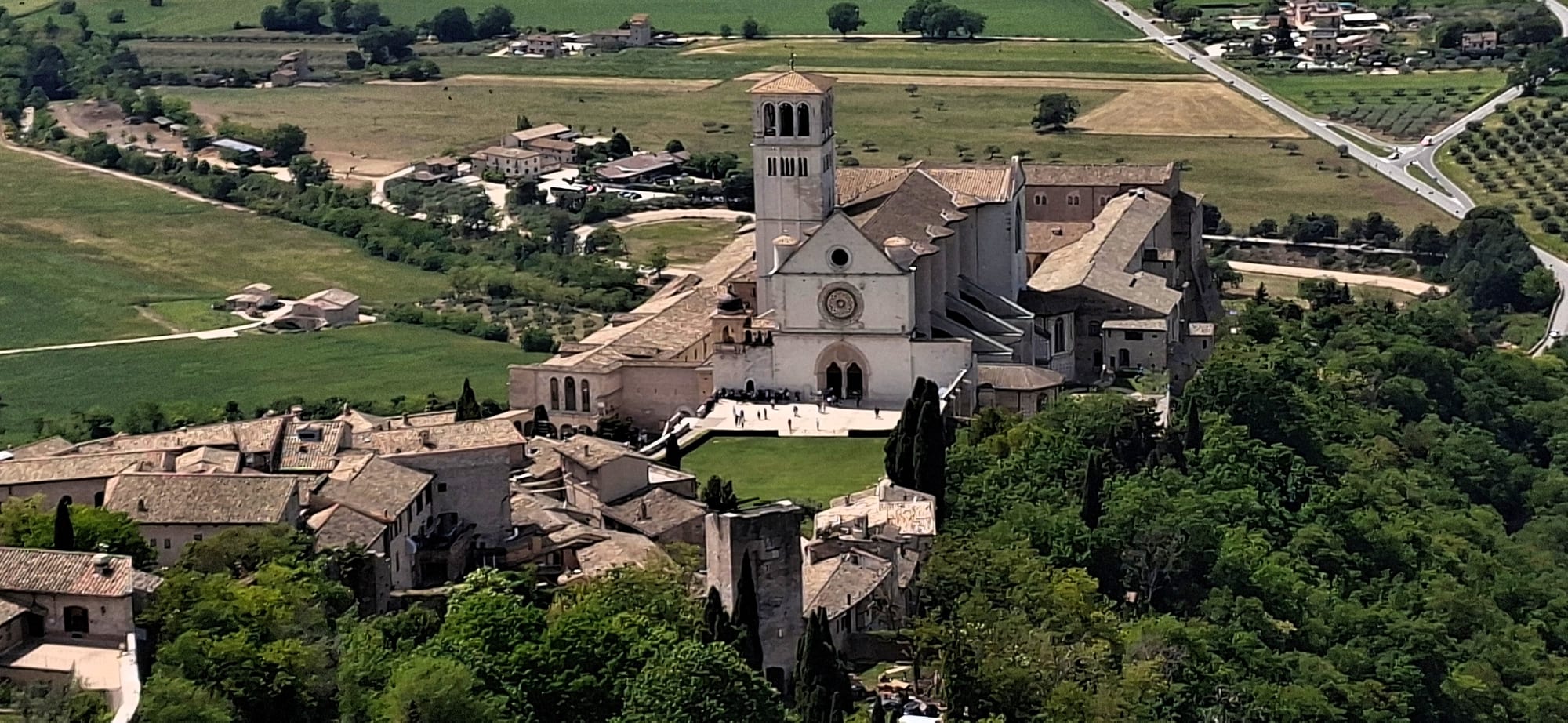
The Middle Ages were an age of communes at war with each other — Perugia against Assisi, Gubbio and Foligno — and of saints. St Benedict, founder of Western monasticism, was born at Norcia around 480; St Francis and St Clare at Assisi in the late 12th century; St Rita at Cascia. The Franciscan movement made Assisi a pilgrimage centre and drew Giotto and Cimabue to paint its basilica, while Perugino and Pinturicchio later made Perugia a centre of Renaissance painting.
The popes gradually tightened their grip, and after Perugia rebelled against a salt tax in 1540 Paul III razed a whole quarter to build the Rocca Paolina fortress. Umbria stayed in the Papal States until 1860, when Piedmontese troops took it and it joined the Kingdom of Italy. Terni grew into an industrial town of steelworks and arms factories, heavily bombed in the Second World War. Earthquakes have repeatedly marked the modern region: the 1997 quake brought down part of the vault of the upper basilica in Assisi, and in 2016 tremors destroyed the Basilica of San Benedetto in Norcia.