💰 Budget
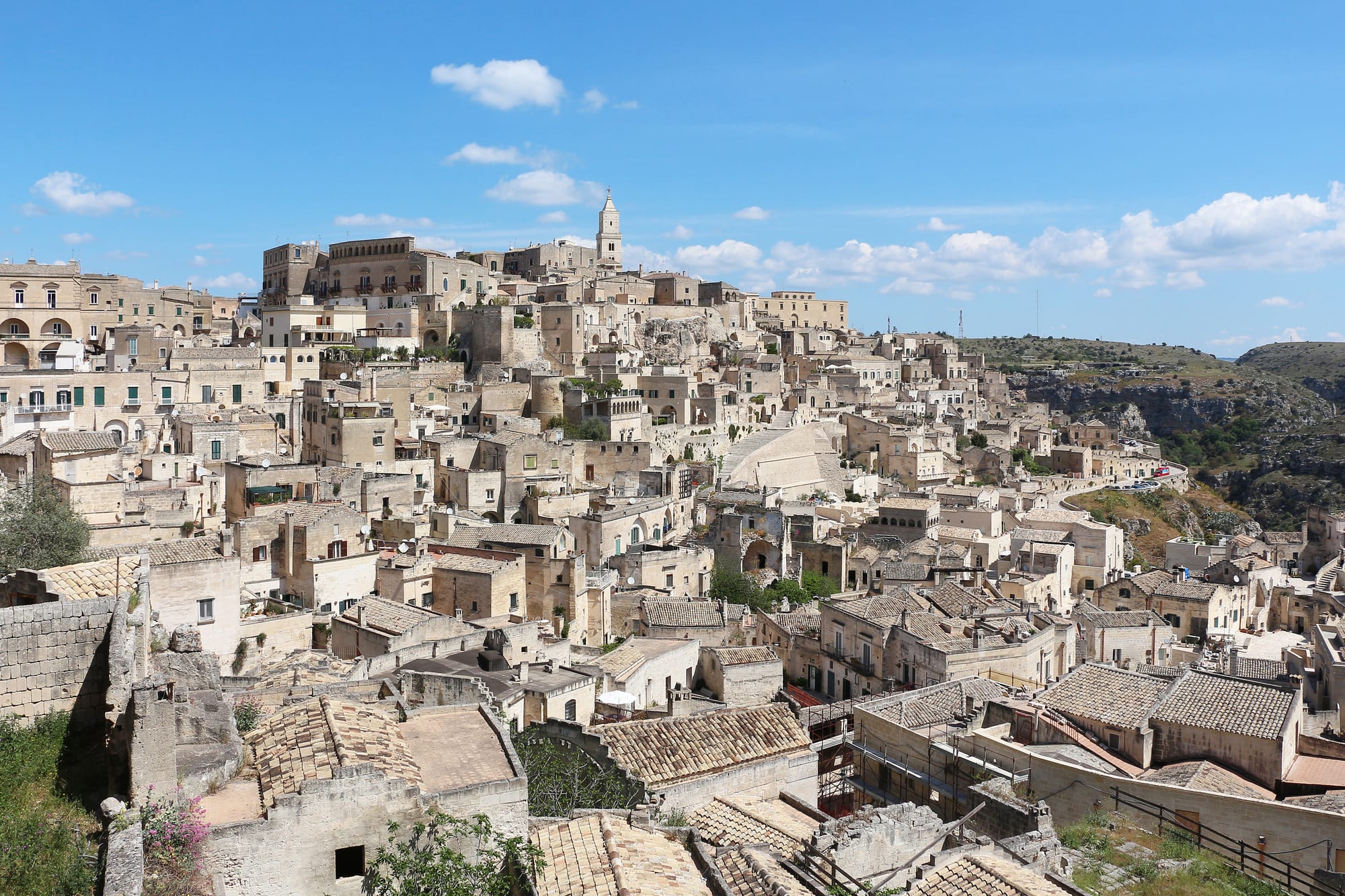
Matera has become one of the most visited places in southern Italy, and cave rooms in the Sassi can be expensive, especially in summer. Rooms in the upper town and meals in its trattorias cost less, and Basilicata as a whole is one of the cheapest regions of Italy.
- Daily Budget Midrange
- USD 120–240 (cave room in the Sassi, restaurant dinners, museum tickets and a guided visit)
- Daily Budget Shoestring
- USD 55–95 (B&B in the upper town, trattoria meals and bakery bread, buses and the train from Bari)
Walking the Sassi and the views from the upper town cost nothing; a night in the Sassi lets the town be seen after the day visitors leave.
📅 Best Time to Visit
Spring and autumn are the best seasons for walking the steep Sassi and the ravine. Summer is hot, though the Festa della Bruna on 2 July is the high point of the year. Winter is quiet and cool, with fewer visitors and lower prices.
⏳ Suggested Number of Days
One to two days cover the town, with a night allowing for the evening and early morning in the Sassi. Three or four days leave room for the park across the ravine and the countryside of Basilicata and Puglia.
- First Visit
- 1–2 days
- With Surroundings
- 3–4 days
🚆 Transportation
Matera is the terminus of the narrow-gauge Ferrovie Appulo Lucane railway from Bari, which arrives at Matera Centrale in the upper town. Local buses run from the station piazza to the Sassi, and long-distance buses to Bari, Taranto, Salerno and Naples leave from the bus station in the new town. Roads link the city to the A14 motorway, and a car is the practical way to explore the region.
Leave the car outside the Sassi, where the lanes are stepped and most are closed to traffic.
🛬 Airport & Station Connections
Bari Karol Wojtyła Airport is the nearest airport, linked to Matera by a direct bus. Trains of the Ferrovie Appulo Lucane run from a station beside Bari Centrale to Matera Centrale in about an hour and a half, sometimes with a change at Altamura; buses replace them on Sundays. There is no state railway station in the city.
🚶 Walkability
The Sassi can only really be seen on foot. From Matera Centrale it is about twenty minutes' walk downhill to the Sassi, which are joined by paths, stairways and courtyards. The stone is worn smooth in places and the climbs are steep; the upper town is flat and easy.
🛡️ Safety
Italy is generally safe, with low levels of violent crime against visitors. Matera's real hazards are physical: steep, uneven and slippery stone steps in the Sassi, unfenced drops at the ravine edge and summer heat.
Wear good shoes for the Sassi, carry water in summer, and stay on marked paths in the ravine. Check current official travel advice before travelling.
🌦️ Climate
Matera has hot summers and cool winters, set on the edge of the Murgia plateau above the ravine. January is the coldest month and August the hottest.
- Summer
- hot — August averaged 25.1°C in 1961–1990, with hotter afternoons
- Winter
- cool — January averaged 6.0°C in 1961–1990
🤝 Local Customs
The Sassi are lived in again, and many cave houses are private homes, so courtyards and doorways should be treated as such. Shoulders and knees should be covered in the cathedral and churches. Matera is proud of its revival, but the poverty of the Sassi before the 1950s is part of living memory.
Ask before photographing residents, and avoid photography during church services.
💳 Common Payment Methods
Italy uses the euro. Cards are accepted widely in shops, hotels and restaurants; keep a little cash for small bars, bakeries and bus tickets.