History
Orta's history is bound up with its lake and its island. Saint Julius of Novara, also called Julius of Aegina, who according to tradition worked around the lake with his brother Julian and died in 401, is said to have built the hundredth of their churches on the island. A chapel stood there by the 5th century and a larger church by the 6th; in the 11th century Arnulf of Milan called the island impregnable. The present basilica was built in the 12th century.
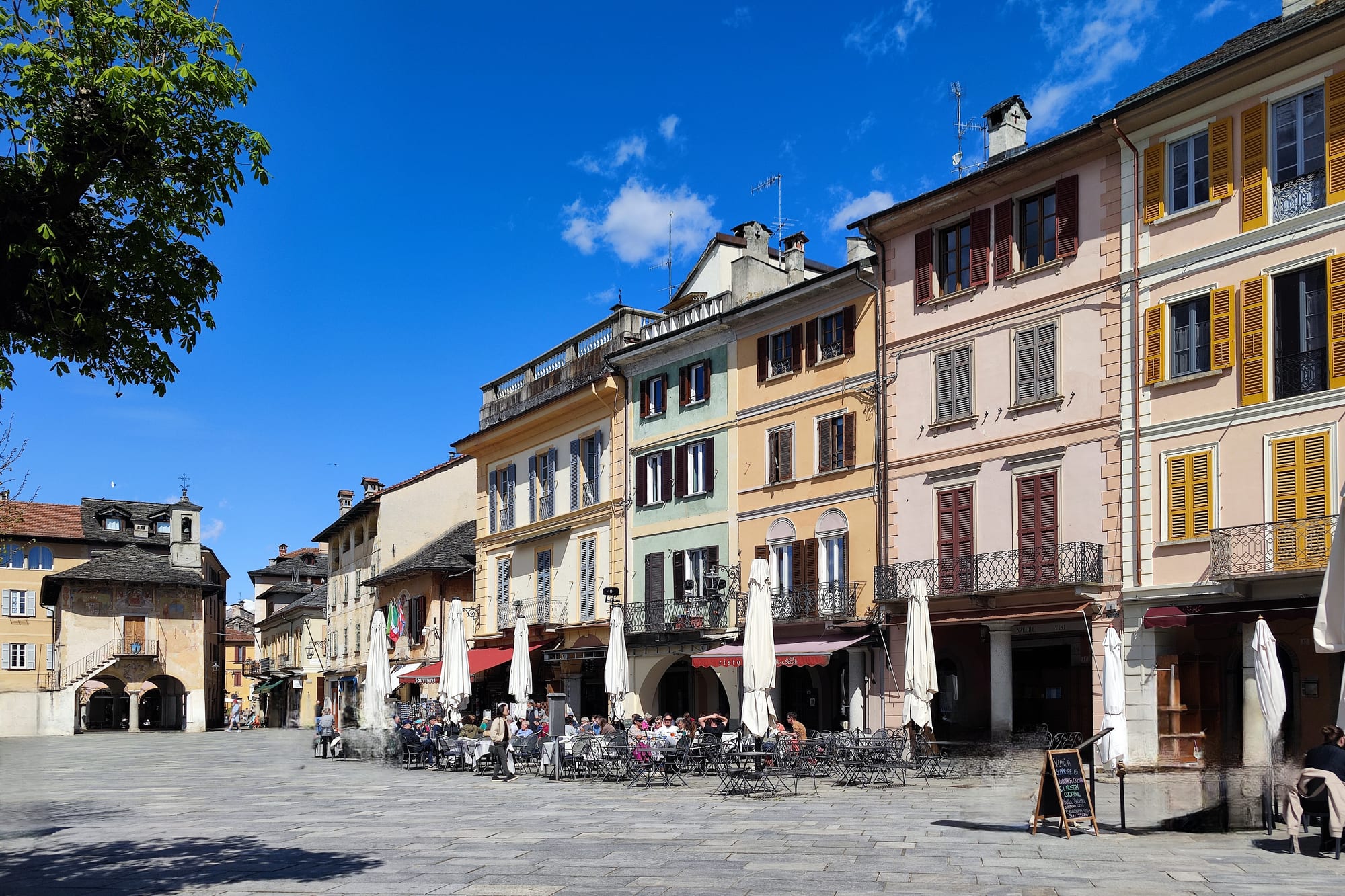
For centuries Orta was the main centre of the Comunità della Riviera, a self-governing league of communes around the lake. The Riviera di San Giulio was a domain of the bishops of Novara: an independent county under the Holy Roman Empire from 1219 to 1767, and then a bishop's principality under the sovereignty of Savoy, to which the people of the Riviera pledged allegiance in the bishop's palace on the island in September 1767. The village's walls were destroyed in 1311 and never rebuilt, its sheltered position being protection enough; it was sacked only once, by the Sforza, in 1524. The Broletto, the Riviera's council house, dates from 1582, and the chapels of the Sacro Monte were built from the end of the 16th century.
In May 1882 Friedrich Nietzsche and Lou Andreas-Salomé visited Orta and the Sacro Monte. In 1928 the municipality of Orta, called Orta Novarese since 1863, merged with Isola San Giulio to take its present name, and in 2003 the Sacro Monte joined the UNESCO World Heritage List.